
A fireplace can make a winter evening feel welcoming, but a comfortable room depends on more than a glowing fire. Safe use begins with a well-maintained hearth, properly seasoned firewood, and equipment suited to the fireplace type. It also includes the less dramatic details homeowners may overlook: working smoke detectors, a nearby fire extinguisher, clear paths to exits, and a plan for keeping children and pets at a safe distance.
Comfort matters, too. Thoughtful furniture placement, warm lighting, and a cozy blanket can make a living room feel inviting without putting soft furnishings too close to heat or sparks. The best winter setup balances atmosphere with routine: prepare the room before lighting a fire, follow the appliance manufacturer’s instructions, and make a final check before leaving the space or going to bed. These habits help turn a seasonal focal point into a feature that works well for everyday living.
In Brief: Winter Fireplace Essentials for a Cozy, Safe Home
- Have wood-burning fireplaces and chimneys inspected and maintained according to professional guidance and the appliance manufacturer’s instructions.
- Burn only appropriate, dry firewood; never use a fireplace as a way to dispose of household waste.
- Use a properly fitted fireplace screen, keep combustible items at a safe distance, and handle hot materials with suitable tools.
- Maintain working smoke detectors and keep an accessible, correctly rated fire extinguisher nearby.
- Build comfort with thoughtful furniture placement, warm lighting, and textiles kept away from heat and sparks.
- Make winter safety a household routine, including supervision, safe ash handling, and a clear exit route.
Prepare the Fireplace Before the First Winter Fire
A safe winter routine starts before the first match is struck. Wood-burning fireplaces depend on a clear path for smoke and combustion gases to leave the home, so a blocked flue, damaged masonry, or neglected chimney can turn an appealing feature into a source of risk. Homeowners should arrange appropriate inspection and maintenance, follow the fireplace manufacturer’s instructions, and consult qualified local professionals when a system needs repair or its condition is uncertain.
Different fireplaces have different operating requirements. A traditional masonry hearth, a factory-built wood-burning unit, and a gas fireplace should not be treated as interchangeable. The owner’s manual identifies the approved fuel, operating method, clearances, and maintenance requirements; where the manual is missing, the manufacturer or a qualified professional may help identify the unit. A real estate walkthrough can note visible concerns, but it does not replace a specialist inspection of a fireplace or chimney.
Check the room as well as the hearth
Before use, remove paper, kindling scraps, decorations, and other combustible materials from the hearth area. Keep curtains, furniture, rugs, and seasonal greenery at the distances specified by the appliance manufacturer or applicable local guidance. A properly fitted fireplace screen helps contain stray sparks, but it does not make it safe to leave a fire unattended.
Consider a household with a low hearth and a sofa positioned close to it. Moving the sofa back and choosing a stable screen can preserve the room’s focal point while making the layout more practical. The same review should check whether a clear route remains from seating areas to a door; decorative baskets and extra chairs should not narrow that path.
Ventilation and air movement deserve attention as well. Some fireplaces require particular damper or vent settings, while exhaust fans and other appliances can affect air pressure in a home. Follow the unit’s instructions rather than guessing at a setting, and stop using the appliance if smoke enters the room or its operation seems abnormal. A persistent smoke problem calls for professional evaluation, not an improvised workaround.
For buyers evaluating a home, a fireplace is best considered as both an amenity and a system requiring care. Ask about maintenance records, the type of appliance, and any known repairs; then confirm details through appropriate inspections. The practical takeaway is simple: a fireplace adds comfort most reliably when its condition and operating requirements are understood before winter begins.
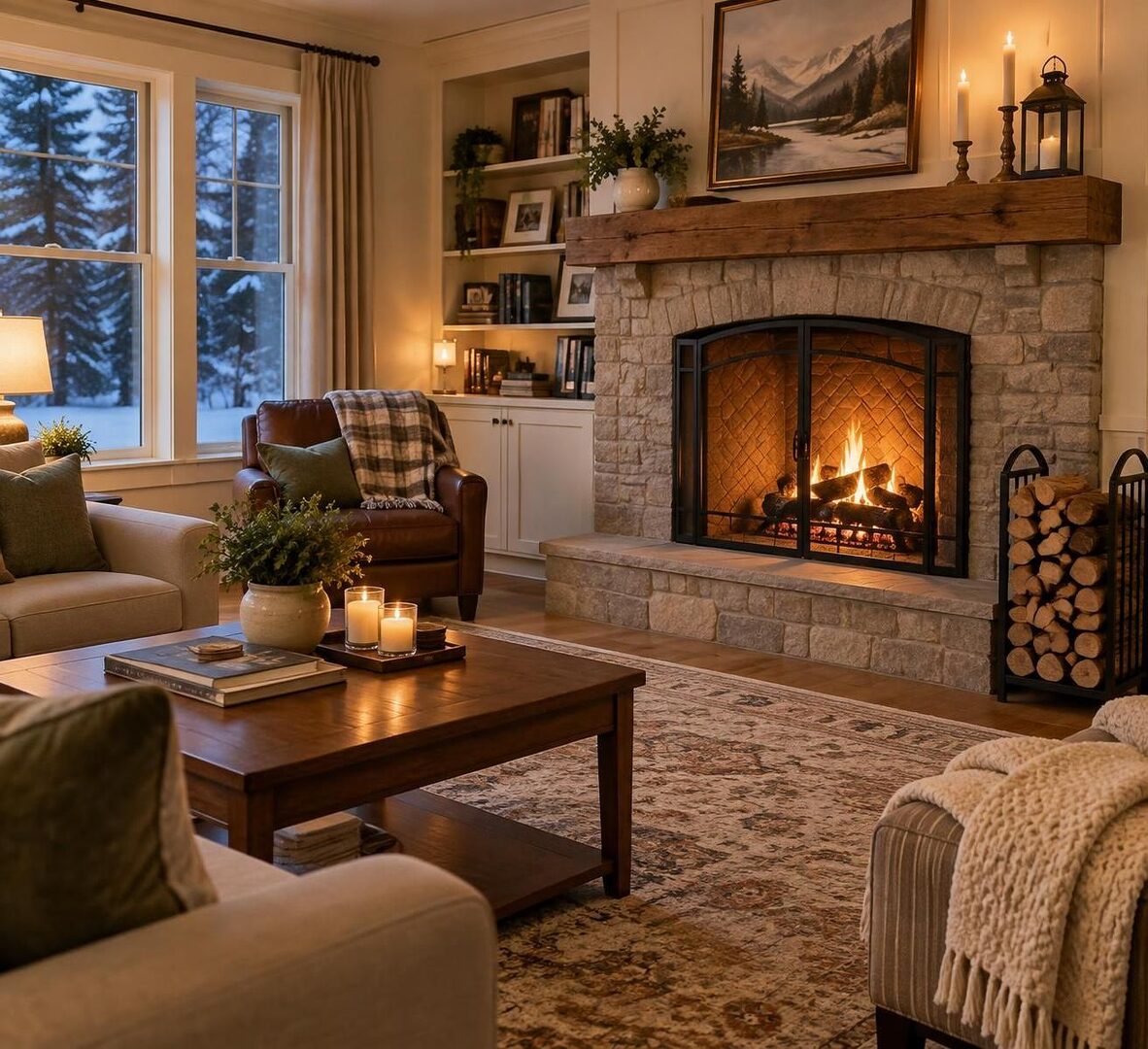
Choose Firewood and Fireplace Tools with Care
For a wood-burning fireplace, the right fuel supports cleaner, more predictable operation. Use firewood that is appropriate for the appliance and sufficiently dry, and follow the manufacturer’s guidance on loading and burning. Wet or unseasoned wood can be difficult to ignite and may produce more smoke; treated, painted, glued, or otherwise unsuitable materials should not be burned in a household fireplace.
Store firewood where it can remain dry and orderly, while keeping the main supply away from the hearth. Bringing in only a modest amount for immediate use can reduce clutter and help keep insects or debris from accumulating indoors. A stable rack or holder is more practical than a loose pile, especially in homes where children or pets share the living area.
Keep essential equipment within reach
A basic set of fireplace tools commonly includes a poker, tongs, a shovel, and a brush. These tools help manage a fire and tidy the hearth, but they are not substitutes for protective equipment or safe technique. Handles should remain cool enough to grasp as designed, and tools should be returned to a secure stand rather than left where someone could trip over them.
Fireproof gloves can offer added protection when handling fireplace equipment, but no glove makes it safe to touch hot coals or remove burning material. Follow product directions and keep hands and clothing away from flames. Ash should be treated as potentially hot even when it looks extinguished; place it in a covered, noncombustible container and keep that container away from combustible surfaces according to local fire-safety guidance.
Imagine a homeowner preparing a fire while guests arrive. A clear hearth, a small amount of dry wood ready to use, and tools returned to their stand reduce last-minute movement around the flames. By contrast, carrying a large armful from a cluttered indoor stack while guests pass through the room increases the chance of bumps, dropped pieces, and blocked walkways.
Firewood sourcing and storage may also matter to a property’s upkeep. Outdoor stacks should be arranged to stay stable and should not obstruct access, drainage, or required clearances around the home. Local guidance can address pest concerns and seasonal restrictions. These details are part of responsible home care, just as drainage and exterior maintenance are part of protecting a property’s long-term condition.
A fireplace can be a distinctive feature in many styles of home, from a traditional residence to a contemporary two-story layout. For broader ideas about how design choices shape a home’s character, readers may explore the appeal of Portobello house living or consider modern two-story design ideas. Whatever the style, the essentials remain the same: suitable fuel, orderly storage, and equipment used as intended.
Make Smoke Detectors and Fire Extinguishers Part of the Plan
Decor and fuel choices do not replace basic fire protection. Working smoke detectors provide an early warning, while a suitable fire extinguisher gives occupants another layer of preparedness. Follow the detector manufacturer’s instructions and local fire-safety guidance for placement, testing, and maintenance. Homes vary in layout, so a qualified local fire-safety authority can help clarify recommendations for a particular property.
Test alarms according to their instructions and address a low-battery warning promptly. If the home has interconnected alarms, confirm that the system is functioning as designed. A detector should not be disabled because cooking, steam, or fireplace use sometimes triggers it; recurring nuisance alarms are a reason to review the device’s location and suitability using manufacturer guidance, not to leave the home without working protection.
Know where equipment is and how it is maintained
Place an extinguisher where it is accessible without requiring someone to reach across a fire. Choose equipment appropriate for the hazards in the home and follow the label for inspection and use. Residents should understand its operating instructions in advance, but an extinguisher is not a reason to approach a fire that is growing, producing heavy smoke, or blocking an exit. In an emergency, leave the building and contact emergency services.
A simple household plan can reduce confusion. Everyone old enough to understand should know how to alert others, which exit to use, and where to meet outside. Keep exits and hallways clear, and consider how a guest unfamiliar with the house would find the way out in low light. Families with young children may practice the plan in a calm, age-appropriate way before winter routines become busy.
For example, a family living in a two-story home may gather in the living room near the fireplace, while bedrooms are upstairs. Their safety plan should account for more than the hearth: it should identify usable exits from sleeping areas and explain how household members will alert one another. The precise plan depends on the home’s layout and local fire-safety recommendations.
Carbon monoxide alarms may also be appropriate where fuel-burning appliances are present. Requirements and recommended placement can vary, so residents should follow local guidance and the instructions for each alarm and appliance. If an alarm sounds, occupants should move to fresh air and follow emergency guidance rather than trying to diagnose the source indoors.
A well-prepared room is not one filled with equipment alone. It is a room where alarms work, residents understand the plan, and exits remain accessible. That combination turns winter safety from a checklist into a usable household habit.
Create a Cozy Living Room Without Adding Fire Hazards
A welcoming winter room can be comfortable without crowding the hearth. Arrange seating so people can enjoy the fireplace while maintaining the clearances required by the appliance instructions. This often means shifting a chair or side table rather than redesigning the whole room. Leave enough space for people to move around safely, and avoid placing baskets, toys, magazines, or charging cords in the path between the seating area and an exit.
Warm lighting can make a room feel inviting after sunset, especially when used in layers. A ceiling fixture provides general illumination, while table or floor lamps make reading areas more useful. Keep lamps, cords, and bulbs away from curtains and other materials that could heat up, and use products according to their labels. A flickering electric candle or a lamp with a warm-toned bulb can add atmosphere without adding another open flame.
Use textiles and furniture thoughtfully
A cozy blanket belongs on a chair or sofa, not draped over the fireplace screen or left on the hearth. Soft furnishings can make a room feel finished, but they need a safe position away from sparks and hot surfaces. The same applies to seasonal decorations: greenery, paper garlands, and dried arrangements should not be placed where heat could reach them.
Picture a family settling in after dinner. The fireplace screen is in place, the nearest chair sits outside the appliance’s required clearance, and the blanket is folded over the back of a sofa on the opposite side of the room. A reading lamp provides enough light to move safely without competing with the fire. These small decisions make the room comfortable while keeping the hearth area functional.
Interior layout also affects how a home feels from room to room. A half-floor living area, for instance, may create a visual connection between levels, but changes in elevation can make clear pathways and appropriate lighting especially important. Design inspiration such as ideas for a half-floor living room can be considered alongside practical winter needs: stair edges should remain visible, and furnishings should not obstruct circulation.
Renters and homeowners alike can make reversible changes, such as repositioning furniture, adding a stable blanket basket away from the hearth, or using lamps to brighten a darker corner. Larger improvements, including changes to a fireplace surround or built-in layout, may involve permits, building requirements, or specialist work depending on the property and location. Aesthetic plans should not override manufacturer clearances or local safety requirements.
The most effective cozy rooms are not necessarily the ones with the most décor. They are rooms where warmth, light, seating, and clear movement work together without placing combustible items near the heat source.
Build a Winter Fireplace Routine That Works Every Evening
Consistent habits matter because fireplace use often happens when people are tired, distracted, or hosting guests. Before lighting a fire, check that the hearth is clear, the screen is properly positioned, and the correct fuel is ready. Confirm the appliance is being operated as directed, and make sure smoke and carbon monoxide alarms are functioning according to their instructions.
During use, keep children and pets at a safe distance and maintain supervision. Do not leave a fire unattended, and do not assume that a low flame or a bed of glowing embers is harmless. If smoke enters the room, the fire behaves unexpectedly, or an alarm activates, follow the appliance and emergency guidance; leave the home and contact emergency services if the situation presents immediate danger.
Use a short checklist, not guesswork
A repeatable checklist makes it easier to spot omissions. It can be adapted to the type of fireplace and the home’s specific needs:
- Check the hearth and surrounding area for combustible clutter.
- Use only fuel approved for the fireplace and follow operating instructions.
- Position the fireplace screen and keep tools in a stable, accessible place.
- Keep children, pets, blankets, and decorations clear of the heat zone.
- Confirm alarms are in service and exits remain unobstructed.
- Before leaving the room or going to bed, follow the manufacturer’s instructions for safely ending use.
This routine also helps homeowners notice changes. A new smell, unusual smoke, damaged screen, loose masonry, or unreliable damper operation can signal that the fireplace needs attention. Rather than relying on a quick visual guess, stop using the unit when there is a concern and seek evaluation from a qualified professional familiar with that system.
Winter preparation can be documented alongside other home records. Keep manuals, inspection notes, service information, and alarm instructions in a place household members can find. For anyone buying or selling a property, clear records can make it easier to understand what maintenance has been performed, although records do not replace an independent inspection or guarantee a system’s present condition.
Some homes are marketed for distinctive setting or design features, but daily livability still depends on practical details such as circulation, maintenance, and safe use of built-in amenities. A property profile like this look at a distinctive Alamo residence illustrates how a home’s character can be part of its appeal; fireplace care remains a separate, property-specific responsibility.
A dependable winter routine does not need to be complicated. When preparation, supervision, and shutdown become ordinary habits, the fireplace can contribute to the evening without making safety an afterthought.
Winter Fireplace Safety Questions Homeowners Commonly Ask
How close can furniture be to a fireplace? The safe clearance depends on the specific fireplace and its instructions. Check the manufacturer’s guidance and local requirements rather than using a general distance for every appliance.
Can a fireplace screen make it safe to leave a fire unattended? No. A screen can help contain sparks, but fires still require supervision and must be handled according to the fireplace’s operating instructions.
Where should firewood be stored? Keep the main supply dry, stable, and outside the immediate hearth area. Bring indoors only what is needed for near-term use, and follow local guidance on outdoor storage and clearances.
What should residents do if smoke enters the room? Stop using the fireplace and follow the appliance instructions. If there is immediate danger or an alarm sounds, leave the home and contact emergency services; arrange qualified evaluation before using the fireplace again.
How close can furniture be to a fireplace?
Clearance requirements vary by appliance. Follow the fireplace manufacturer’s instructions and applicable local guidance.
Can a fireplace screen make it safe to leave a fire unattended?
No. A screen helps contain sparks but does not replace supervision or the need to follow the appliance’s operating instructions.
Where should firewood be stored?
Keep the main supply dry, stable, and away from the immediate hearth area. Follow local guidance for outdoor storage and bring inside only the amount needed soon.
What should residents do if smoke enters the room?
Stop using the fireplace and follow its instructions. If there is immediate danger or an alarm sounds, leave the home and contact emergency services; arrange qualified evaluation before using the unit again.

At 33 years old, I specialize as a Licensed Residential Real Estate Advisor and Property Market Analyst. With a deep understanding of market trends and client needs, I provide strategic insights and personalized guidance to help clients make informed real estate decisions.