
The management of waste during residential or commercial projects often hinges on one critical yet frequently overlooked factor: selecting the correct dumpster size. Misjudging this aspect can lead to increased costs, project delays, and inefficient waste disposal. Understanding the nuances of dumpster sizes through a comprehensive size chart allows homeowners, contractors, and business owners to optimize resource allocation and ensure smoother project workflows. Waste management is not simply about discarding materials; it involves strategic planning to balance volume capacity with weight restrictions and the unique characteristics of the waste produced.
Efficient waste management demands more than just picking the largest or cheapest dumpster available. A focus on specific project needs—ranging from minor home renovations to large-scale construction—facilitates proper selection of appropriate trash containers. This article explores how the dumpster sizes chart guides decisions to maximize waste disposal efficiency, control costs, and maintain compliance with local regulations. Real-world examples and insights demonstrate the tangible benefits of understanding dumpster dimensions, volume requirements, and weight considerations.
Decoding Dumpster Sizes Chart: Volume Capacity and Dimensions Explained
Dumpster sizes are universally measured in cubic yards, a volumetric unit that conveys the amount of space available for waste collection. One cubic yard represents a cube that measures 3 feet on each side, making it approximately 27 cubic feet of space. The common dumpster sizes range from 10 cubic yards up to 40 cubic yards, each catering to different waste volume requirements.
For example, a standard 10-yard dumpster has dimensions roughly 12 feet long by 8 feet wide by 3.5 feet high. This size comfortably holds the waste equivalent of two to three pickup truck loads, making it suitable for small bathroom remodels or minor landscaping projects. In contrast, a 40-yard dumpster measuring approximately 22 feet long by 8 feet wide by 8 feet tall can accommodate volumes exceeding twelve pickup truck loads, ideal for large commercial jobs or extensive demolition projects.
Interpreting a dumpster size chart helps align the dumpster’s physical dimensions and volume capacity with the project’s scale. The chart allows users to visualize how much debris can fit, ranging from the content of a single room remodel up to the waste generated by an entire house or commercial buildout. Additionally, dimensions impact placement feasibility—driveways and job sites must have enough space and clearance for delivery trucks and dumpster installation.
It’s essential to consider that volume alone doesn’t capture the whole picture. Dumpster weight limits vary according to size, typically between 1 ton for a 10-yard container up to 4 tons for a 40-yard dumpster. The type of materials disposed also impacts selection because heavy debris like concrete or roofing shingles can reach weight limits before filling the dumpster. Consequently, the size chart acts as a foundational tool for estimating waste volume, but it must be balanced with material weight considerations for comprehensive waste management planning.
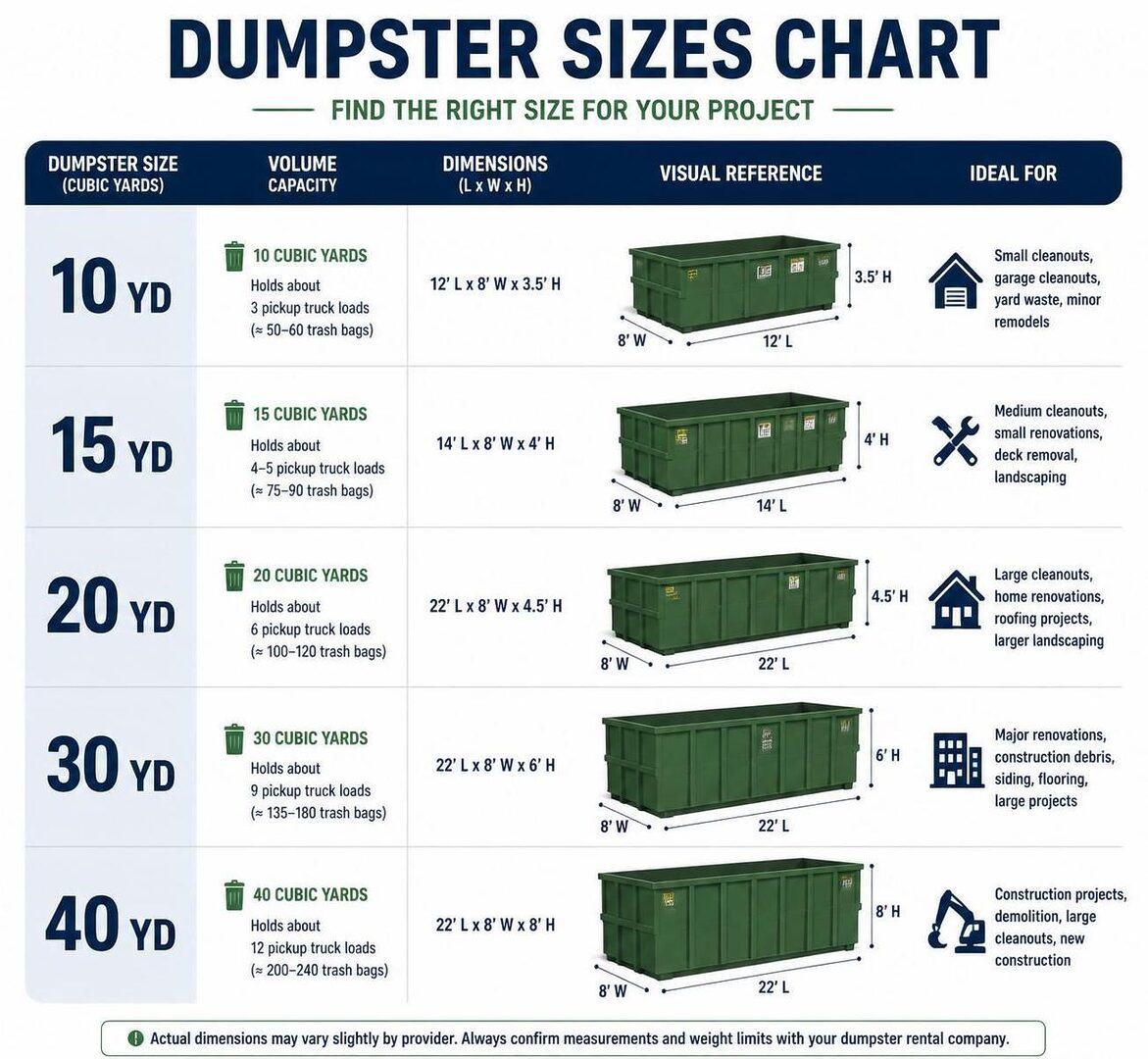
Practical Guidance for Selecting Dumpster Sizes According to Project Types
Choosing the appropriate dumpster size depends largely on the nature and scope of the project. Whether managing residential cleanouts or commercial construction debris, understanding typical waste volumes for each project type informs smarter container selection. By matching dumpster sizes to the project’s waste profile, one can avoid the pitfalls of overpaying for excessive capacity or underestimating and needing a costly second rental.
Residential Projects
Residential waste management often deals with moderate volumes of lightweight debris such as furniture, household goods, and remodeling materials. For small-scale projects like bathroom remodels or garage cleanouts, a 10 to 15-yard dumpster efficiently holds 2-6 pickup truck loads of waste. For larger undertakings, such as kitchen renovations or whole-house cleanouts, a 20 to 30-yard dumpster strikes an optimal balance between capacity and fit. For example, a 20-yard dumpster accommodates contents typical of a three to four-bedroom house renovation and fits most standard driveways, thereby decreasing logistical hurdles.
Commercial and Construction Projects
On larger scales, such as commercial buildouts or major demolition, waste volume can be substantial and heavy. Here, selecting dumpsters in the 30 to 40-yard range is common. These dumpsters handle massive loads while minimizing container swaps, which can disrupt project timelines. Unlike residential projects, commercial sites typically require dumpsters with higher weight limits and greater volume capacity to manage debris like concrete, bricks, and industrial materials effectively.
Outdoor and Landscaping Workloads
Exterior projects such as deck removal, fence replacement, or landscaping generate mixed volumes of materials, including soil and wood scraps of varying densities. While lighter debris allows for volume-based sizing, the presence of heavier soil or concrete may necessitate more robust dumpster options like the 10-yard lowboy, designed specifically to support heavier weight without compromising safety or exceeding limits.
Understanding the typical waste profile — volume versus weight — for each project type enables efficient planning. Clients are encouraged to size their dumpsters up marginally when uncertain, as the cost difference between sizes usually remains moderate compared to surcharges from multiple rentals.
Impact of Waste Material Weight on Dumpster Selection and Costs
Weight restrictions often present hidden challenges in waste management that fail to surface when focusing solely on volume. The differential between volumetric capacity and weight limits means dumpster users must carefully assess the kind of materials they plan to dispose of.
Light materials such as household goods, paper, cardboard, and yard waste typically weigh between 300 to 600 pounds per cubic yard. These materials generally fill the dumpster’s volume without pressure from weight caps. This scenario simplifies container selection, as volume capacity can serve as the primary guide.
By contrast, heavy materials like concrete, brick, roofing shingles, soil, and tile boast densities up to 4,000 pounds per cubic yard or more. Dumpsters can reach their maximum allowable weight before being near full volume, which can result in overruns if not anticipated. For instance, placing concrete in a 20-yard dumpster will quickly hit its weight limit and may require special permits or the use of a lowboy dumpster designed for heavy loads.
Overweight dumpsters are usually subject to hefty fees, sometimes $75 or more per additional ton, reinforcing the importance of weight considerations alongside volume. Property managers and homeowners alike benefit from requesting detailed weight guidelines when obtaining dumpster rentals to prevent costly surprises.
Maximizing Efficiency Through Strategic Dumpster Placement and Size Management
Waste disposal efficiency transcends simply choosing the right dumpster size; it extends to strategic placement and logistics throughout the rental period. Successfully positioning dumpsters requires understanding both spatial constraints and site-specific regulations that regulate dumpster placement on residential property or public right-of-way.
Standard residential dumpsters between 10 and 30 yards generally require at least 10 feet of clearance in width and approximately 60 feet in length for delivery access. Larger 40-yard dumpsters may need even wider spaces and higher overhead clearance, sometimes reaching 22 feet, complicating installations in tight areas. Misjudging these requirements can lead to delivery failures or additional maneuvering costs.
Additional considerations include ease of loading, as dumpsters with lower wall heights (around 3.5 feet for 20-yard sizes) present less physical strain for users compared to 8-foot tall 40-yard containers. This balance influences project timelines and user convenience, especially on residential sites where physical handling often falls on homeowners or small teams.
Implementing a waste management plan that integrates dumpster size, placement, and material load optimizes project timelines and reduces disruptive delays. When projects span multiple weeks, scheduling interim pickups or multiple smaller dumpster rentals might prove more cost-effective than renting a single large container for the entire duration.
Cost Implications of Dumpster Size Choices and Avoiding Common Pitfalls
Financial efficiency remains a priority when selecting dumpster sizes for waste management. Generally, larger dumpsters command higher base rental fees; however, the difference between one size and the next often remains around $50 to $100. Often, renting one appropriately sized larger dumpster prevents the need for a costly second rental, which can exceed $500.
Several common errors impact budget management and waste removal effectiveness:
- Underestimating volume: Renovations and cleanouts can produce unexpected debris volumes. Erring on the side of a slightly larger dumpster is prudent to avoid mid-project overruns.
- Ignoring weight limits: Failing to consider heavy materials can cause abrupt surcharges. Consult with rental providers regarding maximum weight allowances and material restrictions.
- Neglecting space measurements: Improperly sized dumpsters for the project location can cause delivery delays and extra logistical costs.
- Choosing lowest price without evaluating total cost: Initial cost savings may be offset by overage fees or additional rentals, driving up overall expenses.
| Dumpster Size | Dimensions (L×W×H) | Volume Capacity (Cubic Yards) | Approx. Weight Limit (Tons) | Ideal Project Examples | Approximate Cost (Weekly Rental) |
|---|---|---|---|---|---|
| 10 Yard Lowboy | 22′ × 8′ × 2′ | 10 | 6-10 | Concrete, dirt, heavy debris removal | $550 – $700 |
| 15 Yard | 10′ × 8′ × 4’7″ | 15 | 2-3 | Garage cleanouts, small remodels | $350 – $550 |
| 20 Yard | 22′ × 7′ × 3’6″ | 20 | 3-4 | Kitchen remodels, multiple room cleanouts | $400 – $650 |
| 30 Yard | 22′ × 7′ × 5’2″ | 30 | 4-5 | Major renovation, commercial cleanouts | $500 – $800 |
| 40 Yard | 24′ × 8′ × 8′ | 40 | 5-6 | Large-scale commercial projects | $600 – $900 |
Budget-conscious planning involves understanding these ranges and factoring in potential overage fees. Selecting an appropriately sized dumpster promotes efficient waste management while preventing unplanned financial burdens.
Waste management efficiency improves dramatically when dumpster rentals align closely with project needs. By leveraging size charts, weight material knowledge, and proper site preparation, users optimize timelines and budgets.
What is the typical volume capacity of a 20-yard dumpster?
A 20-yard dumpster typically holds about 20 cubic yards of debris, approximately equivalent to 6-7 pickup truck loads, making it suitable for medium-sized home renovations and multi-room cleanouts.
Can I dispose of heavy materials like concrete in a standard dumpster?
Heavy materials such as concrete should be placed in a lowboy dumpster designed for high weight loads. Using a standard dumpster risks exceeding weight limits prematurely and may incur additional fees or require special disposal arrangements.
How do I know if a dumpster will fit in my driveway?
Generally, dumpsters from 10 to 20 yards require about 10 feet in width and 60 feet length for delivery truck access. Checking local space and clearance, including height, is crucial to ensure proper delivery and placement.
Is it better to rent a larger dumpster or multiple smaller dumpsters?
Renting a larger dumpster is usually more cost-effective as the price difference between sizes is smaller than the cost of multiple rentals or overage fees. However, very long projects might benefit from scheduled pickups of smaller dumpsters.
Can I mix different types of waste in the same dumpster?
Most household and construction debris can be mixed, but heavy materials like concrete should be separated to avoid weight limit violations. Hazardous waste is strictly prohibited in dumpster rentals.

At 33 years old, I specialize as a Licensed Residential Real Estate Advisor and Property Market Analyst. With a deep understanding of market trends and client needs, I provide strategic insights and personalized guidance to help clients make informed real estate decisions.