A swimming pool stays safe and inviting when its water chemistry is balanced, not simply when it looks clear. The right treatment plan depends on the pool’s sanitizer, water volume, circulation, use, and test results; adding products by guesswork can create cloudy water, irritation, equipment damage, or unsafe conditions. A complete swimming pool chemicals list is useful as a reference, but no pool needs every chemical at once. The practical goal is to identify what a test shows, choose the product intended to correct that specific condition, and follow its label.
For homeowners, pool care also protects an important property feature. A well-maintained pool can support everyday enjoyment and help preserve the condition of the surrounding outdoor space, while neglected water and equipment may require expensive corrective work. Whether a pool is part of a family home or a future purchase, understanding the basic roles of chlorine, pH adjusters, and other common products makes maintenance more predictable.
In brief
- Chlorine or bromine sanitizes pool water; most pools use one primary sanitizer rather than both.
- Test before adding chemicals, and adjust one water-balance issue at a time.
- pH, total alkalinity, calcium hardness, and cyanuric acid affect sanitizer performance and water comfort.
- Shock treatment, algaecide, and water clarifier address specific conditions; they are not substitutes for routine testing.
- Read product labels, use protective equipment, and never mix pool chemicals together.
Core swimming pool chemicals: chlorine, bromine, and sanitizers
Sanitizer is the foundation of pool water care because it controls many disease-causing germs and helps break down organic material introduced by swimmers, leaves, and debris. Chlorine is the most common residential pool sanitizer. It is sold in several forms, including liquid sodium hypochlorite, calcium hypochlorite, and stabilized tablets or granules. These products can all contribute chlorine, but they differ in concentration, handling requirements, and additional effects on water chemistry.
For example, trichlor tablets contain chlorine and cyanuric acid, a stabilizer that slows chlorine loss from sunlight. Continued use can gradually raise stabilizer levels, so a homeowner who relies on tablets should test cyanuric acid as part of regular maintenance. Calcium hypochlorite adds calcium as well as chlorine, which may matter in water that already has high calcium hardness. Product selection should account for the pool’s test results rather than convenience alone.
Bromine is another sanitizer, used more often in spas and some indoor pools than in outdoor residential pools. It can remain effective across a wider pH range than chlorine, but it is not typically protected from sunlight by cyanuric acid in the same way chlorine is. Switching sanitizer systems is not simply a matter of pouring in a different product; equipment, existing chemicals, and manufacturer directions all need consideration.
Testing and sanitizer management
Use a reliable test kit or test strips to measure sanitizer and pH, following the testing product’s instructions. The U.S. Centers for Disease Control and Prevention (CDC) advises keeping pool pH between 7.0 and 7.8 and maintaining appropriate disinfectant levels; its recommendations vary when cyanuric acid is present. Local public-health guidance and product labels should inform the specific operating range for a pool.
A useful example is a pool that looks clear after a busy weekend but has a low sanitizer reading. Clear water does not confirm that it is disinfected. The owner should check the readings, review the product label for the required dose based on pool volume, and allow circulation and retesting as directed before assuming the water is ready for use.
Sanitizer products are not interchangeable by weight or scoop size. Concentrations differ, and some products add stabilizer or calcium. Choose a primary sanitizer system, monitor the chemistry it affects, and dose only from measured results. That routine provides a safer starting point for the pH and water-balance adjustments covered next.
pH increaser, pH reducer, and alkalinity increaser
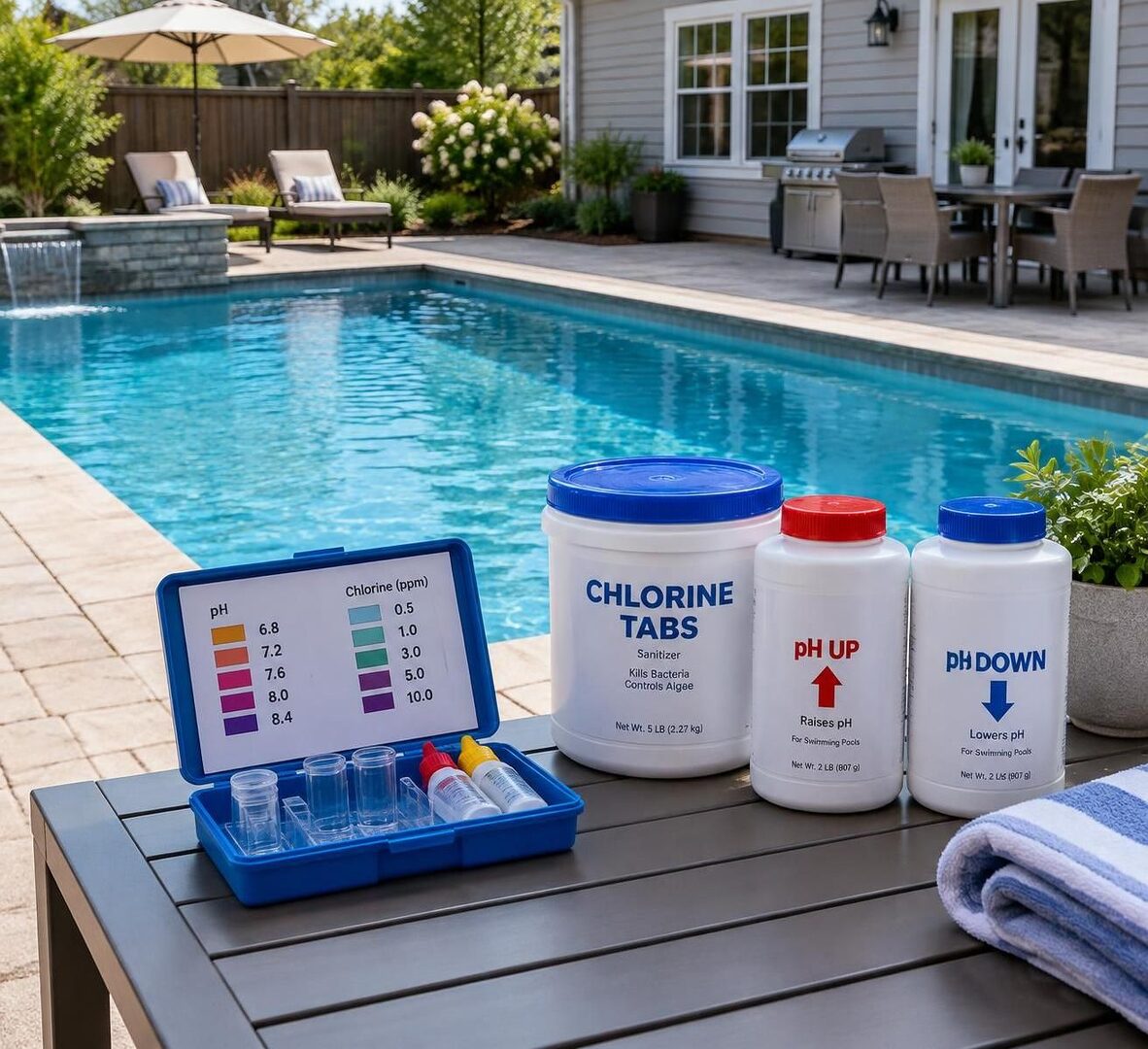
pH describes how acidic or basic water is. It affects swimmer comfort, sanitizer effectiveness, and the likelihood of corrosion or scale formation. A pH increaser, commonly made with sodium carbonate, raises pH. A pH reducer, often sold as sodium bisulfate or muriatic acid, lowers it. The correct choice depends on a test result; adding either product without testing can move the water farther from balance.
Total alkalinity acts as a buffer that helps resist sudden pH changes. An alkalinity increaser, usually sodium bicarbonate, raises total alkalinity. It may also cause a modest change in pH, so the sequence and amount of adjustment matter. If alkalinity is too low, pH can fluctuate repeatedly. If it is too high, pH may be difficult to lower and cloudy water or scale may become more likely under some conditions.
Adjust in measured steps
Imagine a homeowner whose test indicates low pH and low total alkalinity. Adding a large dose of pH increaser may raise pH quickly while leaving the underlying buffering issue unresolved. A better approach is to consult the product label, account for pool volume, make a measured adjustment, circulate as directed, and retest before deciding whether another correction is needed.
Acid products require particular care. Wear the protective equipment specified on the label, avoid splashes, and store the container upright in a suitable location. Never pour water into acid or combine acid with chlorine products. Mixing chemicals can release dangerous gases or cause a violent reaction. Follow label instructions about where and how to add each product, and keep swimmers out of the water for the stated period.
Water source and pool surface can affect how often adjustments are needed. A pool filled with water high in minerals may behave differently from one filled with softer municipal water; rain, heavy use, and fresh water additions also change readings. A pool owner should keep a simple log of test results and additions. If the same imbalance returns repeatedly, the pattern may point to a broader cause, such as a product that continually adds stabilizer or an unsuitable fill-water profile.
For buyers evaluating a home with a pool, maintenance records and visible equipment condition can help frame follow-up questions during due diligence. A pool is an amenity, but it is also a system that needs consistent care. Helpful context on how a pool can fit into a home’s layout appears in this overview of two-story homes designed around a swimming pool. The chemistry lesson is straightforward: correct the measured cause, not merely the symptom.
Calcium hardness increaser and cyanuric acid for water balance
Calcium hardness increaser adds dissolved calcium to pool water, most often using calcium chloride. Calcium level matters because water that is too low in calcium may be more likely to draw minerals from plaster or other cement-based surfaces. Water with excessive calcium, especially alongside high pH and warmer temperatures, may contribute to scale or cloudy deposits. The ideal range depends on pool surface, local water, and the guidance of the pool manufacturer or service professional.
Calcium hardness is not corrected by adding sanitizer or adjusting pH alone. A homeowner should test it separately and compare the result with the pool surface and equipment recommendations. For instance, a plaster pool filled with very soft water may need a different management approach from a vinyl-lined pool supplied by mineral-rich water. Adding calcium without testing can create the very imbalance the product is meant to prevent.
Cyanuric acid, often called stabilizer or conditioner, protects outdoor chlorine from rapid breakdown in sunlight. It is included in some stabilized chlorine products and is also sold as a separate chemical. Stabilizer is useful outdoors, but it can build up because it does not disappear as quickly as chlorine. If the level becomes too high, chlorine may be less effective at the concentration present, and dilution through partial water replacement may be one option depending on local conditions and pool guidance.
How the chemistry works together
Pool chemistry is interconnected. A sanitizer reading that appears adequate cannot be interpreted in isolation if pH or cyanuric acid is outside the recommended range. Likewise, adding several products in one session makes it harder to know which change caused a new reading or water condition. Test, adjust one factor according to the label, allow the required circulation time, and test again.
A common scenario is an outdoor pool maintained primarily with stabilized tablets. The chlorine level may appear stable while cyanuric acid gradually rises. If the owner checks only chlorine, the accumulating stabilizer can go unnoticed. Testing both provides a more complete picture and can guide whether the sanitizer routine needs adjustment.
Water balance also affects the long-term condition of pool surfaces, heaters, pumps, and other components. Chemical readings do not replace equipment inspection, but they can help explain recurring scale, rough surfaces, or corrosion concerns. Keep containers in their original packaging, dry and separated according to label directions; never store acids beside chlorine products if a leak could allow them to meet. Calcium and stabilizer are targeted tools, not routine additions to make without a test.
Shock treatment, algaecide, and water clarifier
A shock treatment is a higher-dose oxidizing treatment used to address certain water conditions, such as elevated organic contamination or combined chlorine, according to product directions. “Shock” is not one single chemical: products may use different active ingredients, and some add calcium or cyanuric acid. The label determines how to apply the product, whether it can be used with the existing sanitizer system, and how long to wait before swimming.
Shocking is not a substitute for maintaining routine sanitizer levels. If a pool repeatedly needs shock treatment, investigate the cause: heavy swimmer load, poor circulation, inadequate filtration, low sanitizer, or persistent contamination may be contributing. The water should be tested before treatment and afterward, with re-entry based on the label and measured conditions rather than appearance alone.
Algaecide products are designed to prevent or control algae, but they do not replace sanitizer or physical cleaning. Different formulations target different situations, and some can cause foaming or staining if used incorrectly. Brushing pool walls, cleaning baskets, maintaining circulation, and correcting sanitizer and pH are often central parts of addressing algae. A green pool may require a coordinated treatment plan rather than an extra dose of a single product.
A water clarifier helps small suspended particles collect into larger particles that a filter can capture. It may be useful when water remains hazy after the underlying cause has been corrected, but it cannot repair a failing filter or compensate for poor circulation. Overuse may make filtration harder or worsen cloudiness, depending on the product and system. Follow the label, confirm that the filter is operating properly, and clean or backwash it as the manufacturer directs.
Common products at a glance
| Product | Main purpose | What to check first |
|---|---|---|
| Chlorine or bromine | Sanitizes water | Sanitizer reading, system compatibility, and label dose |
| pH increaser or pH reducer | Raises or lowers pH | Measured pH and pool volume |
| Alkalinity increaser | Raises total alkalinity | Total alkalinity and expected pH effect |
| Calcium hardness increaser | Adds calcium | Calcium hardness and pool surface |
| Cyanuric acid | Protects outdoor chlorine from sunlight | Existing stabilizer level and sanitizer type |
| Shock treatment | Oxidizes contaminants or addresses specific conditions | Active ingredient, sanitizer system, and re-entry directions |
| Algaecide or water clarifier | Targets algae or suspended particles | Underlying water issue, filtration, and label instructions |
A clear, well-maintained pool can make outdoor living more appealing, but the water’s appearance is only one part of responsible care. For homeowners weighing pool features alongside the broader layout of a property, this discussion of a home with a swimming pool and multiple levels offers a related residential perspective. The practical rule remains: use specialty treatments to address identified problems, not as a substitute for testing and maintenance.
Safe storage, chemical handling, and a practical testing routine
Safe pool care begins before a chemical container is opened. Read the full label, including first-aid, personal protective equipment, storage, application, and disposal directions. Keep chemicals in their original, clearly labeled containers, away from children, pets, heat, moisture, and incompatible products. A locked, dry, ventilated storage area is preferable when the product label permits it.
Never mix pool chemicals, including different chlorine products, or combine chemicals in a bucket unless the label explicitly instructs a specific preparation. Adding one product directly on top of another can trigger a reaction even when both are commonly used in pools. Use clean, dry measuring tools dedicated to each product, and do not return a measured portion to its container.
A repeatable maintenance sequence
A basic routine is more reliable than reacting to water appearance alone. The frequency of testing depends on pool use, weather, sanitizer system, and local conditions; heavy use or a major rain event can justify additional checks. A practical sequence is:
- Inspect circulation and filtration. Check pump operation, baskets, filter pressure, and visible debris before treating the water.
- Test the water. Measure sanitizer and pH regularly; check alkalinity, calcium hardness, and cyanuric acid as appropriate for the pool and treatment system.
- Identify the specific imbalance. Compare results with product guidance and manufacturer recommendations rather than guessing from color or clarity.
- Make one measured correction. Use the product’s directions for the pool volume and required application method.
- Allow circulation and retest. Follow the label’s waiting period and confirm the result before adding another product or allowing swimming.
For example, after a storm, a homeowner may see leaves and cloudy water. Removing debris and checking filtration come first; testing then shows whether sanitizer or pH needs correction. Adding clarifier, algaecide, shock, and pH products at once obscures the cause and increases handling risk. The measured, sequential approach is easier to evaluate and safer to repeat.
Pool products should never be treated as harmless household cleaners. If a spill, exposure, or suspected chemical reaction occurs, follow the product’s emergency directions and contact local emergency services or Poison Control in the United States as appropriate. For persistent algae, recurring imbalance, unusual odors, or equipment concerns, a qualified pool professional can assess the full system. Consistent testing, careful storage, and label-based dosing make routine pool care safer and help protect the home’s outdoor investment.
Which chemicals does a basic residential pool usually need?
Most pools need a primary sanitizer such as chlorine or bromine and, when test results call for them, products to adjust pH or alkalinity. Calcium hardness increaser, cyanuric acid, shock treatment, algaecide, and water clarifier are situation-specific rather than automatic additions.
Can chlorine and bromine be used together?
They are generally managed as different sanitizer systems, not casually combined. Check the pool and product manufacturers’ guidance before changing systems, and never mix chemical products directly.
Should pool chemicals be added before or after testing?
Test first. A reading identifies the issue and helps determine whether a product is needed; follow the product label for dosage, application, circulation, and retesting.
Does clear pool water mean it is safe to swim?
No. Clear appearance does not confirm suitable sanitizer or pH levels. Test the water and follow public-health guidance and product directions before swimming.

At 33 years old, I specialize as a Licensed Residential Real Estate Advisor and Property Market Analyst. With a deep understanding of market trends and client needs, I provide strategic insights and personalized guidance to help clients make informed real estate decisions.