
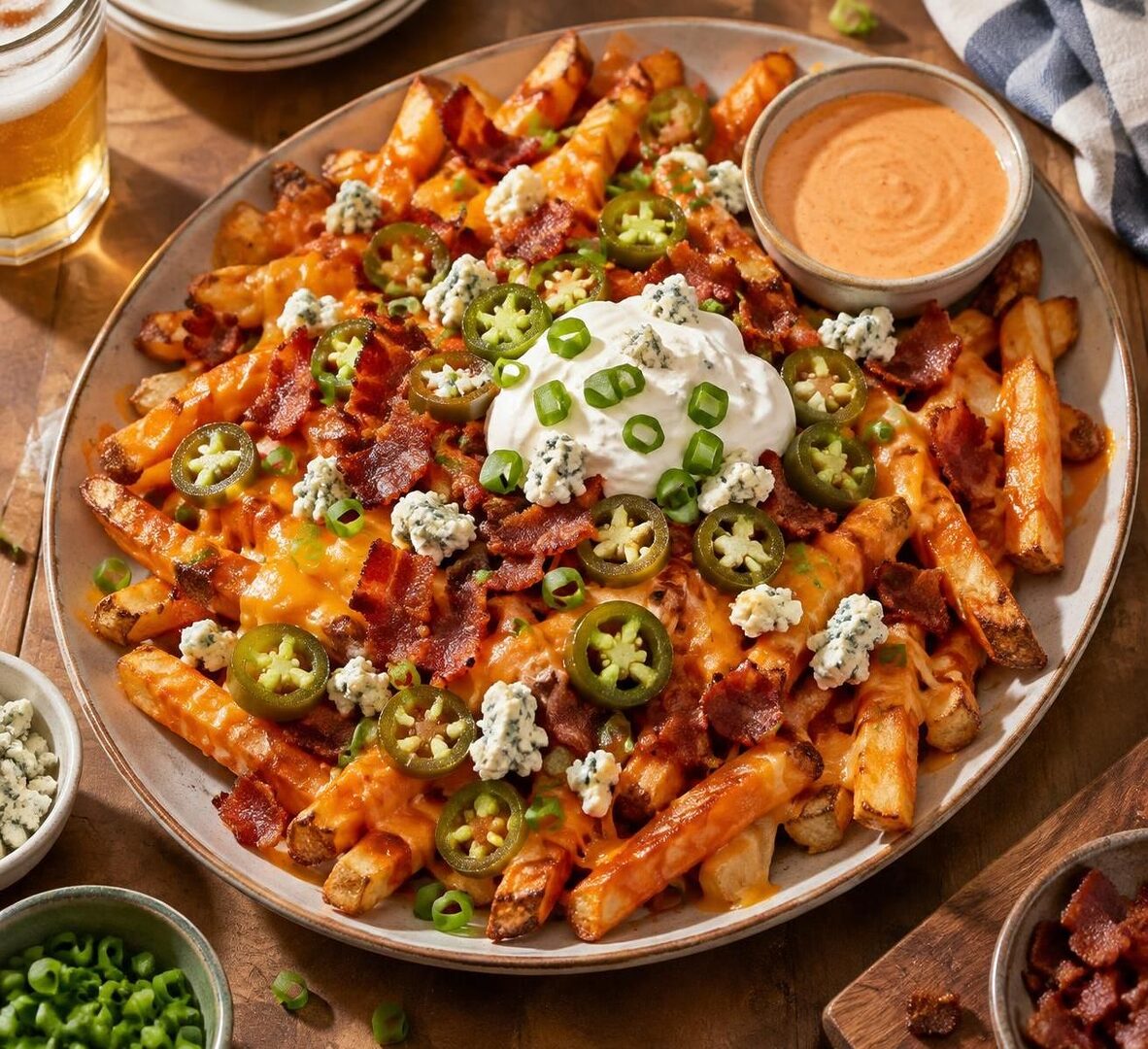
Buffalo fries bring the tangy heat of buffalo wings to a pile of hot, crisp potatoes, with melted cheddar, cool sour cream, blue cheese, and a creamy dipping sauce adding contrast. This version takes about 25 minutes when prepared with cooked frozen fries, and it works in either an oven or an air fryer. Bacon and pickled jalapeños bring extra crunch and spice, but both can be left out for a simpler plate or a vegetarian-friendly option.
The key to a satisfying batch is managing moisture: cook the fries until crisp, keep the toppings measured, and add the cold sauces just before serving. That approach makes this an easy snack for a weeknight, a shareable party appetizer, or game day food that delivers bold flavor without requiring a separate batch of chicken wings. The recipe is flexible, too; homemade fries, leftover fries, wedges, or crinkle cuts can all work with a few adjustments to cooking time.
In brief:
Use about two servings of cooked fries as the base, then add cheddar, optional crisp bacon, and chopped pickled jalapeños.
For a fast buffalo dipping sauce, stir hot sauce into mayonnaise and adjust the heat to taste.
Finish with blue cheese, sour cream, and scallions after baking, then serve immediately for the best texture.
The oven and air fryer both work; the most reliable guide is melted cheese and fries that remain crisp at the edges.
Buffalo Fries Recipe: Ingredients and a Reliable Starting Point
A good buffalo fries recipe balances four things: crisp potatoes, salty or savory toppings, creamy coolness, and the sharp, vinegary heat of buffalo sauce. The method below is designed for two servings, but it can be scaled up by cooking the fries in batches rather than crowding a pan or air fryer basket. Overcrowding traps steam, which softens the fries before the cheese has a chance to melt.
For the base, use two servings of French fries, cooked according to their package directions if frozen. Thin-cut fries offer plenty of surface for cheese and sauce, while crinkle-cut fries and wedges give a sturdier bite. Leftover fries are also useful: reheat them until hot and crisp before adding toppings, rather than putting cold fries directly under the cheese.
Prepare the following ingredients:
Two servings of cooked fries: frozen, homemade, or leftover.
One cup shredded cheddar: or another cheese that melts smoothly.
Six ounces chopped bacon: optional; cook until crisp and drain before using.
Two tablespoons chopped pickled jalapeños: optional, for a tangy kick.
Half a cup mayonnaise and one tablespoon hot sauce: the quick dipping sauce base; adjust the hot sauce gradually.
Blue cheese crumbles, sour cream, and sliced scallions: add to taste after baking.
Heat the oven to 450°F if using the oven. Cook the fries first, following package directions or the timing appropriate for the chosen potato cut, until they are golden and crisp. While they cook, place chopped bacon in a cold skillet, set it over medium-high heat, and cook for roughly 8 to 10 minutes, stirring as needed, until the pieces are crisp; transfer them to a paper towel to drain.
Arrange the hot fries in a single layer in an oven-safe dish or on a baking sheet. Add cheddar, bacon, and jalapeños, then bake for about 10 minutes, until the cheese is melted and beginning to brown. Mix the mayonnaise and hot sauce in a small bowl, taste, and add more hot sauce if desired. Finish the fries with blue cheese, sour cream, scallions, and the dipping sauce, then bring them to the table while they are hot.
For an air fryer, arrange the cooked fries in a layer that allows air to circulate, add cheese and the chosen toppings, and heat at 400°F for about 10 minutes, checking that the cheese melts without over-browning. Follow the appliance manual for any liner or foil use; loose material can interfere with airflow. The practical rule is simple: crisp the potatoes first, melt the cheese second, and add cool toppings last.
How to Keep Buffalo Fries Crisp Instead of Soggy
Crispness depends less on a special ingredient than on how moisture is handled. Fries release steam as they cook, and wet toppings can soften their surface quickly. A single-layer bake gives hot air room to move around each piece, while a crowded tray creates a softer result. If preparing a larger quantity for guests, cook in batches and combine the fries only when they are ready to serve.
Frozen fries are convenient because they are already cut and typically designed to cook from frozen, but their thickness and coating vary by brand. Follow the package directions for the first cook, then check for a browned exterior before adding cheese. If the fries are pale or limp at that point, give them a little more time; melted cheese cannot make undercooked potatoes crisp.
Fresh homemade fries need a little extra attention. Cut the potatoes into evenly sized strips so they finish at roughly the same time, rinse or soak them in cold water if desired, and dry them thoroughly before baking. Surface water encourages steaming, so a clean towel or paper towels are useful after rinsing. Baking time varies with thickness and the oven, so use color and texture rather than relying on one exact minute count.
Leftover fries can be revived in an oven or air fryer before loading. Spread them out and heat until hot and firm at the edges, then add cheese for the final melt. A microwave is quick, but it tends to soften fries, making it less suitable when the goal is crispy potatoes. If the fries are already sauced, reheating can make them softer still, so keeping sauces separate until serving helps.
Several small choices also protect texture:
Drain bacon well. Crisp pieces add a pleasant crunch, while excess rendered fat can make the potatoes feel greasy.
Chop toppings finely. Small pieces of jalapeño and bacon spread flavor across the platter without requiring a heavy layer.
Keep creamy toppings off the baking tray. Sour cream and mayonnaise-based sauce are best added after the hot stage.
Serve promptly. Fries lose their crisp edges as steam collects beneath toppings and in a serving dish.
For a casual movie night, place the sauce in a bowl alongside the fries instead of drizzling it over the entire platter. That lets each person dip at the last moment, preserving more crunch and making the heat easier to control. Texture is not a minor detail here; it is what keeps loaded fries from becoming a soft casserole.
Buffalo Sauce, Cheese, and Toppings That Build Balanced Flavor
Buffalo sauce contributes tang and heat, but the best amount depends on the hot sauce and the preferences of the people eating. For a simple dip, combine mayonnaise with a modest amount of hot sauce, taste, then increase the heat a little at a time. This gives a creamy, easy-to-adjust sauce without soaking the fries. A familiar cayenne-style wing sauce is a natural fit; other hot sauces can work, though sweeter or more heavily seasoned varieties will shift the flavor.
Hot sauce is not interchangeable in taste. Frank’s RedHot, Cholula, and Louisiana-style sauces are examples of options commonly used for buffalo-style flavor, but each has its own acidity, salt level, and heat. A very sharp or very hot sauce may need a lighter hand. Sriracha can be used for a different, often sweeter flavor profile, while a milder wing sauce can make the dish more accessible to guests who prefer less heat.
Cheddar provides a familiar, savory layer and melts over the fries during baking. Blue cheese adds a salty tang that echoes the classic pairing with buffalo wings, so a small amount can be more effective than a heavy blanket. Sour cream cools the palate, and scallions bring a fresh, lightly sharp note. Together, the toppings create contrast rather than simply adding richness.
Consider the platter as a set of choices rather than a fixed formula. For a stronger cheese flavor, use a little more blue cheese; for a milder version, leave it on the side. Ranch dressing can stand in for sour cream or serve as an additional dip, while chopped celery offers a fresh crunch reminiscent of a traditional wing platter. Shredded rotisserie chicken can turn the dish into a more filling snack, though it should be heated before being added.
| Ingredient | What it adds | Practical adjustment |
|---|---|---|
| Cheddar | Melted, savory richness | Use a well-melting shredded cheese and add it before the final bake. |
| Blue cheese | Salty tang associated with wing-style flavors | Scatter over the finished fries or serve on the side. |
| Buffalo dipping sauce | Vinegary heat and creamy texture | Start with less hot sauce and increase after tasting. |
| Pickled jalapeños | Briny acidity and extra spice | Chop finely and use sparingly if the hot sauce is already intense. |
| Bacon | Smoky flavor and crisp texture | Cook until crisp and drain before topping the potatoes. |
For a vegetarian version, omit the bacon and check that the cheeses are made with ingredients suitable for the dietary preference; some traditional cheeses use animal-derived rennet. A fully plant-based adaptation can use dairy-free cheese and a plant-based mayonnaise, though melting and flavor vary by product. The most dependable flavor balance comes from treating heat, salt, and creaminess as separate controls.
Oven or Air Fryer: Choosing the Best Method for Your Batch
The oven is a practical choice when serving several people because a sheet pan can hold more fries than most air fryer baskets. It also makes it easy to melt cheese over a broad layer. For the strongest texture, avoid piling the potatoes into a deep dish; a shallow layer exposes more edges to heat and reduces trapped steam. If the fries need more room, use two pans and rotate their positions as needed.
An air fryer suits a smaller batch and can reheat cooked fries quickly. Its circulating heat is useful for browning, but basket capacity matters: a packed basket cooks unevenly. Cook the fries in batches if necessary, then add cheese for a short final heating period. Check the appliance guidance before using a liner, and never let foil or parchment block the air path or lift into the heating element.
These are starting points rather than guarantees, because appliances, potato cuts, and portion sizes differ:
| Method | Starting temperature | Approach | How to judge doneness |
|---|---|---|---|
| Oven | 450°F | Cook fries until crisp, top with cheese and selected add-ins, then bake about 10 minutes. | Cheese is melted and the potato edges remain browned. |
| Air fryer | 400°F | Cook in an uncrowded layer; add cheese for the final heating period, about 10 minutes as a starting point. | Cheese has melted without the toppings becoming overly dark. |
| Leftover fries | Use oven or air fryer settings suited to the appliance | Reheat until hot and crisp before adding cheese and fresh toppings. | The center is hot and the outside has regained some firmness. |
For homemade fries, cooking time depends on cut size and moisture. Thin strips cook faster than thick wedges, and sweet potato fries may brown differently from russet potato fries. Follow a trusted method for the potato itself, then use the cheese-melting stage as a separate, short finish. This two-stage approach prevents the toppings from spending too long in the heat while the potatoes catch up.
When cooking for a group, set out the finishing ingredients before the fries come out of the oven. Blue cheese, scallions, sour cream, and sauce should be ready to add immediately. This is especially useful at a game day gathering, when a hot platter may be surrounded by guests and distractions; preparation keeps the potatoes from sitting while someone searches for a serving spoon.
Both cooking methods can produce satisfying results, but neither compensates for overcrowding or excess sauce. Choose the oven for a larger shared platter and the air fryer for a quick, small batch.
Serving Buffalo Fries as an Easy Snack or Party Appetizer
Buffalo fries are richest when served hot, so portion size and timing matter. The two-serving recipe is a useful starting point for a substantial snack or side; for a gathering, it can be scaled up, but several smaller platters are often easier to keep crisp than one oversized pile. Offer extra buffalo sauce, sour cream, scallions, and blue cheese on the side so guests can choose their own balance of heat and creaminess.
For a game day spread, set the fries beside fresh vegetables, wings, sandwiches, or other easy-to-share dishes. Their bold flavor means they work well as one part of a varied menu rather than the only snack. A bowl of celery or carrot sticks adds a cool, crisp contrast, while a simple salad or grilled chicken can make the platter part of a more substantial meal.
Customizing the dish is straightforward. Waffle fries and crinkle cuts hold toppings differently from thin shoestring fries, and potato wedges provide a sturdy base for heavier additions. Bacon is optional; leaving it out simplifies preparation and accommodates many vegetarian preferences, though cheese ingredients should still be checked. For a heartier variation, add warm shredded chicken after baking, then drizzle lightly with sauce so the potato base remains intact.
Leftovers are less crisp because sauce and toppings transfer moisture to the potatoes over time. If extra fries remain before they are loaded, refrigerate those separately and make a fresh small batch of toppings later. Fully assembled leftovers can be kept in an airtight container in the refrigerator and reheated in an oven or air fryer, but the original crunch may not return completely. Discard food that has been left out beyond safe serving limits rather than relying on reheating to correct improper storage.
For make-ahead preparation, cook the bacon, chop the jalapeños and scallions, crumble the blue cheese, and mix the dipping sauce in advance. Keep these components separate and refrigerate perishable ingredients until needed. Then cook the fries close to serving time, add the cheddar and warm toppings, and finish with the cool items just before the platter reaches the table.
A brief serving checklist helps keep the final result organized:
Choose the potato cut. Thin fries cook quickly; wedges and thicker cuts need adequate time to become tender inside.
Prepare toppings in advance. Crisp bacon and chop garnishes before the potatoes finish cooking.
Keep sauce controlled. Drizzle lightly or serve it as a dip to protect the fries’ texture.
Finish at the table. Add sour cream, blue cheese, and scallions after the hot stage, then serve without delay.
These small adjustments make the same quick recipe work for a solo snack, a family movie night, or a party appetizer. The best platter is the one that reaches the table hot, with enough sauce for flavor but not so much that the crispy potatoes disappear beneath it.
When planning the next batch, the most useful decision is not whether to add every topping; it is how to preserve the contrast between crisp fries, warm melted cheese, and cool, tangy finishing ingredients.
Buffalo Fries Questions: Heat, Prep, and Storage
Can frozen fries be used for buffalo fries?
Yes. Cook frozen fries according to the package directions until crisp, then add cheese and selected toppings for the final bake. Avoid crowding the pan or air fryer basket so the fries brown instead of steaming.
How can the recipe be made less spicy?
Use less hot sauce in the mayonnaise dip, choose a milder buffalo-style sauce, and leave the pickled jalapeños off the platter. Keeping the sauce on the side also lets each person control the heat.
Can buffalo fries be made vegetarian?
Yes. Leave out the bacon and check the cheese labels if avoiding animal-derived rennet. A plant-based mayonnaise and dairy-free cheese can also be used, although melting and flavor differ by product.
Can buffalo fries be prepared ahead of time?
Prepare and refrigerate the toppings and dipping sauce separately, then cook the fries shortly before serving. Assembled fries soften as they sit, so add the cool toppings and sauce at the end.
What is the best way to reheat leftovers?
Reheat in an oven or air fryer until hot, rather than using a microwave if crispness matters. Sauced fries may soften, and reheating will not fully restore the texture of freshly cooked potatoes.

At 33 years old, I specialize as a Licensed Residential Real Estate Advisor and Property Market Analyst. With a deep understanding of market trends and client needs, I provide strategic insights and personalized guidance to help clients make informed real estate decisions.