
Prickly weeds can change how a garden looks, feels, and functions. Thistles, nettles, burr-producing plants, and other spiny growth may crowd flowers and vegetables, snag clothing, or make paths uncomfortable to use. Their presence can also affect curb appeal: an untended patch beside a walkway or at the edge of a lawn can make a property appear less cared for, even when the rest of the landscape is in good condition.
Effective weed control begins with accurate identification, because plants with similar spines may spread in different ways. Some return from deep roots, while others rely mainly on seeds; removing only the visible top growth may therefore leave the cause of the problem in place. A measured plan—combining safe weed removal, mulching, regular inspection, and careful product selection when needed—can reduce competition without putting desirable plants or soil health at unnecessary risk.
In Brief: How Prickly Weeds Affect a Garden
- Identify the plant before treating it. Leaf shape, flowers, growth habit, and root structure help determine the right control method.
- Act before weeds set seed. Early removal can limit how many new plants appear later.
- Protect yourself while working. Wear sturdy protective gloves, long sleeves, and closed-toe shoes around spines or stinging hairs.
- Use more than one control method. Pulling, targeted digging, and mulching often work better together than a single quick fix.
- Protect soil and nearby plants. Vinegar, salt, boiling water, and herbicides can injure wanted vegetation or affect soil when used carelessly.
- Keep checking the area. Follow-up is essential because roots, fragments, or seeds may produce new growth.
Prickly Weed Identification: Recognizing Common Garden Invaders
“Prickly weed” describes a group of plants rather than one species, so identification is the first practical step toward control. Common examples include thistles, nettles, burr-producing weeds, and some spiny pigweeds. Their appearance varies by region and growing conditions; a young plant may look quite different from a mature one with flowers or seed heads.
Thistles often have leaves with sharp margins and may produce distinctive flower heads. Many develop substantial roots, so cutting the stem at ground level can leave the plant able to regrow. Nettles are different: their stinging hairs can irritate skin on contact, and they may form dense patches. Burr-producing plants develop hooked seed structures that cling to fabric, animal fur, and garden gloves, carrying seeds beyond the original patch.
Before removing an unfamiliar plant, note its leaf arrangement, stem, flowers, seed heads, and the location where it is growing. A clear photograph can help with comparison against local university extension or county resources. Avoid handling a plant closely if its identity is uncertain, particularly if it has milky sap, unusual seed pods, or a strong skin-irritating effect. Regional identification matters because common weeds and recommended controls differ across the United States.
Why the growth habit matters
Weed identification is not simply a naming exercise; it indicates how a plant may spread. A weed that reproduces by seed calls for timely removal before seed heads mature, while a perennial with a persistent root may require careful digging and repeated monitoring. Some plants also spread through underground stems, making casual chopping or tilling counterproductive if fragments are left behind.
Consider a homeowner who finds a single spiny plant beside a vegetable bed. If it is removed while small and the root comes out intact, the task may take only a few minutes. If the plant is allowed to flower and disperse seed, the same bed may need repeated attention in later seasons. Correct identification helps avoid treating every spiny plant alike and reduces the chance of damaging nearby ornamentals.
| Weed type | Clues to notice | Control consideration |
|---|---|---|
| Thistles | Spiny leaf edges; some species form conspicuous flower heads | Remove the root where practical and prevent seed formation |
| Nettles | Stinging hairs and often clustered growth | Use covering clothing and tools; avoid bare-skin contact |
| Burr-producing weeds | Hooked or prickly seed structures | Remove before seeds attach to people, pets, or equipment |
| Other spiny annuals | Rough stems or bristled leaves; appearance varies | Confirm species and local guidance before choosing treatment |
When identification is uncertain, the safest starting point is observation rather than a broad treatment. Knowing the plant’s growth pattern makes the next decision—whether to dig, cut, cover, or seek local guidance—far more effective.
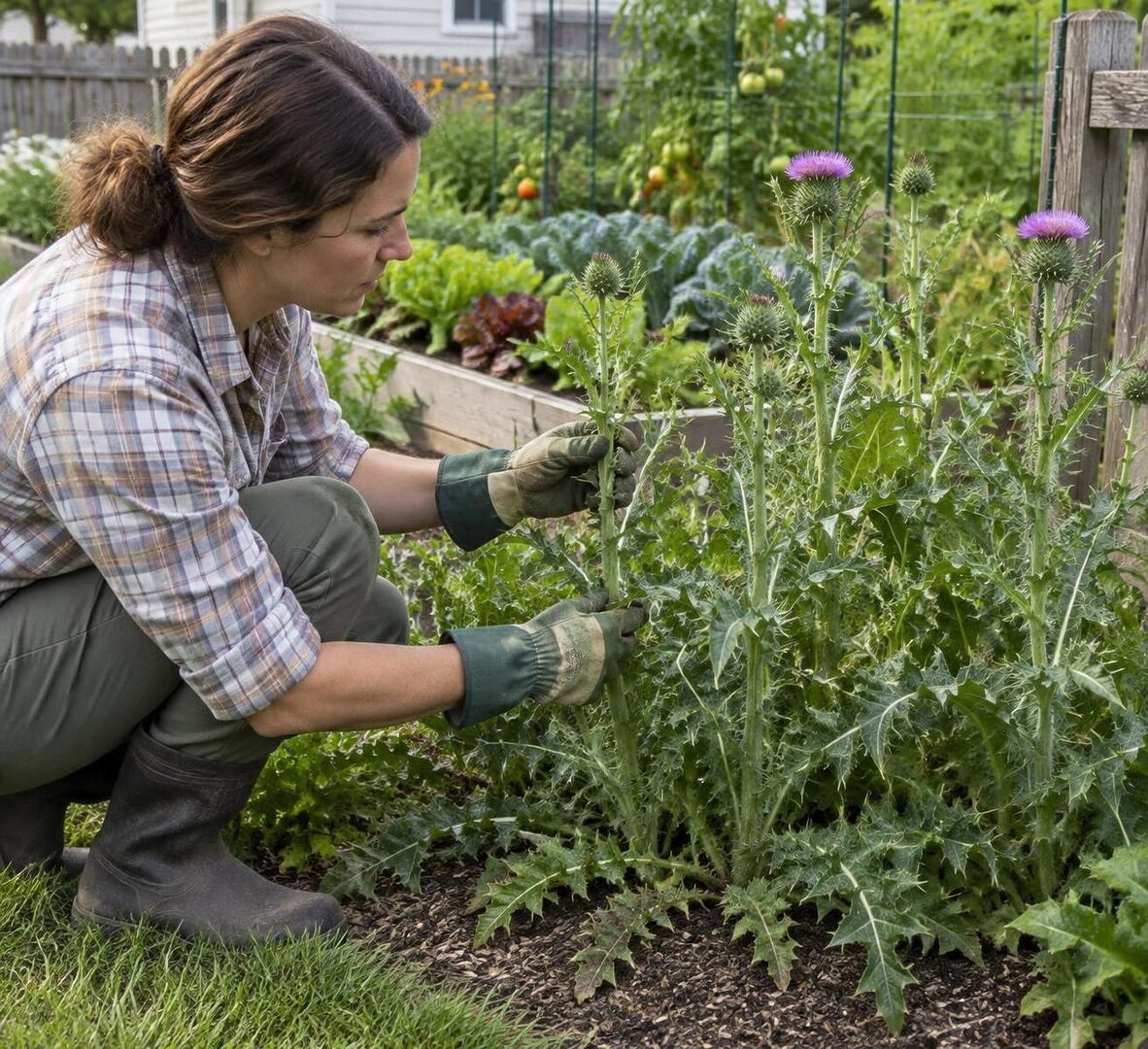
Garden Impact: Competition, Safety, and Property Appeal
Prickly weeds affect a garden in several connected ways. Like other unwanted plants, they can compete with flowers, vegetables, and young shrubs for water, nutrients, and light. This plant competition is most noticeable when weeds establish close to seedlings or in a crowded bed where resources are already limited. A vigorous weed can shade smaller plants, while a dense patch can make watering, harvesting, and routine maintenance more difficult.
The impact depends on the species, the size of the infestation, and the conditions in the garden. It is not accurate to assume that every prickly weed releases substances that harm neighboring plants or causes a predictable loss in vegetable yields. A more useful assessment is to look at what is happening on site: Are wanted plants being shaded? Is the weed spreading into pathways? Are seed heads forming? Those observations help determine whether immediate removal is needed or whether the issue can be managed gradually.
Access, injury, and curb appeal
Spines and stinging hairs create a practical safety concern. A plant beside a walkway, play area, or outdoor seating space is more likely to cause an unpleasant encounter than one in an unused corner. Burrs can cling to clothing and pet fur, while thorny stems may make ordinary gardening tasks harder. Protective gloves, long sleeves, and closed-toe shoes reduce exposure, but they do not replace careful handling or plant identification.
Garden condition can also influence how a property is experienced. A buyer walking toward a home may notice an overgrown border before seeing carefully maintained interior features. That does not mean a few weeds determine property value; rather, visible maintenance contributes to a visitor’s overall impression of upkeep. For homeowners preparing a property for sale, controlling weeds near entries, fences, and paths is a straightforward way to make outdoor areas feel more accessible and cared for.
For example, imagine a small spiny patch spreading along a side gate. It may not threaten the entire garden, but it can narrow the route for carrying tools or bins and make the gate unpleasant to use. Removing that patch and keeping the route clear addresses both the garden impact and daily usability without requiring a large-scale landscape renovation.
Why early attention usually takes less effort
Plants become harder to manage when they grow larger, develop extensive roots, or produce mature seed heads. Early inspection allows a gardener to remove isolated plants before they occupy more space. This is especially useful around new plantings, where young flowers and vegetables may not yet be strong enough to compete for light and water.
Early attention is not the same as indiscriminate removal. Some plants that appear wild may be intentionally cultivated or may have ecological value, so identification should come first. Once a plant is confirmed as unwanted, timely control helps preserve access, reduce competition, and keep the garden’s appearance consistent with the homeowner’s goals.
Safe Weed Removal: Hand-Pulling, Digging, and Disposal
For a small number of prickly weeds, manual weed removal is often the most direct option. It avoids applying a product near vegetables or ornamental plants, and it allows the gardener to remove individual plants selectively. The method works best when the soil is moist but not waterlogged, since damp earth is generally easier to work and may release roots more readily than hard, dry ground.
Before starting, put on sturdy protective gloves and clothing that covers exposed skin. Use a hand fork, narrow trowel, or other suitable tool to loosen the soil around the base. Pulling sharply on the stem can break it while leaving the root behind, so work around the plant and lift steadily. For a deep-rooted weed, removing as much of the root system as practical is more useful than repeatedly clipping the visible growth.
A careful removal routine
- Confirm the plant. Identify the weed and check whether it is flowering or carrying seeds.
- Prepare the area. Keep children and pets away while handling thorny or irritating plants, and gather tools before beginning.
- Loosen the soil. Dig around the plant rather than gripping spiny leaves or pulling from the top.
- Lift and inspect. Remove the plant carefully, checking whether substantial roots or fragments remain.
- Contain the waste. Follow local yard-waste guidance; do not place seeded weeds in a compost pile unless the composting process is suitable for destroying viable seeds.
- Recheck the spot. Look for regrowth over the following weeks and remove new shoots while they are small.
Disposal deserves attention because a removed weed can still spread seed if mature heads are handled carelessly. Bagging seed-bearing material is often a more cautious approach than leaving it on the soil surface. Local waste rules vary, so homeowners should check municipal guidance before placing invasive plants or noxious weeds in yard-waste bins.
When manual removal is not enough
Hand-pulling may become impractical across a large or established patch. Repeated cutting can reduce some plants’ ability to flower, but it may not eliminate a perennial root system. In those cases, combining repeated cutting or digging with a plan to cover bare ground can reduce the opportunity for new growth. If a plant is widespread or difficult to identify, a county extension office or local land-management resource can help clarify suitable options.
Herbicides are another possible tool, but they require careful, label-directed use. Products differ in which plants they affect, where they may be applied, and what precautions are required. A nonselective product can injure desirable flowers, vegetables, lawn grasses, or other vegetation it contacts. Avoid selecting a product based solely on a weed’s prickly appearance; confirm that the product is labeled for the target plant and location, and follow every instruction on the label.
Manual removal is most effective when it is patient and selective. The practical goal is not simply to clear the visible stems, but to prevent the plant from returning or setting seed.
Mulching and Natural Treatments: What Helps and What Can Backfire
Mulching can suppress many weeds by reducing the light that reaches the soil surface and making it harder for seeds to establish. Organic options include shredded leaves, wood chips, and straw where appropriate for the bed. As organic mulch breaks down, it contributes organic matter, although the amount and timing of that benefit depend on the material and local conditions. Landscape fabric and gravel can also serve as barriers, but they do not provide the same organic contribution to soil.
For a typical garden bed, apply mulch evenly after removing existing weeds and follow the depth guidance for the chosen material and plants. Avoid piling it against stems or trunks, where persistent moisture can create other problems. Mulch is not a guarantee that weeds will never appear: seeds can land on top, and persistent plants may grow through gaps or edges. A regular inspection routine keeps small breakthroughs manageable.
Choosing a mulch for the site
Wood chips may suit paths or established ornamental beds, while leaf mulch can be useful in places where a finer material is preferred. Straw is sometimes used around vegetables, but it should be clean and suitable for garden use. Inorganic barriers may be practical in specific areas, though they can complicate future planting or maintenance. The right choice depends on the garden’s use, drainage, plant types, and willingness to replenish the material.
Before laying a barrier, clear the area and remove weeds that are already growing. Covering established prickly plants without addressing them can leave roots alive beneath the material. Pay attention to edges, too: a well-covered bed can still be invaded from adjacent lawn, fence lines, or disturbed soil. Mulching works best as part of an integrated weed control plan rather than as a one-time fix.
Natural sprays are not automatically harmless
Vinegar-based sprays and boiling water are sometimes used for small weeds in cracks or other isolated areas. Their effects are generally concentrated on the plant tissue they contact; they do not reliably remove every deep root. Vinegar can damage nearby leaves, and stronger horticultural products may require additional precautions. Boiling water can injure wanted plants, roots, and anyone handling the kettle, so it is poorly suited to crowded beds.
Salt is particularly risky as a garden treatment because it can persist in soil and interfere with the growth of desirable plants. “Natural” describes the source or character of a material, not a guarantee of safety. A careful gardener considers where runoff may go, what plants are nearby, and whether a targeted hand-removal method is safer.
Use the least disruptive approach that can reasonably address the problem. In many gardens, clearing the weeds, applying a suitable mulch layer, and monitoring the bed provides more lasting control than repeated applications of homemade sprays.
Preventing Prickly Weeds: Soil Health and Ongoing Garden Care
Prevention begins with reducing the conditions that allow weeds to establish. Bare, disturbed soil offers an opening for seeds, while a well-planted bed can leave less room for unwanted growth. Healthy soil supports the plants a gardener intends to grow, but no soil amendment makes a garden weed-proof. The useful aim is to support desired plants while noticing new weeds early enough to remove them before they spread.
A soil test can help identify pH or nutrient conditions that may affect the plants in a particular bed. Testing is more reliable than adding fertilizer by guesswork, since excess nutrients do not necessarily help garden plants and may encourage unwanted growth in some settings. Follow recommendations from a reputable local soil-testing service or extension resource, then amend only as appropriate for the planned plants.
Build a routine that catches weeds early
A short weekly walk through the garden can prevent a small problem from becoming a large one. Check bed edges, fence lines, paths, and the spaces around newly planted flowers or vegetables. Remove isolated weeds while they are young, and pay particular attention to plants approaching flowering or seed production. Keeping tools clean after working in a patch can also help avoid moving seeds or plant fragments to another area.
- Keep soil covered: Use appropriate mulch or dense planting to limit exposed ground.
- Maintain bed edges: Barriers and clear borders can make creeping or windblown weeds easier to spot.
- Rotate crops where useful: Changing the location of annual crops can support soil management and interrupt some recurring weed patterns.
- Consider cover crops: Suitable cover crops can occupy open ground, though species should be selected for the climate and managed before they become unwanted themselves.
- Water thoughtfully: Directing water to garden plants rather than broadly wetting every open area can support targeted maintenance.
- Track recurring patches: Note where weeds return and whether they appear to spread from roots, seeds, or an adjacent area.
For example, a homeowner who repeatedly finds thistles along a sunny fence can record when they emerge and remove them before seed heads mature. Mulch or a suitable ground cover may then reduce exposed soil, while a clear edge makes future inspection easier. This combination does not promise a weed-free garden, but it turns an unpredictable chore into a manageable routine.
Some prickly plants may be intentionally retained as a barrier or habitat feature, depending on the species and location. That choice calls for thoughtful placement away from paths, play areas, and neighboring plantings, as well as confirmation that the plant is not invasive or restricted locally. The best prevention plan balances access, appearance, ecological considerations, and the garden’s intended use.
Long-term control comes from consistency: identify what is growing, remove it with care, cover exposed soil where practical, and revisit the area. These habits protect garden function and soil health while keeping maintenance proportionate to the size of the problem.
What are the most common prickly weeds in gardens?
Thistles, nettles, burr-producing weeds, and some spiny pigweeds are common examples. The species present vary by region, so identify the plant before choosing a control method.
When is the best time to remove prickly weeds?
Remove them when they are small and before they produce mature seeds. Moist soil can make digging easier, but avoid working in conditions that compact or damage the bed.
Can I compost prickly weeds?
Avoid composting plants with mature seeds unless the composting system reliably destroys viable seed. Check local yard-waste guidance, and contain seed-bearing material to reduce the chance of spreading it.
Does vinegar safely kill prickly weeds?
Vinegar can damage exposed plant tissue, but it may also injure nearby desirable plants and does not reliably eliminate deep roots. Use caution and consider selective removal or other site-appropriate methods.
How does mulch help control prickly weeds?
Mulch blocks some light at the soil surface and can reduce seed germination. Remove existing weeds first, apply material appropriately, and inspect for growth at gaps and edges.

At 33 years old, I specialize as a Licensed Residential Real Estate Advisor and Property Market Analyst. With a deep understanding of market trends and client needs, I provide strategic insights and personalized guidance to help clients make informed real estate decisions.