
In California workplaces, unexplained absences without any notification—commonly referred to as “no call no show” incidents—pose significant challenges for employers striving to maintain smooth operations and reliable employee attendance. These unexpected gaps in staffing disrupt workflow, shift coverage, and ultimately affect business productivity and morale. Understanding the intricacies of no call no show behavior within California’s legal and labor framework is essential for employers seeking to develop effective workplace policies and uphold employee accountability. With a growing emphasis on compliance with state labor laws, employers benefit from clear, consistent policies that articulate expectations, disciplinary measures, and legal considerations related to absenteeism.
Employee absenteeism in California is governed not only by general workplace conduct rules but also by specific HR regulations that ensure fair treatment while protecting operational integrity. Crafting workplace policies around no call no show events involves balancing strict enforcement with accommodations for legitimate emergencies or medical conditions. As such, a detailed comprehension of the intersection between attendance challenges and labor laws allows for well-rounded, legally compliant strategies that manage disciplinary steps without undermining employee rights.
From defining what constitutes a no call no show to outlining the permissible disciplinary actions and understanding the implications under California labor statutes, businesses are tasked with a nuanced approach. Implementing these policies strategically helps reduce absenteeism’s negative impacts and fosters a culture of reliability, fairness, and transparency across all levels of an organization.
Key Takeaways:
- No call no show refers to an employee missing a scheduled shift without notifying their employer within a reasonable timeframe.
- In California, such incidents are often treated as job abandonment, especially after multiple occurrences.
- Employers must apply these policies fairly, respecting legal protections against discrimination, retaliation, and recognizing medical or family leave requirements.
- A robust no call no show policy includes clear definitions, notification procedures, progressive discipline, and provisions for exceptions.
- Effective management involves clear communication, consistent enforcement, and the use of data and technology to reduce incidents.
No Call No Show Definition and Implications in California Workplaces
Within California’s diverse employment landscape, the term no call no show specifically denotes an employee’s failure to attend their scheduled shift without notifying their employer in advance or within a specified notification window. This absence without communication leaves workplaces scrambling to fill gaps, jeopardizes operational continuity, and can negatively impact team dynamics.
California employers often equate repeated no call no show incidents with job abandonment. For example, commonly accepted practice treats three consecutive no call no show days as a voluntary resignation, regardless of the formal resignation process being bypassed. This approach aims to protect employers from indefinite absenteeism but requires clear, consistent policies to avoid wrongful termination claims.
The critical elements that employers must define in their workplace policies include:
- Notification method: Whether employees should notify via phone call, email, or a dedicated attendance system matters for documentation and responsiveness.
- Notification time frame: Many organizations require an employee to contact their supervisor at least two hours before the shift start to report an anticipated absence.
- Consequences of failure to notify: Clear disciplinary actions must be laid out, ranging from warnings to termination.
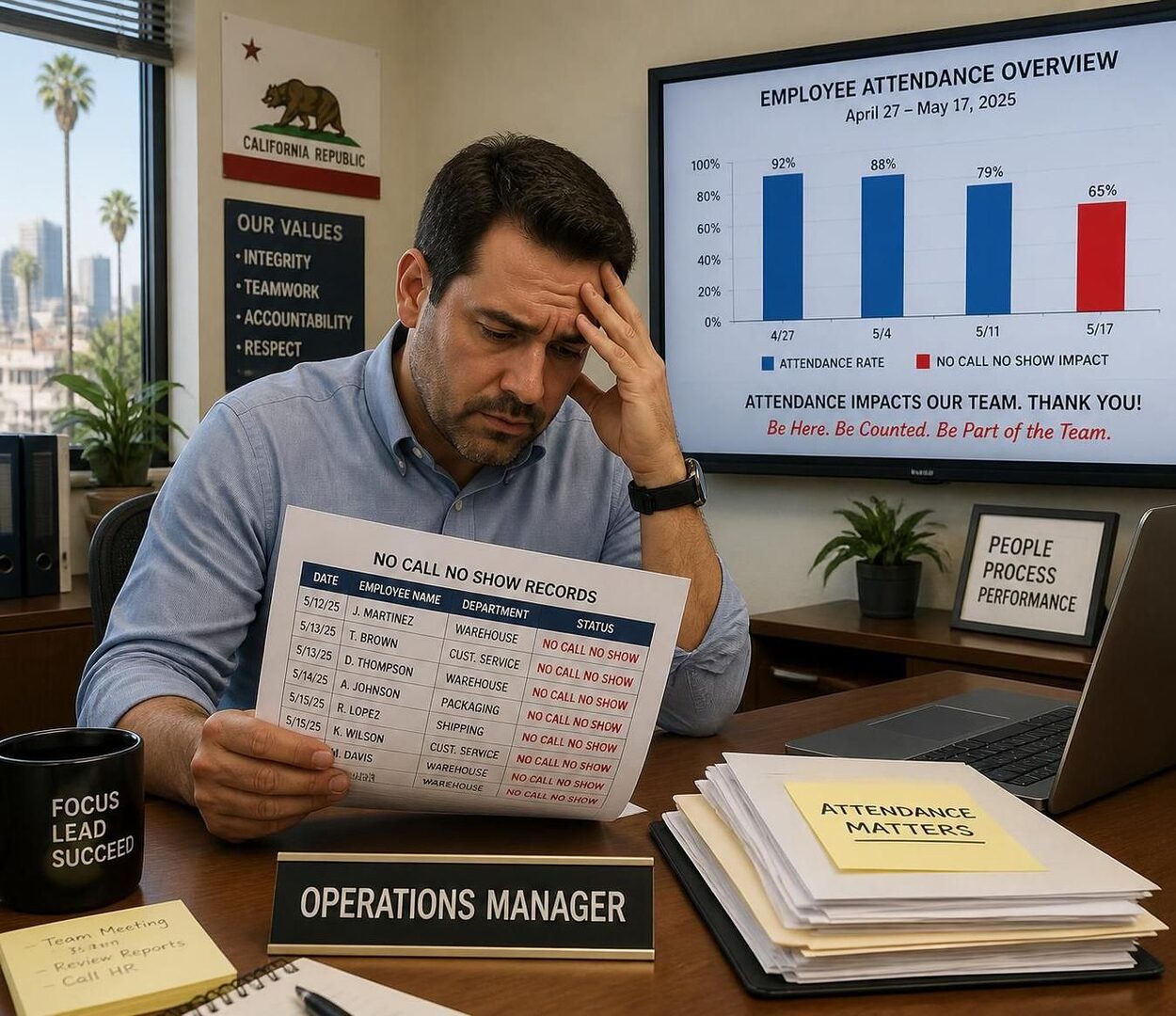
For instance, consider a manufacturing company in Los Angeles where an assembly line worker misses a morning shift without notice or communication. The sudden absence disrupts the entire production schedule, forcing overtime for co-workers and risking deadline delays. If the company’s policy stipulates a job abandonment threshold of three missed shifts without contact, this worker’s repeated no call no shows could lead to termination, supported by thorough documentation of these violations.
It’s essential that such policies align with California’s at-will employment doctrine, where employers can end employment for lawful reasons such as attendance issues, provided no discrimination or retaliation occurs.
Legal Frameworks Surrounding No Call No Show Incidents in California
Understanding the legal foundations that frame no call no show policies is crucial for employers to ensure compliance and mitigate risk. California’s labor laws intersect with federal protections, creating a complex environment where workplace attendance and employee discipline must be carefully managed.
First and foremost, California operates under at-will employment, allowing employers broad authority to terminate employment for reasons including absenteeism and no call no shows. However, this authority is tempered by critical legal protections:
- Anti-discrimination laws: Employers must ensure attendance policies and their enforcement do not target protected groups based on race, sex, age, disability, or other protected characteristics.
- Disability accommodations: Under the Americans with Disabilities Act (ADA) and California Fair Employment and Housing Act (FEHA), absent employees with medical conditions may require reasonable accommodations rather than immediate punitive actions.
- Leave protections: Employees taking approved medical or family leave, such as under the Family and Medical Leave Act (FMLA) or California’s Paid Sick Leave laws, cannot be disciplined for absences related to those protected leaves.
- Unemployment insurance impact: A no call no show considered as voluntary job abandonment can disqualify an employee from unemployment benefits unless there is a reasonable justification.
To apply these laws effectively, employers must document all attendance-related incidents rigorously. Inconsistent application or failure to consider legal protections exposes the company to discrimination claims or wrongful termination lawsuits. Managers and HR personnel must be trained to evaluate circumstances thoroughly, including extenuating situations and reasonable accommodations.
For instance, a retail employee with a chronic medical condition may occasionally miss shifts without prior notice during acute episodes. In such cases, the employer must engage in an interactive process to determine an accommodation rather than proceeding directly to termination. This approach aligns with both state and federal labor standards, helping to reduce legal risks and maintain ethical workplace practices.
Building Effective No Call No Show Workplace Attendance Policies
A successful no call no show policy is both clear and comprehensive, setting transparent expectations and procedures that guide employee behavior and managerial response. Key components typically include:
- Clear definitions: Specify what qualifies as no call no show, including acceptable communication methods and timeframe.
- Notification requirements: Outline the time window and how employees must report absences (phone, email, attendance platform).
- Documentation obligations: When applicable, require medical notes or other documentation for excuse verification, respecting privacy laws.
- Progressive discipline: Establish a graded system of consequences, typically escalating from warnings to suspension and termination.
- Job abandonment standards: Define the threshold for such classification, often after three or more consecutive no call no shows.
- Exemptions and appeals: Offer a process for employees to explain absences or contest disciplinary measures.
- Consistent enforcement: Stress uniform application across the workforce and thorough recordkeeping to support decisions.
An example ladder of progressive discipline could look like this:
| Occurrence | Action | Notes |
|---|---|---|
| 1st Incident | Verbal Warning | Documented coaching session to reinforce policy |
| 2nd Incident | Written Warning | Formal documentation added to employee file |
| 3rd Incident | Final Written Warning/Suspension | Clear notice of risk of termination for repeat behavior |
| 4th Incident | Termination | Enforced in accordance with policy and legal review |
Effective policies acknowledge legitimate reasons for absences such as emergencies and medical issues, differentiating them from avoidable no call no shows. Providing employees with accessible reporting options, such as phone calls, text messages, and emails, helps facilitate communication and reduce misunderstandings.
This approach emphasizes employee accountability without neglecting the human element of workplace attendance management.
Strategies For Employers to Address No Call No Show Absenteeism
Employers aiming to mitigate the disruptions caused by no call no shows should adopt proactive and comprehensive strategies. These include:
- Clear communication: Regularly review and disseminate no call no show policies, embedding them within employee handbooks and orientation sessions.
- Multiple reporting channels: Allow employees to report absences via phone, text, or email to supervisors or HR departments, ensuring accessibility.
- Reasonable grace periods: Acknowledge occasional unavoidable absences and differentiate them from chronic patterns.
- Attendance monitoring: Analyze attendance data to identify departments, shifts, or individuals prone to absenteeism trends for targeted interventions.
- Legal accommodation engagement: Collaborate with employees to provide reasonable adjustments for health-related attendance challenges.
- Routine documentation: Keep detailed records of all attendance events, disciplinary actions, and employee communications.
For instance, a healthcare facility might implement an internal attendance monitoring dashboard to track no call no show rates by shift, using this data to adjust staffing levels or offer support to employees facing challenges such as transportation barriers.
Linking no call no show policies with broader attendance frameworks—including paid time off, sick leave, and shift swap programs—also enhances effectiveness. Employees who have options to manage their schedules or request leave proactively may be less likely to resort to unreported absences.
What Employees Must Know About No Call No Show Policies
Clarifying expectations regarding workplace attendance and employee accountability is essential for reducing confusion and disciplinary conflict. Employees should understand that:
- They must notify their employer as soon as possible if they cannot attend work.
- Repeated no call no show incidents can lead to disciplinary actions including termination for job abandonment.
- Valid explanations such as medical emergencies or family crises require prompt communication but may not exempt them from certain documentation requirements.
- Their right to explain or appeal disciplinary decisions exists and should be exercised within company timelines.
- No call no show terminations may impact eligibility for unemployment benefits under state rules.
By promoting transparency and informing employees, organizations foster mutual respect and reduce attendance issues. These guidelines contribute to creating workplaces where employees feel supported yet responsible for their attendance.
What constitutes a no call no show incident in California?
A no call no show occurs when an employee misses a scheduled shift without notifying their employer within the time frame specified in the workplace policy, typically at least two hours before the shift begins.
Can an employee be terminated immediately after one no call no show?
While employers can take disciplinary action, many policies follow progressive discipline, starting with warnings before termination, unless the absence severely impacts operations or recurs.
How does California law affect no call no show terminations?
California employment law requires that terminations be free from discrimination or retaliation, and employees with protected leaves or disabilities must be accommodated rather than terminated outright for absences related to those conditions.
What should an employer do after a no call no show incident?
Employers should promptly attempt to contact the employee, document the incident, investigate any extenuating circumstances, and apply disciplinary measures consistent with their attendance policy.
How can employers prevent no call no show incidents?
Clear communication of policies, flexible scheduling options, multiple absence reporting channels, consistent enforcement, and employee support programs help reduce no call no shows.

At 33 years old, I specialize as a Licensed Residential Real Estate Advisor and Property Market Analyst. With a deep understanding of market trends and client needs, I provide strategic insights and personalized guidance to help clients make informed real estate decisions.