
A glass project can change how a home looks, feels, and performs, but the result depends on more than the glass itself. A poorly fitted window can admit drafts, a shower panel that is measured incorrectly can leak, and a replacement installed without attention to the surrounding frame may create problems that are expensive to correct. Choosing a qualified provider means assessing the company’s residential experience, materials, estimate, installation process, and written warranty—not simply comparing the bottom-line price.
For homeowners weighing glass repair against replacement, or planning new windows, doors, mirrors, or a custom shower enclosure, a careful selection process helps protect both the property and the budget. The guidance below explains what to ask, how to compare proposals, and which details reveal whether a provider is equipped to deliver durable work. The same scrutiny is useful whether the project is a single damaged pane or a larger renovation intended to improve comfort and resale appeal.
In Brief: Choosing Home Glass Services
- Confirm residential experience with the specific project type, such as window replacement, shower enclosures, or custom mirrors.
- Ask for proof of applicable licensing and insurance, and check recent service reviews for patterns in communication and workmanship.
- Compare written estimates that spell out glass specifications, labor, preparation, cleanup, schedule, and possible additional charges.
- Choose materials for their use and location; safety glass and energy-efficient windows serve different performance needs.
- Review the product coverage and installation warranty separately, including exclusions and the process for reporting a problem.
Start with the Right Glass Installer for Your Project
Glass companies do not all handle the same work. Some focus on residential windows and patio doors, while others specialize in commercial storefronts, vehicle glass, or small repairs. Before comparing prices, describe the project clearly and confirm that the provider regularly completes similar jobs in homes. A contractor experienced with window replacement may not have the same expertise in a frameless shower enclosure, where precise measurements, hardware placement, and water management matter.
Ask how the company handles the full project, from measurement and material ordering to removal, installation, and cleanup. If custom fabrication is involved, find out whether it is completed in-house or through another supplier, and who is responsible if a panel arrives with incorrect dimensions. Professional glaziers should be able to explain the sequence in plain language and identify what they need to inspect before giving a firm proposal.
Residential specialization is especially useful when the project affects existing trim, siding, tile, or interior finishes. For example, replacing a fogged insulated window unit may be a different scope from replacing the entire window frame. A reliable provider explains the distinction, checks the condition of the surrounding assembly, and avoids promising that a glass-only repair will solve a problem caused by damaged framing.
Verify credentials, insurance, and relevant experience
Ask whether the company holds any license required for the work in your state or locality. Requirements differ across jurisdictions and project types, so homeowners should verify details with the relevant local or state authority rather than assume one credential applies everywhere. Request current proof of general liability insurance and workers’ compensation coverage where applicable. These checks help clarify who is responsible if property damage or a jobsite injury occurs.
Experience should be specific, not just a number of years in business. Ask for examples of recent projects similar in size and complexity, and whether the installers have training for specialized tasks such as custom fabrication or fitting large glass panels. A company may have a long history but still subcontract an unfamiliar service; that is not automatically a problem, but the arrangement and accountability should be transparent.
Review service reviews across more than one source when possible. Give greater weight to recurring comments about punctuality, communication, careful protection of floors and furnishings, and how the company responds when a job needs adjustment. A single glowing testimonial tells less than a consistent pattern of detailed feedback. For a renovation involving glass as part of a broader home design, the ideas in these modern home layout ideas can also help clarify how light, privacy, and room use affect the project brief.
A written scope, relevant experience, and verifiable credentials provide a more dependable starting point than a polished sales pitch.
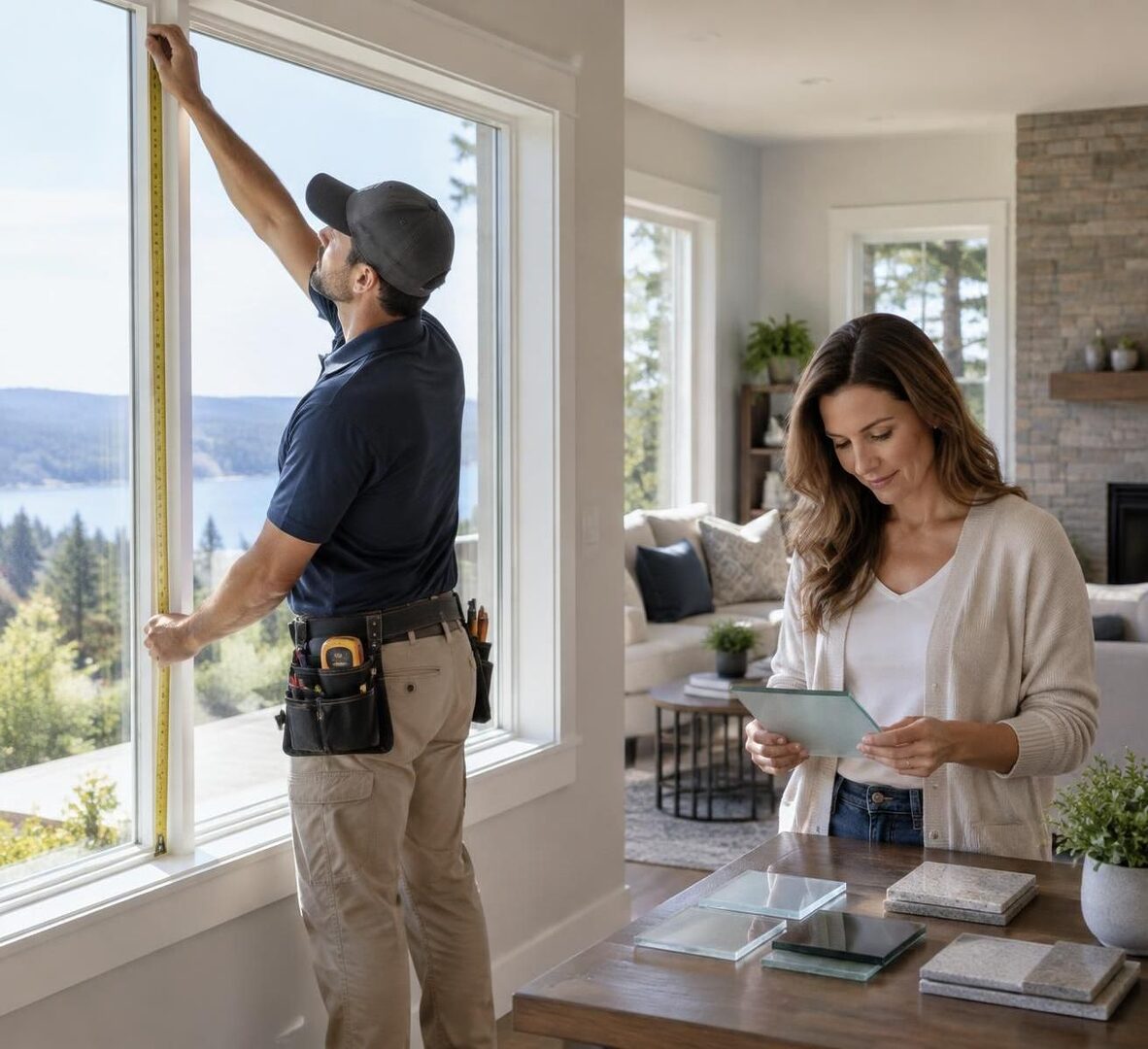
Compare Glass Types, Safety Features, and Energy Performance
The right glass depends on where it will be installed and what the homeowner needs it to do. A bathroom enclosure, exterior window, interior partition, and decorative mirror face different demands. Ask the provider to identify the proposed glass type, thickness where relevant, coatings, framing, and hardware in writing. A knowledgeable installer should explain the trade-offs instead of treating every upgrade as necessary.
Safety glass is designed for specific applications where impact risk is a consideration. Tempered glass is processed to increase strength compared with ordinary annealed glass and, if it breaks, generally fragments into smaller pieces. Laminated glass uses layers bonded together so that the broken material tends to remain held in place. Which product is suitable depends on the location, design, applicable building requirements, and manufacturer specifications; confirm the proper choice with the contractor and local authorities when needed.
For exterior glazing, ask whether an insulated glass unit is appropriate. These units use two or more panes separated by a sealed space, and some include low-emissivity coatings or gas fills intended to affect heat transfer. The performance of a window also depends on its frame, seals, installation, orientation, and local climate. A low-E label alone does not establish that a particular window is the right option for every house.
Match performance claims to the home
Energy-efficient windows may help reduce unwanted heat transfer, but the actual result depends on the product and the quality of the installation. Ask for manufacturer documentation and ratings relevant to the window being proposed. The National Fenestration Rating Council (NFRC) provides standardized product ratings, which can help homeowners compare listed performance characteristics. A contractor should not promise a specific reduction in utility bills without evidence tied to the home, climate, existing windows, and energy use.
Consider a homeowner replacing a drafty patio door in a sunny room. A proposal that identifies the glass package, frame material, weatherstripping, and installation method gives a clearer basis for comparison than one that simply says “energy-efficient door.” If the issue is condensation between panes, ask whether the failed insulated unit can be replaced independently or whether the full frame is compromised. The appropriate scope can affect both cost and disruption.
For custom work, appearance and maintenance also belong in the discussion. Clear, patterned, tinted, or privacy glass can change daylight and sightlines. A provider should explain how a finish may affect cleaning, privacy, and the room’s appearance at different times of day. Homeowners planning glass features alongside other design changes can use practical ideas for modern residential spaces to think through circulation and natural light before final measurements.
Material selection is strongest when it connects a documented product specification to the room’s real conditions, rather than relying on a broad performance claim.
Evaluate Estimates, Timelines, and Project Communication
A free estimate can be helpful, but “free” does not mean the proposal is complete or directly comparable with another company’s bid. Ask whether the price is based on an on-site measurement or an initial estimate from photographs. For custom glass or a replacement that depends on the condition of the frame, an in-person assessment may be needed before the company can confirm dimensions and scope.
A useful written estimate identifies the glass and hardware, quantity, labor, removal and disposal, surface preparation, and expected schedule. It should also state whether permits or other project-specific requirements are included or excluded, if relevant. Ask how the company handles concealed damage, such as rot discovered after an old window is removed. A clear process for documenting and pricing unforeseen work is more reassuring than a vague promise that “everything is included.”
| Estimate detail | What to check | Why it matters |
|---|---|---|
| Materials | Glass type, configuration, coatings, frame, and hardware | Establishes what product is actually being supplied |
| Labor and preparation | Removal, installation, sealing, protection, and disposal | Shows whether essential parts of the work are accounted for |
| Schedule | Measurement, ordering, installation date, and estimated duration | Helps coordinate access and household routines |
| Extra work | How concealed damage or scope changes are approved and priced | Reduces surprises if site conditions differ from expectations |
| Warranty | Separate product and workmanship terms, exclusions, and claim steps | Clarifies which party handles a future problem |
Compare at least two detailed proposals when the project is substantial, but do not treat the lowest figure as the automatic winner. One estimate may exclude disposal, use different glass, or leave out finish work. Ask each company to explain major price differences. If a bid is unusually low and the provider cannot account for the gap, the savings may reflect a narrower scope rather than better value.
Communication is part of the service. Ask who will be the main point of contact, how schedule changes are shared, and how the crew protects the home during removal. Glass work can involve sharp edges, heavy panels, dust, and temporary openings, so homeowners should know what access and preparation are expected. Emergency service and same-day availability vary by location and workload; get a realistic response time rather than relying on a general advertising claim.
A complete estimate turns a verbal promise into a scope the homeowner can compare, question, and use to manage expectations.
Assess Installation Quality and Protect the Home During Work
Even high-quality glass can underperform if it is measured, supported, or sealed incorrectly. Before approving the work, ask how final measurements are confirmed and how the installer checks the opening for alignment and condition. For a window, proper fitting and sealing affect operation and resistance to air and water intrusion; for a shower enclosure, accurate panel placement and compatible hardware help control movement and leakage. The appropriate method depends on the product and manufacturer’s instructions.
Ask what will happen to the surrounding surfaces during installation. A careful crew explains how it will protect floors, counters, tile, and furnishings, and whether existing trim or sealant must be removed. For a replacement window, the condition of the frame and the connection between the window and the wall can influence the scope. If the installer discovers damage, request photographs and a written explanation before authorizing additional work.
Look for clear checks at completion
At the end of the job, a walk-through gives the homeowner and installer a chance to confirm that the work matches the agreed scope. The installer should demonstrate that windows or doors operate correctly, inspect visible seals and hardware, and explain any care instructions. For a shower panel or custom mirror, check the finished edges, alignment, mounting, and surrounding surfaces. Small adjustments are easier to address while the crew is still on site.
Glass repair may be suitable when damage is limited and the surrounding assembly remains sound. Replacement may be the better option when a unit has failed seals, persistent moisture between panes, extensive damage, or a frame that cannot support a reliable repair. The provider should explain why it recommends one path and what limitations remain. For example, replacing only a sealed glass unit may restore clarity while leaving an older frame in place; replacing the complete window involves a broader scope and different cost.
- Confirm the installed product matches the proposal and labels or documentation.
- Check movement, latches, handles, and visible alignment where applicable.
- Ask how and when sealants or other materials should be cleaned or left to cure.
- Record any incomplete items and agree on a correction schedule in writing.
- Keep the final invoice, product information, care instructions, and warranty documents together.
Installation quality is not always visible in a photograph. Clear workmanship checks and written records help homeowners judge whether the completed project performs as intended and make follow-up easier if an issue appears.
A professional handoff should leave the owner knowing what was installed, how to care for it, and whom to contact about a concern.
Review Warranties, References, and Long-Term Value
Before hiring, ask for the warranty terms in writing and distinguish the product warranty from the workmanship coverage. The manufacturer may cover certain product defects, while the installer’s warranty may address problems related to the installation. Coverage, duration, exclusions, and claim procedures vary by company and product, so avoid relying on a broad verbal assurance. Ask whether the warranty applies to the specific glass, frame, seals, hardware, and labor included in the proposal.
Clarify what happens if a sealed unit develops a problem, a door needs adjustment, or water appears around an enclosure. A useful warranty explains how to report a concern, what documentation is needed, and whether inspection or service fees may apply. It is also worth asking whether registration is required and who submits it. A written installation warranty is valuable only when its scope and process are understandable.
References and project photos offer another way to assess fit. Ask for examples that resemble the planned work, not just a gallery of a company’s most visually striking projects. If a provider shares references, ask previous customers whether the crew arrived as scheduled, kept the site orderly, communicated changes, and resolved any post-installation issues. Online service reviews can add context, but look for recurring specifics rather than treating star ratings as a complete assessment.
Value is broader than the initial invoice. A custom shower enclosure may cost more than a standard framed model but suit an unusual opening better; a glass repair can be less expensive than replacing an entire window when the frame is sound. Conversely, a low-cost patch may not address recurring moisture or failed seals. The right comparison weighs expected service life, performance, appearance, maintenance, and the consequences of choosing a narrower scope.
Ask the company what makes its approach different, then look for evidence in its estimate, references, and process. Meaningful answers may include a clear measurement procedure, trained installers, documented material options, or a practical plan for correcting issues. Claims about superior service matter less than details a homeowner can verify.
For a homeowner preparing to sell, clean, functional glass can support a property’s overall presentation, but a glass upgrade should be chosen for the home’s needs rather than assumed to deliver a particular resale return. Keep receipts and product records with other improvement documents. A provider’s willingness to explain care and future service is a useful sign that the relationship does not end the moment installation is complete.
The strongest choice is the company that makes the scope, materials, workmanship, and aftercare clear enough for the homeowner to make an informed comparison.
How many glass installation estimates should a homeowner compare?
For a substantial project, comparing two or more detailed written estimates can reveal differences in products, scope, and schedule. Make sure each bid covers comparable materials and work rather than judging by price alone.
Should a damaged window be repaired or replaced?
The right option depends on the type and extent of damage, the condition of the frame, and whether the insulated unit has failed. Ask the provider to explain the limits and expected result of each option.
What should a glass installation warranty cover?
Review product coverage and workmanship coverage separately. Check the covered components, exclusions, claim process, and whether registration or specific maintenance is required. Terms vary by provider and product.
How can homeowners check a glass company’s reputation?
Read recent service reviews across multiple sources, look for consistent details about communication and workmanship, and ask for relevant project examples or references when available.

At 33 years old, I specialize as a Licensed Residential Real Estate Advisor and Property Market Analyst. With a deep understanding of market trends and client needs, I provide strategic insights and personalized guidance to help clients make informed real estate decisions.