The architectural landscape of Mexico in recent years has experienced a significant transformation marked by the rise of modern houses with unique architectural styles that blend tradition and innovation. This evolution reflects the country’s dynamic cultural heritage, climatic considerations, and growing urban development. Contemporary design in Mexican residential architecture embraces sustainable architecture principles while embodying distinctive features sourced from indigenous influences, colonial history, and modernist movements. The increasing popularity of modern houses in Mexico among both local homeowners and foreign buyers highlights a broader shift toward innovative design that prioritizes aesthetics, functionality, and environmental responsiveness.
This growing trend is not only altering the physical skyline but also redefining housing trends, creating a fusion of styles that showcase Mexico’s rich architectural legacy intertwined with global influences. Architects and developers are increasingly leveraging local materials and cultural motifs to create homes that resonate deeply with Mexico’s identity while pushing the envelope on urban development strategies. In doing so, Mexican architecture is becoming a reference point for blending heritage and modernity in residential settings, attracting international attention for its distinctiveness and sustainability efforts.
Modern Houses in Mexico: A Synthesis of History and Contemporary Design
The architectural evolution leading to modern houses in Mexico is deeply rooted in the country’s diverse historical influences, ranging from pre-Columbian civilizations to colonial and post-Revolutionary transformations. This synthesis is visible in contemporary homes that skillfully incorporate elements from native Mesoamerican designs, Spanish Baroque colonial architecture, and 20th-century modernist movements.
For example, many modern houses now reflect the spatial arrangements and courtyard concepts found in pre-Columbian urban centers such as Monte Albán and Teotihuacan, integrating indoor-outdoor living areas that suit Mexico’s climate. This approach invigorates the homes with natural ventilation and sunlight, reducing energy consumption and enhancing comfort. The blend of traditional architectural concepts with contemporary materials like concrete, glass, and steel, as well as new construction technologies, defines much of the innovative design in residential architecture today.
Moreover, mid-century modernists like Luis Barragán have left an indelible mark on Mexico’s architectural identity, inspiring modern designs that respect regionalism while embracing functionalism. Barragán’s use of natural light, vibrant colors, and minimalist yet warm aesthetics resonates in new developments where designers strive to create tranquil, stylish, and socially connected living spaces. Contemporary Mexican architects are adept at balancing cultural legacy and modern demands, creating homes that serve not only as living quarters but also as works of art embedded within their natural and urban settings.
This fusion of styles is not uniform; it varies significantly depending on the region, local culture, and available materials. Coastal areas emphasize open-plan layouts to maximize ocean views and breezes, while desert regions integrate passive cooling and shading techniques inspired by indigenous architecture. Cities like Mexico City and Guadalajara focus on vertical and infill development, combining modern high-rises with residential neighborhoods that incorporate green roofs and communal spaces, reflecting new urban development trends.
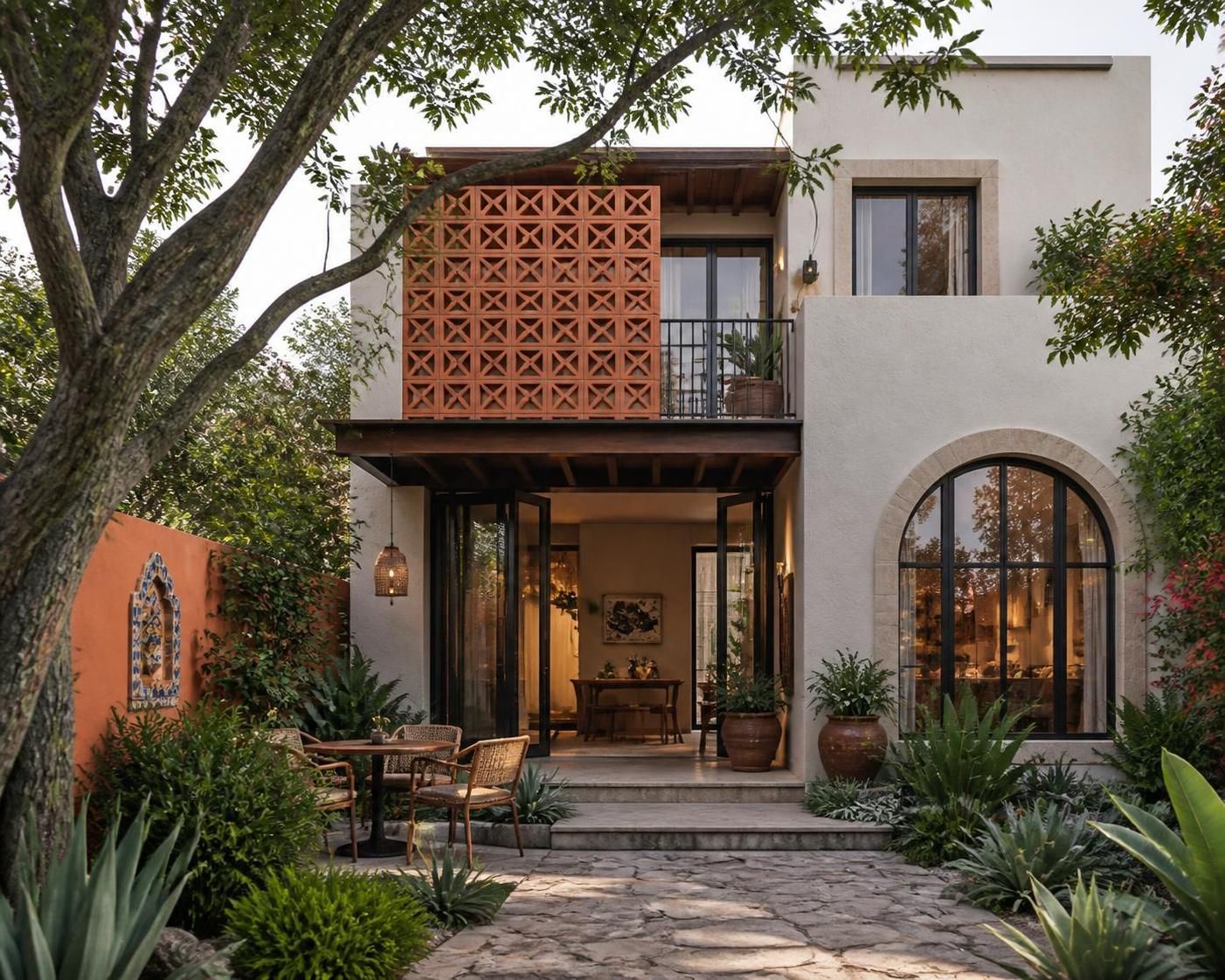
Incorporation of Sustainable Architecture in Mexican Residential Design
One of the defining features of modern houses in Mexico is their commitment to sustainable architecture. As environmental concerns grow globally, Mexico’s residential projects increasingly prioritize energy efficiency, use of local and natural materials, water conservation, and climate-responsive designs.
For instance, the use of thermal mass techniques, a traditional approach revived with modern materials, helps regulate indoor temperatures by absorbing heat during the day and releasing it at night. Concrete block houses, modeled after adobe construction, sustain cooler interiors in hot climates, reducing the need for artificial cooling systems. Additionally, many contemporary homes incorporate expansive windows positioned to optimize natural ventilation while mitigating solar heat gain through shading devices, advanced glazing, or pergolas.
Architects also incorporate rainwater harvesting systems and greywater recycling, especially in regions facing water scarcity. Green roofs and walls have become more prevalent, improving insulation, reducing runoff, and supporting biodiversity within urban settings. The increasing availability of solar panels and energy-efficient appliances further supports Mexico’s trajectory toward sustainable homes.
These sustainable practices are complemented by the use of native building materials such as volcanic stone (cantera), clay tiles, and reclaimed wood, which not only reduce environmental impact but also reinforce cultural identity within new building projects. By blending innovative technologies with vernacular wisdom, modern Mexican houses achieve a balance between ecological responsibility and cultural relevance.
Such efforts align with broader urban development policies aimed at promoting affordable, environmentally friendly housing. Federal and local governments support initiatives that integrate sustainable design principles in residential construction, reflecting a national commitment to improving life quality while preserving natural resources. As a result, sustainable architecture is becoming a normative rather than optional aspect of modern Mexican housing.
Key Sustainable Features in Mexican Modern Housing
- Adaptation of thermal mass for natural temperature regulation
- Strategic placement of openings for cross-ventilation
- Utilization of local, low-impact building materials such as cantera and adobe
- Inclusion of rainwater harvesting and greywater reuse systems
- Incorporation of green roofs and vertical gardens
- Adoption of solar energy solutions and energy-efficient appliances
Contemporary Mexican Architectural Styles: Regional Variations and Influences
Mexico’s architectural diversity is reflected strikingly in its modern houses, where regional climates, cultural influences, and historical precedents shape design choices. The rise of modern houses across the country is characterized by the convergence of traditional styles with contemporary architectural trends tailored to local contexts.
In the Yucatán Peninsula, for example, modern houses often build upon the traditional xa’anil naj style—oval-shaped homes with rounded structures designed to withstand hurricanes—infused with modern materials and open concept living. These residences emphasize durability and resilience while offering spacious, light-filled interiors that suit tropical living.
In the northern states like Sonora and Chihuahua, where the climate is arid, architectural styles draw from Oasisamerican adobe traditions and Mexican Brutalism to create functional yet visually striking homes. The exposed concrete and minimalist lines merge with wide window openings and patios, facilitating both aesthetic appeal and environmental adaptability.
Urban centers such as Mexico City and Guadalajara underscore the integration of cutting-edge international movements like Postmodernism and Neomodernism, often housing developments that feature smart home technologies, communal social spaces, and mixed-use plans. Architects in these regions champion designs that accommodate increasing urban density while preserving cultural elements, resulting in neighborhoods that blend old colonial textures with futuristic aesthetics.
Hacienda-style influences also persist in modern reinterpretations, particularly in rural and semi-urban areas where large courtyards, arcades, and terracotta tiles coexist with refined, minimalist interiors. This juxtaposition honors Mexico’s historical roots while delivering functionality aligned with contemporary lifestyles.
| Region | Characteristic Architectural Style | Distinctive Features | Material Preferences |
|---|---|---|---|
| Yucatán Peninsula | Modern Xa’anil Naj Adaptations | Rounded walls, hurricane-resistant, open plan | Concrete, local stone, clay tiles |
| Northern States (Sonora, Chihuahua) | Oasisamerican Adobe & Brutalist Fusion | Exposed concrete, minimalism, patios | Adobe, concrete, metal roofing |
| Central Urban Areas (Mexico City, Guadalajara) | Postmodern & Neomodern Integration | Smart technology, mixed-use, cultural blends | Glass, steel, sustainable composites |
| Rural & Semi-urban | Hacienda Revival in Modern Form | Large courtyards, arcades, warm interiors | Terracotta tiles, cantera, wood |
The Impact of Urban Development on Modern Housing Trends in Mexico
Rapid urban development and demographic changes are primary drivers behind the surge in modern houses in Mexico. Urban sprawl, population growth, and evolving lifestyle demands are reshaping how residential neighborhoods are planned and built. The trend toward multifamily housing, mixed-use developments, and gated communities reflects both economic dynamics and evolving social preferences.
Unlike the historical focus on expansive haciendas and low-density estates, modern urban development prioritizes efficient use of space and sustainable living environments. Many metropolitan areas have embraced vertical growth strategies, with innovative high-rise developments designed to enhance green space accessibility, facilitate public transportation options, and reduce commuting time. These approaches address the challenges of urban congestion and environmental footprint.
Government policies and real estate market incentives also influence housing trends. Programs that encourage affordable housing construction, combined with rising foreign investment and demand from expatriates, fuel the construction of upscale modern houses that showcase Mexican architectural elements with global sensibilities.
In suburban and peri-urban zones, there is an increased emphasis on creating self-sustaining communities that integrate residential, commercial, and recreational spaces. This trend supports community building and improves quality of life while highlighting the value of regional design principles that respect environmental and cultural contexts.
The real estate market data from 2025 highlights a 15% year-over-year increase in new modern housing developments, particularly in Mexico City and coastal resort areas such as Playa del Carmen. This growth factor underscores Mexico’s expanding reputation as a destination for both residential investment and cutting-edge architectural experimentation.
Factors Shaping Modern Housing Urban Development in Mexico
- Population growth and urban migration trends
- Emergence of mixed-use and multifunctional spaces
- Government incentives promoting affordable and sustainable housing
- Rising foreign investment and international buyer interest
- Growing integration of smart home and green technologies
- Strategic inclusion of communal areas promoting social interaction
Innovative Design Trends in Mexican Modern Houses for 2026 and Beyond
Looking forward, the architectural styles defining modern houses in Mexico continue to evolve rapidly, influenced by global trends and local innovation. Emphasis on digital fabrication, modular construction, and adaptive reuse of materials is becoming increasingly prevalent. The rise of architectural firms like TEN Arquitectos and architects such as Tatiana Bilbao reflects Mexico’s leadership in sustainable and socially conscious design.
Contemporary houses emphasize seamless indoor-outdoor integration through expansive sliding glass walls, rooftop gardens, and courtyards. These elements improve light flow, ventilation, and connectivity to nature. Innovations also focus on minimizing construction waste and reducing carbon footprints.
There’s a growing interest in New Classical and Neo-Mexican architecture, where traditional motifs and artisanal craftsmanship intersect with modern building techniques. This approach creates homes with a timeless aesthetic while incorporating contemporary comfort and technology.
Smart home systems are being integrated more than ever, with automation controlling lighting, climate, and security, reflecting Mexico’s growing digital infrastructure. These technological integrations complement sustainable features such as solar panels, energy storage, and water-efficient landscaping to create resilient living environments.
As Mexican modern houses push toward a future proof design philosophy, they maintain a strong dialogue with the country’s cultural roots, producing residential architecture that is both innovative and profoundly Mexican. This fusion promises to influence global housing trends by demonstrating how local identity and global modernity can harmoniously coexist in residential design.
- Use of modular and prefabricated construction methods
- Increased prominence of biophilic and nature-centric design
- Expansion of artisanal details blending tradition with modernity
- Integration of cutting-edge home automation technologies
- Focus on adaptive reuse and circular economy principles
- Continued emphasis on sustainability and resilience
What defines a modern house in Mexico?
Modern houses in Mexico blend traditional cultural elements with contemporary design, incorporating sustainable materials, climate-responsive features, and innovative construction techniques to create functional and aesthetically compelling residential spaces.
Which architectural styles influence modern Mexican houses?
Modern Mexican houses are influenced by pre-Columbian indigenous styles, Spanish colonial architecture, Mexican modernism exemplified by architects like Luis Barragán, and global movements such as Postmodernism and Neomodernism, adapted regionally.
How does sustainable architecture manifest in Mexico’s modern houses?
Sustainable architecture in Mexican homes utilizes thermal mass, natural ventilation, local materials like cantera and adobe, solar energy, rainwater harvesting, and green roofs to improve energy efficiency and environmental harmony.
What role does urban development play in the rise of modern Mexican houses?
Urban development shapes housing trends by encouraging vertical growth, mixed-use communities, and integration of green and smart technologies, addressing the demands of population growth and quality of life improvement.
What are emerging design trends in Mexican modern houses for the future?
Emerging trends include modular construction, biophilic design, artisanal craftsmanship fusion, smart home integration, and adaptive reuse, aligning with sustainable and culturally rooted living environments.

At 33 years old, I specialize as a Licensed Residential Real Estate Advisor and Property Market Analyst. With a deep understanding of market trends and client needs, I provide strategic insights and personalized guidance to help clients make informed real estate decisions.