A mansion’s front view does more than announce its size. It reveals how the home meets the street, balances privacy with openness, and translates its owners’ priorities into architectural form. In contemporary residential architecture, the most memorable facades often combine familiar elements—stone, timber, glass, and carefully framed entrances—with simpler lines and a stronger connection to the landscape.
That balance matters to buyers as well as designers. A striking exterior can strengthen curb appeal, but its long-term value depends on more than a dramatic photograph: proportion, materials, maintenance, site conditions, and the relationship between the entrance and the rest of the property all play a part. Looking closely at a modern mansion front view offers a practical way to understand how design choices shape both first impressions and everyday use.
In brief
- Composition matters: A clear visual hierarchy helps a large home feel intentional rather than imposing.
- Materials shape character: Stone, wood, metal, and glass each affect appearance, upkeep, and performance.
- The entrance sets expectations: A well-scaled grand entrance can welcome visitors without overwhelming the facade.
- Site and climate influence design: Orientation, drainage, privacy, and local weather should inform exterior decisions.
- Photographs are only a starting point: Buyers should consider maintenance, construction quality, and the surrounding property.
What Makes a Modern Mansion Front View Feel Balanced?
A successful front elevation—the architectural drawing or visible face of a building as seen from the front—organizes many large elements into a readable whole. In a mansion, those elements may include several stories, broad windows, a garage, balconies, and a prominent entrance. Without a clear hierarchy, the facade can feel crowded. Strong designs give the eye a natural path: perhaps from a central doorway to a sheltered upper balcony, then across the roofline and landscaping.
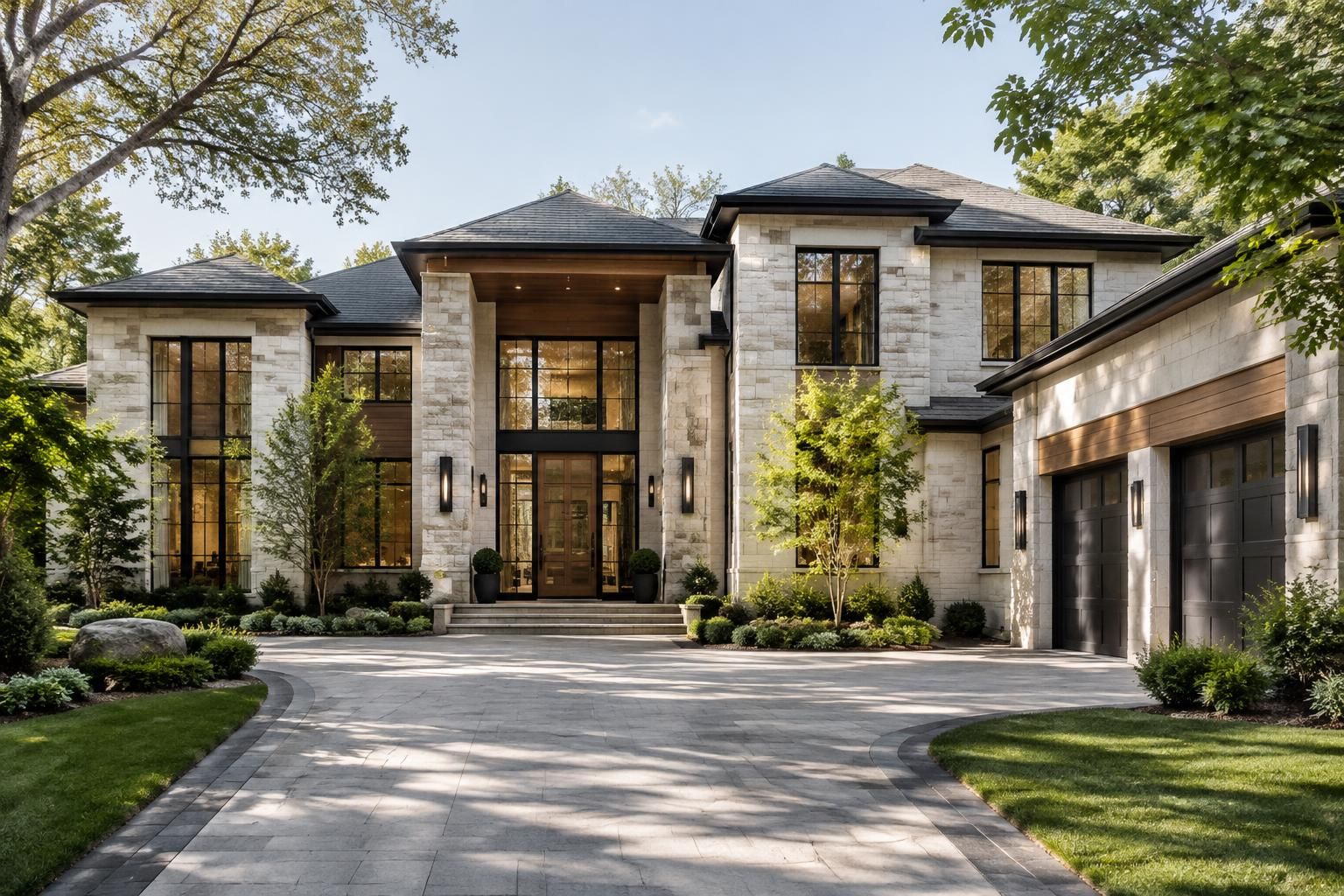
Balance does not require perfect symmetry. A contemporary home may place a tall glass window on one side and a lower stone-clad wing on the other. The composition can still feel stable if the shapes, colors, and visual weight are thoughtfully coordinated. Designers often use a limited palette to connect varied forms. For example, dark metal window frames may repeat in a gate and exterior lighting, while warm wood appears on the entry soffit and a privacy screen.
Scale is equally important. A broad mansion with a narrow door can make the entrance seem incidental, while an oversized portico may dominate the entire front. A practical design review considers how the facade looks from the sidewalk, the driveway, and the main approach. A feature that reads well in a close-up photograph may feel out of proportion when viewed from the street.
Consider a hypothetical buyer evaluating two homes with similar square footage. One has a complicated roofline, several competing finishes, and a large entrance canopy; the other uses a simpler massing, repeated window proportions, and a clearly defined doorway. The second may appear more composed even without more expensive materials. Good architectural design is often less about adding features than about making each feature belong.
Symmetry, asymmetry, and visual hierarchy
Traditional estates often rely on symmetry: a central door, matching windows, and balanced wings. Modern architecture can retain that sense of order while adjusting individual components. A house might have an off-center entrance but use a repeated rhythm of windows and a consistent roof edge to create unity. The result feels contemporary without appearing arbitrary.
When assessing a front view, notice which element attracts attention first. If the garage doors overpower the entrance, the design may not communicate the intended welcome. Landscaping, a change in material, or a sheltered walkway can help redirect focus. The most effective facade makes the arrival sequence legible, so visitors can identify the entry without searching for it.
Choosing Facade Materials for a Luxury Home
Materials give a facade its texture and visual temperature. Glass can make a home look light and open; stone adds weight and permanence; timber introduces warmth; and metal details can sharpen the lines. These impressions are useful, but a material should also be evaluated for its suitability to the site. Sun exposure, rainfall, freeze-thaw cycles, salt air, and maintenance access can all affect how an exterior performs over time.
Stone is often used at a base, chimney, or entry wall to visually anchor a large structure. It can pair well with smooth stucco or fiber-cement siding, but the overall effect depends on scale and detailing. A small area of carefully chosen stone may provide more character than covering every surface. Buyers should ask what material is present, how it is installed, and what maintenance the manufacturer or builder recommends; appearance alone does not identify the underlying assembly.
Wood accents can soften a minimalist exterior, particularly beneath a roof overhang or around a recessed entrance. Their placement matters because exposed surfaces may need periodic care, depending on the species, finish, and local conditions. Metal cladding and trim can create a crisp contrast, though finishes, seams, and drainage details deserve attention during an inspection. Glass expands views and brings daylight indoors, yet it can also affect privacy, glare, and heat gain depending on orientation and glazing specifications.
For readers comparing high-end homes, the visual language of a facade can be considered alongside the interior experience. A detailed discussion of how extraordinary properties coordinate design and amenities appears in this overview of features inside an exceptionally priced residence. The broader lesson applies across price points: impressive finishes are most convincing when they support a coherent plan rather than compete for attention.
| Material | Typical visual effect | Questions to consider |
|---|---|---|
| Stone or masonry | Grounded, textured, and substantial | How is it installed, and are joints or drainage details maintained? |
| Wood or wood-look cladding | Warm and natural | What finish and upkeep does the product require in this climate? |
| Glass | Open, light-filled, and visually expansive | How do privacy, glare, and solar exposure affect the rooms? |
| Metal accents | Clean-edged and contemporary | Are coatings, seams, and transitions appropriate for local weather? |
Material selection is therefore an aesthetic and practical decision. A cohesive palette can elevate curb appeal, while durable detailing helps preserve the impression beyond the first showing.
How a Grand Entrance Shapes the Arrival Experience
The entrance is the point where exterior design becomes a sequence of movement. Visitors may approach from the sidewalk, pass through a gate, cross a driveway, follow a path, and arrive at the front door. A grand entrance does not need to be monumental; it needs to make that sequence clear, comfortable, and consistent with the scale of the house. A covered porch or recessed doorway can provide shelter and a transition between public and private space.
Architects often distinguish an entry with a change in depth, material, lighting, or ceiling height. A timber-lined canopy, for instance, can draw attention without requiring a massive columned portico. The door itself can serve as a focal point, but its visual weight should be balanced with nearby windows and wall surfaces. Lighting should help visitors understand the route after dark, while avoiding glare that distracts from the home or neighboring properties.
Arrival also affects daily function. A family may use a formal front door for guests while relying on a side or garage entrance for routine trips. That arrangement can work well, but the front approach should still feel intentional. If the walkway is difficult to follow or the entry is hidden behind landscaping, the home may appear less welcoming than its design otherwise suggests.
Imagine a couple touring a contemporary estate with a broad driveway and a glass-heavy facade. The front door is set behind a small courtyard wall, creating privacy from the street while keeping the approach visible from the house. The design offers a sense of arrival without displaying every interior room to passersby. This example illustrates a useful principle: the best entrance creates welcome and privacy at the same time.
Privacy, lighting, and landscape around the door
Landscaping can frame an entrance, but dense planting near doors and windows may obstruct sightlines or make the path feel concealed. Low planting, a well-positioned tree, or a screen with open spacing can define the route while preserving visibility. The right choice depends on the lot, the surrounding homes, and how the owners use the front yard.
Lighting should be planned as part of the architecture, not added as an afterthought. Fixtures can mark the doorway and path, while softer illumination highlights texture or planting. Buyers examining a home can ask whether exterior lights are functional and whether the entry remains easy to locate from the street. An entrance succeeds when it is legible by day, welcoming at night, and practical in ordinary weather.
Contemporary Architecture, Curb Appeal, and the Property Setting
A mansion facade cannot be judged in isolation from its site. The shape of the lot, street width, neighboring buildings, slope, views, and mature trees all influence what can be seen from the front. On a narrow urban parcel, privacy screens and vertical proportions may be central to the design. On a larger suburban or rural lot, a long approach and broad landscape can change the perceived scale of the home.
Curb appeal describes the impression a property makes from the street and at the point of arrival. It can influence how buyers interpret upkeep and design quality, but it is not a dependable substitute for evaluating the home itself. A striking exterior may photograph well while concealing deferred maintenance, and a restrained front view may belong to a carefully maintained property. Buyers should look beyond the first impression to the roof, drainage, windows, visible flashing, retaining walls, and the condition of paved areas.
Contemporary architecture often uses large windows to connect interior rooms with outdoor views. Their orientation and placement affect the experience: a living room facing a private garden may benefit from generous glazing, while a front-facing bedroom may need screening. The design challenge is to balance daylight and openness with privacy and comfort. Exterior overhangs, recessed windows, planting, and appropriately specified glazing can contribute, but suitability depends on the particular building and climate.
Local context is not a demand that every house imitate its neighbors. Rather, it helps a design respond intelligently to its surroundings. A modern home in a coastal community might use a restrained palette that complements the landscape, while an urban residence may emphasize durable surfaces and a protected entry. Zoning, historic-district rules, and design review requirements can vary by municipality, so property owners should verify applicable local requirements before planning exterior changes.
For a buyer comparing two luxury homes, a useful exercise is to view each from several distances and at different times of day. Notice how the facade meets the sidewalk, whether headlights or nearby buildings affect privacy, and whether outdoor lighting is comfortable. Context gives curb appeal its meaning: the same design can feel graceful on one site and out of scale on another.
Questions that help evaluate the exterior
- Does the entrance read clearly? Visitors should be able to identify the route without relying on signs or guesswork.
- Are the materials suited to the location? Ask about maintenance recommendations and the condition of exposed surfaces.
- Does the design respect privacy? Consider sightlines from the street and nearby properties as well as views from inside.
- Is the site well managed? Look at grading, drainage, paving, planting, and visible retaining structures.
- Does the exterior connect to the interior plan? Window placement and entry location should make sense for how the home is used.
These observations are not a substitute for a professional inspection, but they help buyers frame better questions. A polished exterior is most meaningful when its visual appeal is supported by sound condition and a suitable site plan.
Evaluating Mansion Exterior Design as a Buyer or Owner
A front view can create an emotional response, yet real estate decisions benefit from separating appearance from performance. Buyers can start by identifying what they value: a formal arrival, a low-maintenance exterior, a strong connection to outdoor space, or a quieter street presence. Once priorities are clear, it becomes easier to compare properties beyond their listing photographs. A home with less dramatic styling may fit a household better if its layout, upkeep, and location are more suitable.
During a showing, walk the approach as a guest would. Notice whether the path is protected from weather, whether the front door opens comfortably, and whether the driveway dominates the view. Look at how the facade meets the ground, including changes in grade and places where water may collect. These are prompts for further investigation, not a diagnosis; a qualified inspector or relevant building professional can assess condition when needed.
Owners planning an exterior renovation should define the design problem before selecting finishes. If the house looks flat, the solution might be improved depth at the entry rather than a new material across every wall. If the garage dominates the front, landscaping or a revised door treatment may help rebalance the composition. Changes to windows, exterior walls, roofs, or site features can involve structural, permitting, energy, or neighborhood considerations, which differ by location and project.
Real estate valuation also requires care. A distinctive exterior may support buyer interest, but its effect on value depends on comparable properties, location, condition, and market demand. A real estate agent may review recent comparable sales, or “comps,” to understand how similar homes have performed; those comparisons are more informative than assuming a particular style always commands a premium. The National Association of Realtors and local MLS data can provide market context, though individual properties still require property-specific analysis.
Consider a homeowner deciding between a complete facade overhaul and targeted improvements. Repainting a tired entry, repairing damaged trim, and improving the path may address the most visible concerns at a more measured scope. Another property might need broader work because of deteriorated materials or water-management issues. The right exterior investment begins with a clear diagnosis, not a fashionable reference image.
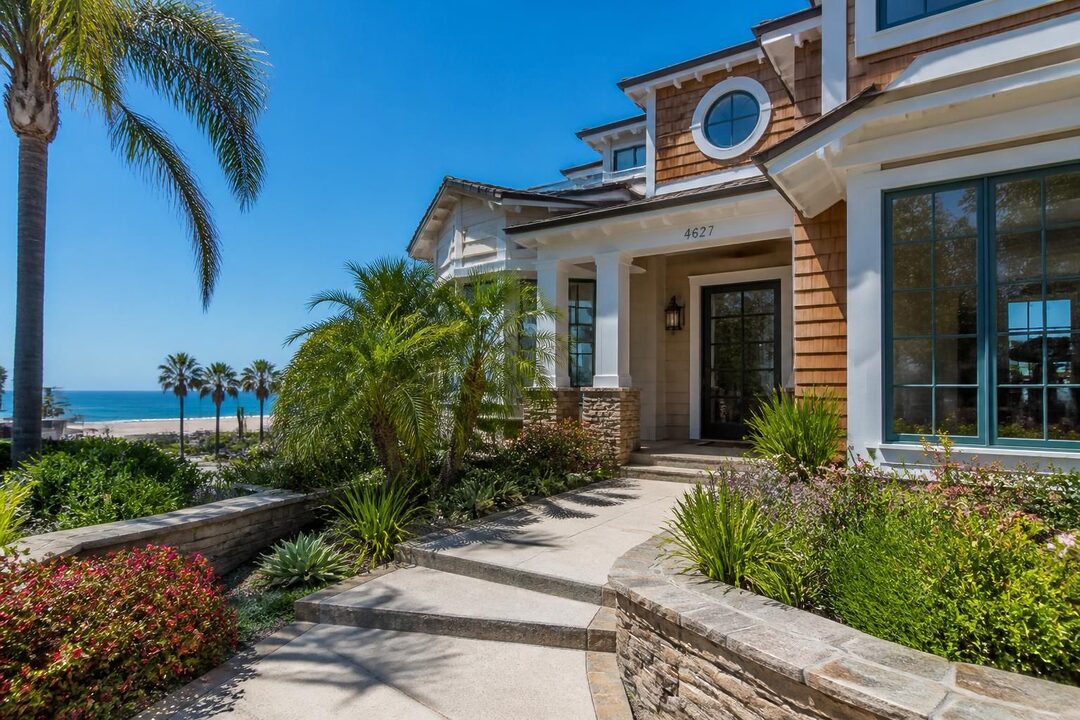
Design inspiration can help owners describe what they like, but it should be translated to the specific house rather than copied wholesale. A dramatic coastal mansion photographed against the ocean may depend on its climate, orientation, and site in ways that do not transfer to an inland neighborhood. Practical evaluation keeps the appealing features while accounting for local conditions and long-term maintenance.
What defines a modern mansion front view?
It is the visible front elevation of a large residence designed with contemporary forms, materials, and proportions. The strongest examples coordinate the entrance, windows, roofline, facade materials, and landscaping into a legible composition.
Which materials are common on contemporary mansion facades?
Stone, masonry, wood or wood-look cladding, glass, stucco, and metal accents are commonly used. The appropriate combination depends on the design, climate, maintenance expectations, and product specifications.
Does a dramatic facade guarantee a higher resale price?
No. Resale value depends on factors such as location, condition, comparable sales, buyer demand, and the property’s overall features. A distinctive exterior may attract attention, but it does not guarantee a premium.
What should buyers inspect on a mansion’s exterior?
Pay attention to visible roof and wall condition, windows, drainage, grading, paths, retaining walls, and the entrance. A qualified home inspector can evaluate concerns that cannot be reliably assessed during a showing.

At 33 years old, I specialize as a Licensed Residential Real Estate Advisor and Property Market Analyst. With a deep understanding of market trends and client needs, I provide strategic insights and personalized guidance to help clients make informed real estate decisions.