HV Ground Solutions brings several home-protection services together under one roof, from basement waterproofing and foundation repair to gutters, drainage, and septic work. For homeowners in the Hudson Valley, that matters because water problems rarely stay neatly within one category: a clogged gutter can saturate soil beside a foundation, while poor exterior drainage may contribute to a damp basement or recurring crawlspace moisture. Understanding how these systems interact helps homeowners ask better questions, compare recommendations, and focus on the source of a problem rather than its visible symptoms.
The company says it has served homeowners since 1984 and has combined six service businesses under the HV Ground Solutions name, including the familiar B-Dry brand. Its stated approach emphasizes practical recommendations and repairs that address a home’s needs rather than selling unnecessary work. That service model is distinct from high-voltage grounding or electrical substation construction: despite the word “ground,” the residential services described here concern moisture management, foundations, gutters, drains, and septic systems—not electrical utility infrastructure.
In Brief: HV Ground Solutions and Home Protection
- Multiple services address connected home issues: waterproofing, foundation repair, seamless gutters, exterior drainage, crawlspace work, and septic services.
- Finding the cause matters: water entering a basement may originate with roof runoff, grading, a drain, or a foundation opening.
- Repair scope should match the evidence: a visible crack or damp patch does not by itself establish the right solution.
- Electrical grounding is a separate field: home moisture-control services are not high-voltage grounding or substation grounding.
- Local conditions influence the plan: soil, rainfall, property layout, system condition, and applicable local requirements all matter.
How HV Ground Solutions Connects Waterproofing, Drainage, and Foundations
Water management works best when it is treated as a system. Rain lands on a roof, enters gutters, travels through downspouts, and is directed away from the house; meanwhile, soil around the foundation absorbs and releases moisture. If one part of that path fails, water may collect near the foundation or find an opening into a basement or crawlspace. A repair that addresses only the interior stain may improve the appearance without correcting the conditions that caused it.
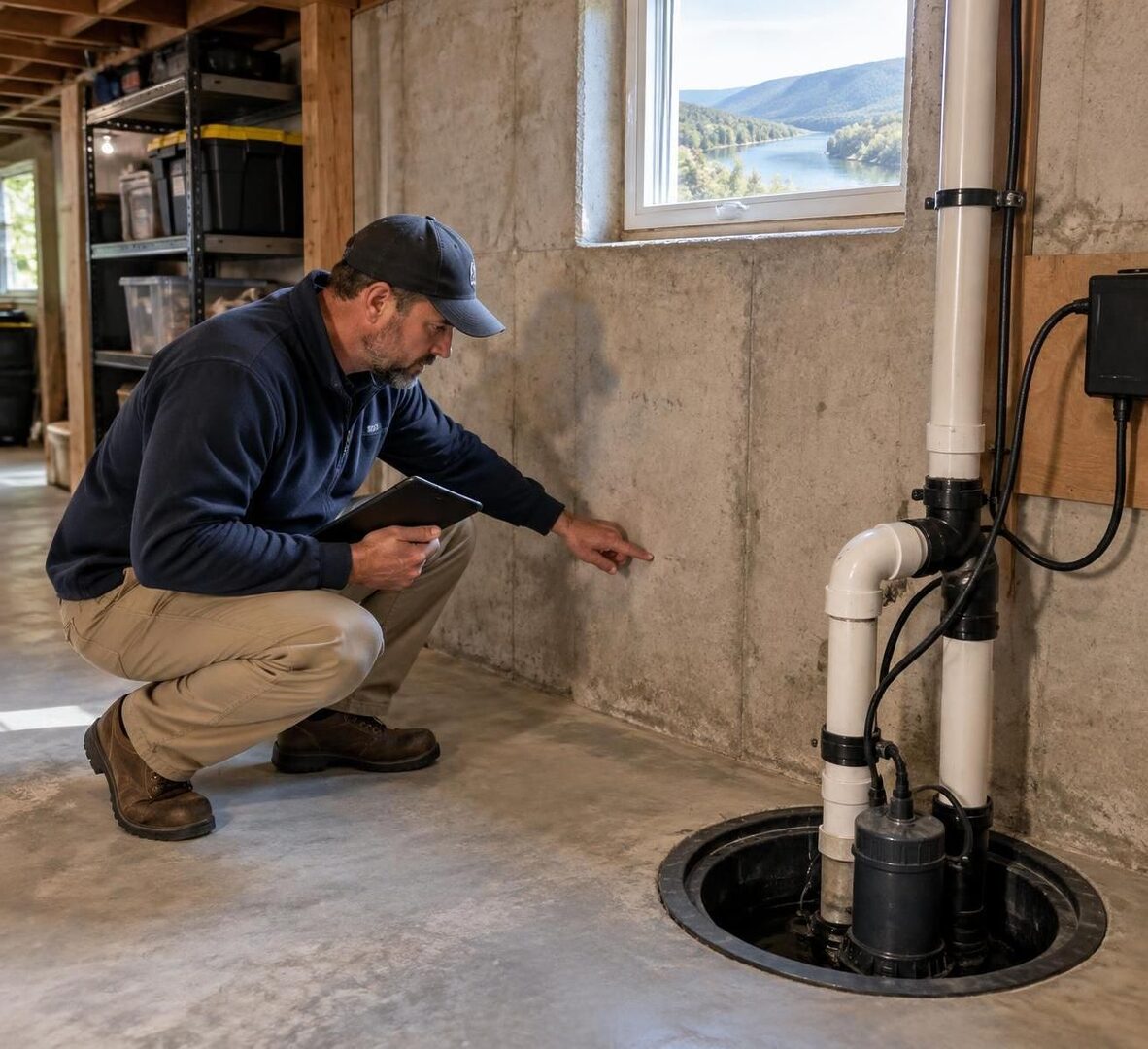
HV Ground Solutions lists interior and exterior basement waterproofing, drainage systems, sump pump installation, vapor barriers, and encapsulation among its services. These options serve different purposes. An interior drainage system, for example, is designed to manage water that reaches the basement perimeter, while exterior waterproofing focuses on limiting water contact with the outside of foundation walls. A sump pump can move collected water away, but its suitability depends on the property, discharge route, and system design.
Consider a hypothetical Hudson Valley homeowner, Mara, who notices water along one basement wall after heavy rain. The first useful questions concern the pattern: Is the dampness limited to one area? Does it appear only after storms? Are downspouts discharging beside the house? Is the ground sloped toward the foundation? These observations can help a qualified professional distinguish among surface runoff, a drainage issue, and water entering through the foundation.
That distinction affects both the proposed work and the budget. A solution may involve correcting a downspout discharge, improving exterior drainage, repairing a foundation crack, installing a basement drainage system, or addressing more than one contributing factor. Not every wet basement needs every available service, and an assessment should explain why a recommended component is relevant to the conditions observed.
The same systems perspective applies to crawlspaces. Persistent moisture can affect stored materials and indoor conditions, so vapor barriers or encapsulation may be considered as part of a broader moisture-management plan. These measures are not interchangeable with correcting an active water source; a barrier cannot redirect a failing gutter or repair a damaged drain. The practical starting point is a clear diagnosis, followed by work matched to the source and route of the water.
Foundation Repair: Matching the Repair to the Warning Signs
Foundation concerns can range from a small, stable crack to movement that requires structural attention. HV Ground Solutions describes services including crack repair, wall straightening, structural reinforcement, foundation stabilization, and settlement correction. These are not one-size-fits-all remedies: the appropriate approach depends on the type of foundation, the location and shape of the damage, signs of movement, water conditions, and the building’s overall structure.
For a homeowner, the first task is to record what is visible rather than assume what it means. Note whether a crack is vertical, horizontal, or stair-stepped; whether it appears to have changed; and whether water is present nearby. Doors that begin sticking or walls that appear to bow may also be worth documenting. These signs warrant professional evaluation, but they do not independently confirm the cause or severity of a structural issue.
A repaired crack can help address a water-entry point, but crack sealing is not automatically a substitute for stabilizing a moving wall. Conversely, a minor crack does not by itself prove that extensive reinforcement is needed. A responsible assessment should explain the observed condition, distinguish moisture control from structural repair, and describe what the proposed work is intended to accomplish.
Homeowners can make that conversation more useful by asking for the reasoning behind the scope. Which condition supports the recommendation? Is the work intended to stop water, correct movement, or both? What maintenance or monitoring may be needed afterward? Are there related drainage factors that should be addressed? Clear answers help a homeowner compare proposals on more than price alone.
Foundation work may also intersect with local permitting, engineering, or inspection requirements, which vary by municipality and project. Homeowners should verify what applies to their property rather than assume one standard governs every location. The central principle is straightforward: visible symptoms are clues, while the repair plan should be based on an evaluation of the underlying condition.
Seamless Gutters and Exterior Drainage: Managing Roof Runoff
Gutters are a home’s first line of defense against concentrated roof runoff. When they are clogged, leaking, undersized for the roof, or poorly directed, water can spill close to the foundation and contribute to erosion or basement moisture. HV Ground Solutions offers seamless gutter installation, replacement, and repair, as well as exterior drainage options such as French drains.
Seamless gutters are formed in long sections for a particular installation, which reduces the number of joints along a run compared with systems assembled from multiple short pieces. Fewer joints can mean fewer potential leak points, although installation quality, hangers, slope, outlet placement, and routine cleaning still matter. A seamless system does not eliminate the need to remove leaves and debris or check that downspouts carry water to a suitable discharge location.
Exterior drainage serves a different role from gutters. A French drain, commonly designed to collect and move subsurface water through a gravel-filled trench and perforated pipe, may be considered where site conditions support that approach. Its layout and outlet need careful planning: directing water toward a neighbor’s property, a public area, or a location where it can flow back toward the home can create new problems. Local requirements and site constraints should be reviewed before installation.
For Mara, the homeowner with a wet basement, an inspection might reveal that one downspout empties directly beside the affected wall. Correcting that discharge could be a sensible part of the plan, but it would not automatically resolve a separate foundation opening or groundwater issue. Conversely, installing an interior system without examining roof runoff could leave an avoidable source unaddressed.
Useful questions include whether gutters are pitched correctly, whether water spills during ordinary rainfall, how far downspouts carry runoff, and whether the yard slopes toward or away from the house. These simple observations do not replace professional diagnosis, but they help define the problem. Effective drainage is less about adding the most equipment and more about giving water a reliable route away from the building.
Septic and Drain Services: Protecting Wastewater Performance
Septic systems and household drains need regular attention because a failure can affect daily use as well as the surrounding property. HV Ground Solutions lists septic installation, repair, and routine maintenance, along with drain cleaning and repair. These services address distinct parts of wastewater management: household drains carry wastewater from fixtures, while a septic system treats and disperses wastewater where a property is not connected to a municipal sewer.
Slow drains, recurring backups, odors, or unusually wet areas near a septic system can have several possible causes. A single clogged fixture may be a localized plumbing issue, while multiple affected drains could point to a broader blockage or system concern. Wet ground or odors near a septic area also merit prompt assessment rather than guesswork. Symptoms alone are not enough to determine whether cleaning, repair, maintenance, or replacement is appropriate.
Septic requirements and maintenance schedules depend on the system design, household use, soil, and local rules. Homeowners should consult relevant local authorities and qualified septic professionals for property-specific requirements. Keeping records of inspections, pumping, repairs, and installation documents can help future service providers understand the system’s history and can be useful during a property sale.
Drainage and septic planning may overlap on a property, but they should not be treated as the same system. An exterior drain intended to manage rainwater should be evaluated separately from wastewater infrastructure. Poorly planned discharge can create nuisance conditions or conflict with local requirements, so the intended destination and site layout matter.
When comparing service recommendations, ask what has been inspected, what evidence supports the diagnosis, and whether the work is preventive or corrective. A clear explanation should identify the affected component and the purpose of the proposed service. The goal is dependable wastewater function and responsible water management, not simply a quick response to the most visible symptom.
Choosing a Home-Service Plan—and Understanding What “Grounding” Means
The “ground” in a company name can be confused with electrical grounding, but HV Ground Solutions’ listed residential services focus on buildings, water, foundations, drainage, gutters, and septic systems. In electrical engineering, grounding systems and earthing solutions are designed to manage electrical hazards and provide reference or fault-current paths. Terms such as electrical safety, fault current management, ground potential rise, substation grounding, and lightning protection belong to that separate technical field.
Likewise, utility-scale high-voltage grounding and underground transmission projects address power infrastructure and grid reliability; they should not be confused with basement waterproofing or residential foundation services. Electrical work involving utility equipment requires appropriately qualified specialists and applicable codes. A homeowner researching a damp basement should focus on moisture pathways and structural conditions, while someone planning electrical or utility work needs a different scope of expertise.
For residential work, a practical comparison of proposals should include the problem identified, the evidence observed, the proposed scope, and any ongoing maintenance. Homeowners can also ask about drainage discharge, warranties, access needs, disruption inside or outside the home, and whether permits or other approvals may apply. The answers should be specific to the property, not based on a generic promise that one system solves every water or foundation issue.
| Home condition | Service category to discuss | Useful question |
|---|---|---|
| Water entering a basement | Waterproofing and drainage | Where is the water coming from, and how will the plan manage it? |
| Cracks or apparent wall movement | Foundation evaluation and repair | Is the concern moisture, structural movement, or both? |
| Runoff collecting beside the house | Gutters and exterior drainage | Where will roof and surface water be directed? |
| Recurring drain or septic symptoms | Drain or septic assessment | Which part of the system is affected, and what evidence supports the proposed work? |
Bringing several home services together may make it easier to coordinate related work, particularly when drainage, a foundation, and a basement are involved. It does not remove the need to evaluate each issue on its own merits. A sound plan connects the symptoms to a cause, explains the selected remedy, and leaves the homeowner with a clear understanding of maintenance and next steps.
Common Questions About HV Ground Solutions
What types of home services does HV Ground Solutions provide?
The company lists basement waterproofing, foundation repair, seamless gutters, crawlspace services, exterior drainage, and septic and drain services. The appropriate service depends on the property condition and the cause of the problem.
Is high-voltage grounding part of the company’s residential services?
The services described are residential building and water-management work, not high-voltage electrical grounding or substation grounding. Electrical grounding projects require qualified electrical professionals.
Does every basement leak require an interior drainage system?
No. Water may enter because of roof runoff, grading, a foundation opening, or other site conditions. An assessment should identify likely sources before a repair system is selected.
When should a homeowner seek an assessment for foundation concerns?
Persistent or changing cracks, apparent wall movement, recurring water entry, or related changes such as sticking doors are reasonable reasons to request a qualified evaluation. These signs alone do not establish the cause.

At 33 years old, I specialize as a Licensed Residential Real Estate Advisor and Property Market Analyst. With a deep understanding of market trends and client needs, I provide strategic insights and personalized guidance to help clients make informed real estate decisions.