An Icelandic mansion is compelling not simply because it is large or secluded, but because its setting and design must answer to a powerful natural environment. A residence near Reykjavík, on a sheltered fjord, or beside open volcanic terrain will face different conditions, views, and practical demands. The most successful homes make those realities part of the experience, pairing considered materials and comfortable interiors with a close relationship to the land.
That relationship has deep roots. Turf houses, timber buildings clad in corrugated metal, and contemporary residences each reflect different ways of living with Iceland’s climate and limited resources. For a buyer or design-minded traveler, this history offers a useful lens: unique architecture here is not only visual expression; it is also a record of adaptation. The appeal of a luxury getaway rests on how well shelter, setting, and daily use work together.
In Brief: What Makes an Icelandic Mansion Distinctive
- Site shapes the experience: volcanic scenery, coastal views, weather exposure, and access all influence a property’s design and practical value.
- Architecture carries history: turf-house traditions and imported timber construction inform the country’s changing built environment.
- Comfort depends on performance: insulation, glazing, ventilation, heating, and maintenance matter as much as dramatic interiors.
- Nordic design is contextual: restrained palettes and natural materials can connect a home to its surroundings without copying historic forms.
- Due diligence is local: ownership, permitted uses, utilities, access, and property condition should be verified with qualified local professionals.
Icelandic Mansion Settings: Volcanic Scenery, Coastlines, and Access
The first decision in evaluating an Icelandic mansion is not the number of bedrooms; it is the relationship between the site and the landscape. Iceland’s scenery can shift from lava fields and moss-covered slopes to glacial vistas, open farmland, and rugged coast. A home framed by stunning landscapes may offer exceptional visual character, yet the same exposure can bring strong winds, changing weather, and a longer journey to services.
Consider a hypothetical buyer, Mara, comparing two expansive homes. One sits within reach of Reykjavík’s shops, cultural venues, and transport connections, while the other stands in a rural setting with wide coastal views. The urban-edge property may make year-round errands easier; the remote residence may offer greater quiet and a stronger sense of retreat. Neither is automatically superior: the right choice depends on how often the owner expects to use the home and what kind of daily routine it must support.
Reading the Site Beyond the View
A listing photograph can make a property seem sheltered, but a site visit should consider the direction of prevailing weather, the shape of the land, drainage, and the condition of the approach road. A panoramic window facing the sea is valuable only if the building envelope is designed and maintained to handle the local conditions. Buyers should ask how the home performs through different seasons, not just during a calm, bright viewing.
Access deserves the same attention as scenery. A remote house may depend on a private drive, seasonal road conditions, or services that are farther away than expected. A buyer should establish which utilities are connected, how heating is supplied, and what arrangements are needed for waste, water, and ongoing maintenance. These questions are especially important when a property is being considered as a second home or luxury getaway rather than a full-time residence.
Local planning constraints and environmental protections can also affect future changes to a building or its grounds. The rules depend on the specific location and property, so assumptions based on another region—or on a tourist visit—are not a substitute for local review. A qualified Icelandic real estate professional and relevant local authorities can help clarify what uses and improvements are permitted.
Matching the Landscape to the Intended Use
For a family expecting regular visits, practical access and flexible rooms may matter more than complete isolation. For an owner seeking a quiet retreat, privacy and a sheltered outdoor area might take priority, even if the nearest services are farther away. A clear use plan helps make trade-offs visible before a buyer becomes attached to a dramatic view.
In Iceland, a striking setting is an asset only when the property’s access, services, and exposure make sense for its intended use.
Unique Architecture in Iceland: Turf Houses, Timber, and Modern Forms
Icelandic architecture developed under constraints that remain relevant to anyone assessing a large home today. Early settlers had limited access to building materials and faced a demanding climate, encouraging practical construction and careful use of resources. Turf houses became an enduring expression of that ingenuity: stone and timber structures were covered with thick layers of turf, creating shelter that appeared to merge with the surrounding ground.
Historic farmsteads such as Glaumbær, preserved as a museum, help visitors understand how these buildings supported rural life. They are not direct templates for a contemporary mansion, but they reveal a principle that still resonates: construction should respond to place. A modern home may use advanced insulation and carefully designed foundations rather than historic methods, while retaining the older idea of working with the land instead of treating it as a blank backdrop.
From Imported Timber to a Distinctive Townscape
As trade expanded, timber construction and corrugated metal siding became familiar features in Icelandic towns. Imported materials were adapted to local conditions, and modest buildings often gained character through color, proportion, and practical detailing rather than extensive ornament. In Reykjavík, these older forms remain part of a varied streetscape alongside newer housing and public buildings.
This history can help a buyer distinguish genuine architectural response from decorative imitation. A residence with a metal exterior or turf-covered section is not automatically more authentic or more durable; the details of installation, maintenance, and weather protection matter. A careful inspection should establish how materials have aged and whether repairs have addressed the causes of wear rather than merely concealing visible symptoms.
Contemporary Design in Dialogue with the Past
Modern Icelandic architecture can be bold without losing its connection to local context. Reykjavík’s Harpa Concert Hall, designed by Henning Larsen Architects with artist Olafur Eliasson, is a prominent example of contemporary public architecture that draws visual inspiration from Icelandic geology and light. It is not residential architecture, but it demonstrates how a modern building can translate local references into form without reproducing a historic structure.
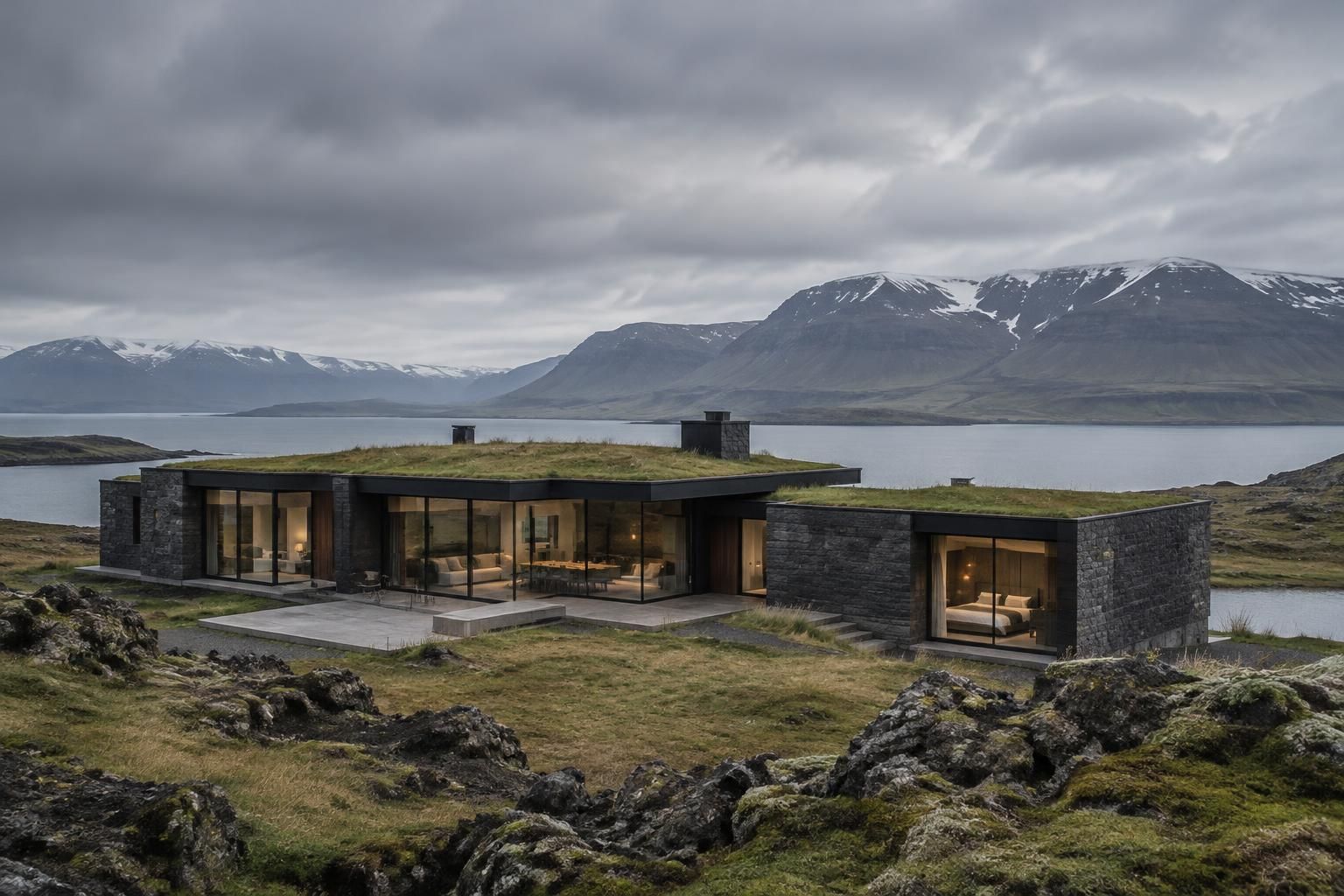
For a private mansion, that dialogue might appear in a low profile that respects an open horizon, a restrained exterior palette, or the use of stone and timber in carefully chosen areas. The goal is not to make a home disappear at any cost. It is to create a building whose scale and materials feel considered in relation to the terrain, neighboring structures, and views.
When reviewing a property, buyers can ask whether its architectural choices serve a clear purpose: Does the roof shape respond to weather? Do windows balance daylight and thermal performance? Are exterior materials suitable for their exposure? These questions move the conversation beyond style and toward long-term usability. Iceland’s most persuasive architectural quality is often the way practical decisions create visual character.
Nordic Design Inside an Icelandic Mansion
Interior design in Iceland often draws on Nordic design principles—clarity, useful storage, natural materials, and a preference for light—but a successful residence should also reflect its own landscape and occupants. In a large home, minimalism does not mean leaving rooms bare. It means giving each space a purpose and avoiding features that compete with the views, natural light, or the architecture itself.
A hypothetical owner furnishing a coastal residence might choose wool textiles, timber details, and a muted palette that echoes stone, snow, or sea. Those choices can establish warmth without making every room feel themed. Local craft, family objects, or artwork can provide a personal connection to place; the result feels more durable than an interior assembled only to match a passing trend.
Light, Views, and the Layout of Daily Life
Daylight changes significantly through the seasons, so window placement can shape the experience of a home as much as its furniture. Large glazing can frame coastal views or distant mountains, but its orientation, shading, and thermal performance deserve careful consideration. Buyers should ask how windows behave in colder conditions and whether the home remains comfortable in rooms with extensive glass.
Floor plans also influence whether a mansion feels welcoming or unnecessarily difficult to manage. A practical layout may bring shared living areas together while allowing bedrooms, workspaces, and guest rooms to function independently. For owners who host visitors or work remotely, flexible rooms can be more valuable than a collection of spaces with narrow, single-purpose uses.
Materials and Comfort Through the Seasons
Natural textures can make a large interior feel grounded, but materials must be selected for maintenance as well as appearance. Wool, timber, stone, and ceramics each bring distinctive qualities; their suitability depends on the room, the household, and the expected level of use. In an entry or mudroom, for example, durable surfaces and thoughtful storage can make wet-weather routines easier than a fragile decorative finish.
Heating and ventilation should be evaluated as parts of the design, not hidden technical details. Iceland makes extensive use of geothermal energy at a national level, but the heating arrangement for an individual property depends on location and infrastructure. A buyer should verify the actual system, its operating condition, and available documentation instead of assuming that every rural residence has the same energy source or cost profile.
Comfort also comes from a home’s quieter systems: insulation, airtightness, ventilation, and moisture control. Inspection findings can reveal whether condensation, drafts, or uneven temperatures require attention. A beautiful interior is most successful when the building performs reliably behind the visible finishes.
For a mansion, considered interior design is less about filling space than making each room comfortable, efficient, and connected to its setting.
Evaluating an Icelandic Historic Estate or Contemporary Residence
A historic estate and a recently built mansion can offer very different ownership experiences. Older properties may carry architectural character and a tangible connection to Icelandic history, while contemporary homes may provide updated systems and layouts. Neither description confirms condition: age, construction quality, maintenance history, and location all need to be assessed individually.
Buyers should distinguish between a building that is historically significant and one that simply looks traditional. Where heritage status or preservation requirements may apply, the relevant local authorities and qualified professionals should confirm what is protected and which alterations may require approval. The same caution applies to a modern property marketed as eco-conscious: specific systems and performance records matter more than broad labels.
Due Diligence for Property Condition and Ownership
A thorough review typically involves more than a standard walk-through. Depending on the property, buyers may need professional assessments of the roof, exterior envelope, foundation, drainage, heating, ventilation, electrical systems, water supply, and access. For a remote residence, the cost and availability of future repairs may be influenced by distance, weather, and the ability to source materials or contractors.
Transaction procedures, ownership eligibility, taxes, insurance, and permitted use can depend on the buyer’s circumstances and the property’s location. These matters should be confirmed with appropriate Icelandic legal, tax, lending, and real estate professionals. U.S. assumptions about financing or closing processes should not be applied automatically to an overseas purchase.
Operating costs also deserve a realistic review. A larger building can require more heating, upkeep, and staffing or service coordination than a smaller home, while a remote site can add travel and maintenance considerations. Buyers can request available utility records, service documentation, and repair history, then discuss gaps with their advisers rather than relying on a seller’s general description.
Comparing Property Priorities
| Property consideration | Questions to investigate | Why it matters |
|---|---|---|
| Location and access | How accessible is the home throughout the year, and how far are essential services? | Travel time and seasonal conditions shape everyday use. |
| Building envelope | What is known about insulation, windows, roofing, drainage, and exterior maintenance? | These components influence comfort and repair planning. |
| Heating and utilities | Which systems serve the property, and what records document their condition? | Infrastructure varies by location and should be verified. |
| Historic character | Are there preservation requirements or limits on alterations? | Restrictions can affect renovation plans and future use. |
| Intended occupancy | Will the home serve as a primary residence, second home, or occasional retreat? | The best layout and location depend on actual use. |
For instance, a buyer drawn to an older stone-and-turf property may value its heritage while budgeting for specialist repairs and confirming alteration requirements. Another buyer might choose a newer residence near a town to reduce the complexity of regular upkeep. Comparing those options through condition, access, and intended use makes the decision more grounded than comparing photographs alone.
A compelling property is not simply the most dramatic one; it is the one whose design, condition, and setting align with a realistic ownership plan.
Iceland Travel and the Experience of Staying in a Design-Led Home
For visitors, an architecturally distinctive residence can make Iceland travel feel more connected to local culture, but the setting should support the trip rather than dictate it. A home near Reykjavík may offer convenient access to museums, restaurants, and city architecture, while a rural stay can make the surrounding terrain part of the daily experience. Before choosing, travelers should compare travel times and seasonal access with the activities they actually plan to pursue.
A useful way to assess a luxury getaway is to imagine an ordinary day, not just an arrival photograph. Where will guests prepare meals, dry outdoor clothing, gather after a long drive, and rest when the weather changes plans? Well-designed shared spaces, practical storage, and comfortable bedrooms can matter more over several nights than a dramatic feature that is used only briefly.
Architecture as a Route into Local Culture
Travelers interested in design can pair time in a private residence with visits to public architecture and heritage sites. Harpa provides a contemporary reference point in Reykjavík, while open-air museums such as Glaumbær offer context for older rural building traditions. These visits show that Icelandic architecture is not one fixed style; it is a continuing conversation between available materials, social life, and environmental conditions.
Respect for the setting is essential when exploring rural areas. Private homes, farms, and fragile natural surfaces are not simply scenic backdrops. Visitors should follow access guidance, respect property boundaries, and avoid disturbing vegetation or landforms, especially in places where recovery from foot traffic can be slow.
Choosing for the Kind of Stay Planned
Travelers seeking coastal views may prioritize a property’s orientation and proximity to the shore, while those more interested in volcanic scenery may prefer access to inland routes and geological sites. The terms “coastal” and “remote” can cover very different experiences, so listing descriptions should be checked against maps and local information. A home’s actual location determines what can be reached comfortably and what requires a longer journey.
Before booking or purchasing for repeated visits, confirm the property’s permitted use, included services, and practical arrangements with the relevant local professionals or operator. Rules and availability vary by property and municipality. Clear verification helps prevent an appealing design story from overshadowing the basics of access, services, and responsible use.
The lasting appeal of an Icelandic mansion comes from more than its scale: it is the balance between thoughtful shelter, cultural character, and the natural beauty that surrounds it.
What defines an Icelandic mansion?
The term describes an expansive residence rather than a single established architectural style. Its character may come from the site, materials, layout, and relationship to Icelandic landscapes, while its condition and services must be assessed property by property.
Are Icelandic mansions built in a traditional turf-house style?
Some contemporary homes incorporate turf or other references to vernacular construction, but many use modern building systems and materials. Historic turf houses remain important cultural examples, not a universal model for current residences.
What should buyers inspect before purchasing a rural Icelandic property?
Buyers should investigate access, the building envelope, roof, drainage, heating, ventilation, water and other utilities, maintenance records, and any relevant planning or preservation requirements with qualified local professionals.
Does every home in Iceland use geothermal heating?
No. Energy infrastructure and heating systems vary by location and individual property. Buyers should verify the system serving the specific home and review its condition and documentation.

At 33 years old, I specialize as a Licensed Residential Real Estate Advisor and Property Market Analyst. With a deep understanding of market trends and client needs, I provide strategic insights and personalized guidance to help clients make informed real estate decisions.