
The Bahamas is not a single beach destination but a vast archipelago where every island changes the view: Nassau’s harbor and historic streets give way to the luminous cays of the Exumas, the pink sands of Eleuthera, and the quieter shorelines of the Out Islands. That variety is what makes the country a compelling Caribbean travel choice. Visitors can pair resort comforts with boat excursions, snorkeling, historic landmarks, or long stretches of beach where the main plan is simply to watch the tide shift.
For travelers comparing destinations, the practical question is not only which place looks beautiful, but what kind of trip its geography supports. Some islands are easy to reach from Nassau and suit a short stay; others reward visitors who plan domestic flights, ferry connections, or time on a boat. Whether the priority is culture, marine life, or an unhurried island getaway, the Bahamas offers a scenic destination with memorable ocean vistas—and the best experience often comes from choosing an island that matches the pace of the trip.
In Brief: Where to Find Breathtaking Views in the Bahamas
- Nassau and Paradise Island combine historic attractions, beaches, dining, and large-scale resort amenities.
- The Exumas are known for clear shallows, boating routes, snorkeling, and distinctive cays such as Thunderball Grotto.
- Eleuthera and Harbour Island offer dramatic coastal scenery, secluded beaches, and the famous pink-sand shoreline.
- Andros, Grand Bahama, and Long Island appeal to visitors interested in parks, caves, blue holes, and diving.
- The Abacos and smaller Out Islands suit sailing, quiet beach days, and trips centered on local communities.
Nassau and Paradise Island: Historic Sights Beside Turquoise Waters
Nassau is often the first stop on a Bahamas itinerary, and its appeal extends well beyond the view from a resort balcony. The capital offers a practical base for visitors who want to combine beach time with museums, markets, and landmarks. In the downtown area, Bay Street connects shops and restaurants with the pastel-colored buildings around Parliament Square, while nearby historic sites provide context for the islands’ colonial past and maritime history.
The Queen’s Staircase is among Nassau’s most recognizable landmarks. Carved from limestone in the late eighteenth century, the staircase leads toward Fort Fincastle and offers a shaded route through tropical greenery. Its steps and surrounding stonework make a striking contrast with the bright colors of the city, while the nearby fort helps explain how Nassau’s elevated position once served a defensive purpose. The Pirates of Nassau Museum provides a different perspective, presenting the island’s association with piracy in an accessible, visitor-friendly setting.
For a change of pace, Nassau’s beaches make it easy to spend a day close to town. Cable Beach is associated with major resorts and a wide range of services, while Love Beach offers a more relaxed coastal setting. Conditions vary by location and weather, so visitors planning to swim or snorkel should check local guidance rather than assume every shore has the same currents, facilities, or water access. The view is only part of the decision: beach access, transportation, and nearby amenities can shape the day just as much.
Across the bridge, Paradise Island is known for resort facilities and the Atlantis complex, whose attractions include a large marine habitat and Aquaventure water park. The scale and range of amenities can suit families or travelers who prefer to keep dining, pools, and activities close together. That convenience can come with a busier atmosphere and higher on-property costs, so it is worth comparing a resort stay with accommodations in Nassau before booking. A visitor seeking local restaurants and historic streets may value a different base than someone prioritizing pool access and organized entertainment.
Food offers another way to experience the capital. Conch salad, peas and rice, and other Bahamian dishes appear at restaurants and local food stands, though menus and availability differ. A traveler who spends the morning at a historic site, takes an afternoon swim, and then samples local cuisine gets a broader impression of Nassau than one who remains entirely inside a resort. The capital’s strongest advantage is variety: culture, convenience, and coastal scenery can fit into the same stay.
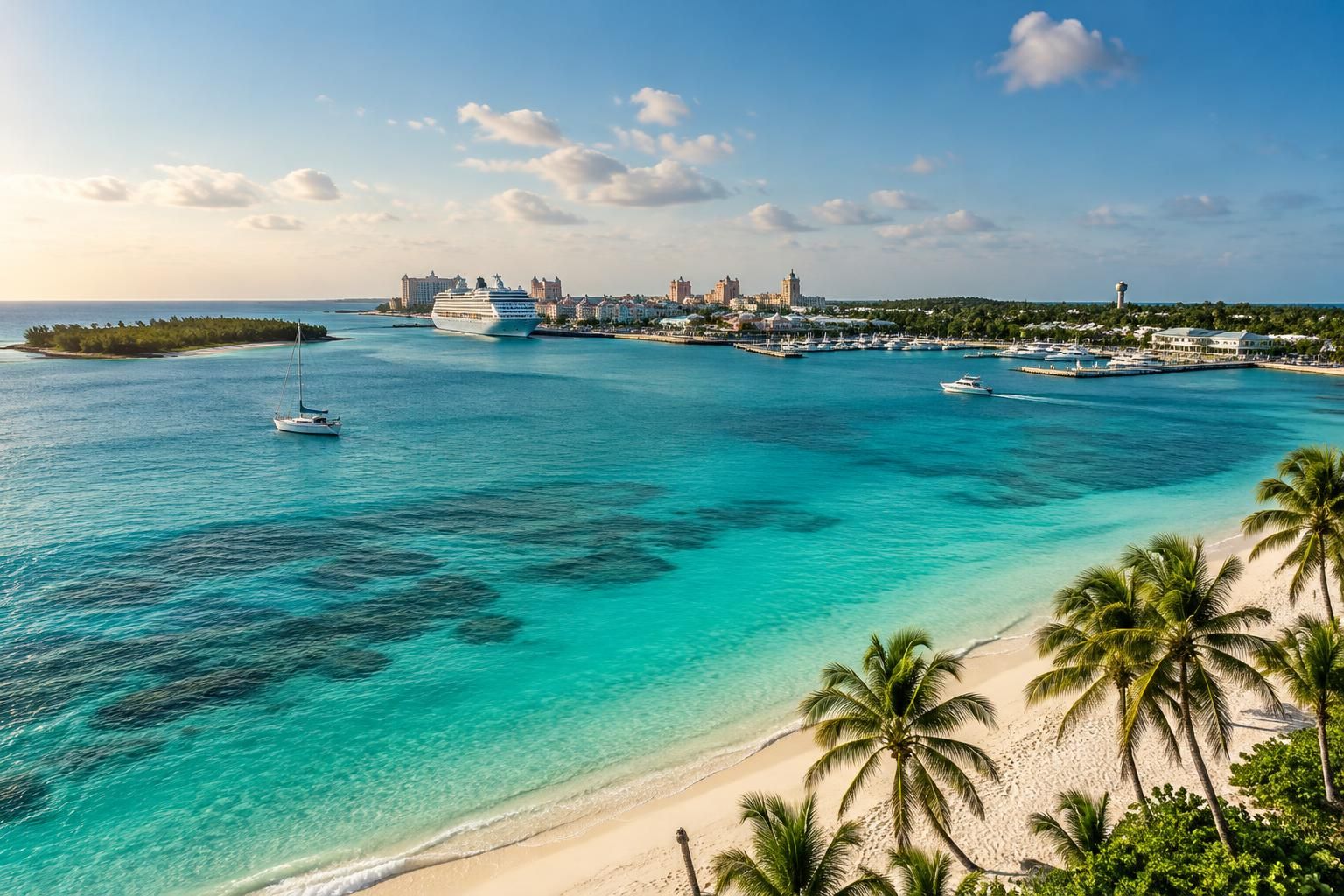
The Exumas: Bright Blue Water, Sandbars, and Boat-Based Exploration
The Exumas are an archipelago rather than one resort-centered island, and that distinction shapes the experience. The region’s cays and shallow banks create the striking palette many visitors associate with the Bahamas: pale aqua close to shore, deeper blues farther out, and narrow ribbons of sand appearing where the tide allows. The scenery is especially rewarding from a boat, because the changing water depths and small islands become part of the journey instead of a backdrop viewed from one beach.
Great Exuma and nearby cays can serve as a starting point for exploring, but travel times depend on the route and the day’s conditions. Visitors may choose a guided excursion, a private charter, or a land-based stay with selected boat trips. A guided tour can make logistics easier and provide local knowledge, while a charter may allow more control over timing and stops. Either way, responsible operators should explain safety procedures, weather decisions, and what is included before departure.
One well-known stop is Big Major Cay, often called Pig Beach, where visitors may see pigs near or in the water. The encounter is unusual, but it should be approached as a wildlife interaction rather than a guaranteed photo opportunity. Animals should not be chased, crowded, or fed unapproved food; visitors should follow the guide’s instructions and maintain a respectful distance. In this setting, responsible behavior protects both the animals and the quality of the experience.
Thunderball Grotto offers a different kind of attraction. This cave system near Staniel Cay became familiar to movie audiences through James Bond films, but its appeal is primarily natural: light enters through openings in the rock, illuminating the water and creating a memorable snorkeling environment. Conditions vary with tide and weather, and entering a cave requires comfort in the water and attention to the operator’s safety advice. A person who prefers a relaxed swim may enjoy watching from outside rather than feeling obliged to snorkel through a confined opening.
The Exuma Cays Land and Sea Park protects an important marine environment, and its no-take rules are designed to help ecosystems and wildlife thrive. Visitors should confirm current park guidance and respect restrictions, including rules on fishing and collecting marine life. The protected waters can make snorkeling and diving especially compelling, but the value of the reserve is not measured only by what visitors see. Leaving shells, coral, and wildlife undisturbed helps preserve the very qualities that make the area remarkable.
For a hypothetical couple planning a week away, the Exumas may be a better choice than Nassau if boating and open-water scenery are central priorities. But they should account for transfers, excursion costs, and weather flexibility, especially when traveling between islands. The Exumas are best experienced at a pace that leaves room for the boat ride itself, not just the next stop.
Eleuthera and Harbour Island: Pink Sand and Coastal Contrasts
Eleuthera is a long, narrow island where the coastline can feel close from almost any point, yet the character of one shore may differ sharply from another. It is an appealing choice for travelers who want a scenic drive, quieter beaches, and natural landmarks rather than a schedule built around large resort attractions. The island’s famous Glass Window Bridge is a dramatic example: from the crossing, the deep Atlantic and the calmer water on the other side appear in contrasting shades, divided by a narrow strip of land and road.
The bridge is a working roadway as well as a viewpoint, so visitors should stop only in safe, designated areas and remain alert to traffic and changing sea conditions. The surrounding coast can be exposed to waves and weather, and a striking photograph is not a reason to approach an unsafe edge. This is a useful reminder for the entire region: Bahamian scenery is beautiful partly because it remains shaped by wind, tide, and storms, not arranged as a controlled attraction.
Nearby natural features such as Queen’s Bath can offer a refreshing look at tide pools and coastal rock formations, but access and water conditions change. Before entering a pool, visitors should assess the surf, follow local advice, and avoid swimming when waves are pushing strongly into the rocks. The Leon Levy Native Plant Preserve provides a calmer contrast, with paths through native vegetation and opportunities to learn about the island’s plant life. Together, these sites show that Eleuthera’s appeal is not limited to the shoreline.
Harbour Island, reached by a separate short transfer from North Eleuthera, is especially known for Pink Sand Beach. Its color comes from finely crushed marine material mixed with sand; the shade may appear more pronounced under certain light and conditions than at other times. The beach stretches along the Atlantic side of the island, where a walk at sunrise or near sunset can reveal subtle changes in pink, cream, and blue. Visitors should treat the shoreline as a living environment and avoid taking sand or disturbing natural features.
Harbour Island’s small settlements and locally run businesses give a visit a different rhythm from a large resort property. Accommodation and dining choices may be more limited than in Nassau, and costs can reflect the island’s small scale and supply logistics. Travelers should book essential transport and lodging in advance, particularly during popular travel periods, and confirm how to reach the places they intend to visit. A beautiful beach does not automatically mean every service is within walking distance.
For someone choosing between an easy resort stay and a more independent island trip, Eleuthera and Harbour Island reward preparation. Rental transportation, ferry schedules, and local conditions all affect how much can reasonably fit into a day. The islands’ defining attraction is contrast: pink-tinted sand, rugged Atlantic views, quiet gardens, and a slower pace can coexist within one itinerary.
Andros, Grand Bahama, and Long Island: Blue Holes and Natural Landscapes
Travelers drawn to nature beyond the beach will find a different set of breathtaking views on Andros, Grand Bahama, and Long Island. These islands offer forests, wetlands, caves, reefs, and blue holes—features that make the Bahamas more than a collection of sunbathing spots. Access and services vary considerably, however, so visitors should plan around the specific activity they want rather than assume that every natural site is easy to reach independently.
Andros is the largest island in the archipelago and is known for its comparatively undeveloped landscapes, marine environments, and blue holes. These water-filled sinkholes can be found in different settings, including inland areas and coastal zones. Some are suitable for supervised swimming or diving; others require specialized knowledge and equipment. Visitors should not enter a blue hole without confirming access, depth, and safety conditions with qualified local guides. The visual calm of a pool can conceal steep underwater drop-offs or other hazards.
The Andros Barrier Reef is a major draw for divers and snorkelers, with marine habitats that support a range of life. A reef trip is also a reminder that ocean conditions, visibility, and wildlife sightings are never guaranteed. Choosing a responsible operator, using reef-conscious sunscreen where appropriate, and avoiding contact with coral are simple ways to reduce harm. Andros also attracts anglers interested in bonefishing on shallow flats, but fishing regulations and access arrangements should be checked locally before a trip.
On Grand Bahama, Lucayan National Park combines pine forest, mangrove environments, beaches, and cave systems. The park provides an opportunity to see several ecosystems without needing to travel between separate islands. Cave exploration should take place only where permitted and under suitable conditions; the natural formations are fragile, and visitors should follow posted guidance. Gold Rock Beach, within the park, is known for its broad shoreline at low tide. Because tidal conditions change the shape and accessible area of the beach, checking the tide can improve a visit.
Long Island is known for Dean’s Blue Hole, a deep marine sinkhole that is a landmark for divers and freedivers. Its depth makes it a site for experienced participants, not a casual swimming challenge. Visitors who are not trained can still appreciate the surrounding scenery from shore and choose safer, appropriate water activities elsewhere. Cape Santa Maria Beach and the settlements around Stella Maris offer a slower counterpoint, with open coastal views and opportunities to explore local life.
These islands suit travelers who value ecology and outdoor experiences, but remote settings require sensible preparation. Confirm transport, carry water and sun protection, and avoid relying on mobile service or facilities that may not be available at every site. Here, the most memorable views often come with a responsibility to respect fragile landscapes and understand the conditions before entering the water.
The Abacos and Out Islands: Sailing Routes, Quiet Beaches, and Local Character
The Abacos are a natural fit for visitors who want a sailing-centered island getaway. Marsh Harbour functions as a hub for services and boat trips, while smaller communities and cays offer a more intimate sense of place. Rather than treating every stop as a separate destination, sailors can experience the region as a sequence of harbors, beaches, and settlements, with each leg shaped by wind, visibility, and sea conditions.
Elbow Cay is among the best-known stops, with Hope Town’s red-and-white striped lighthouse serving as a landmark against the surrounding water. The lighthouse and nearby settlement make a compelling visit even for travelers who do not sail, although reaching the cay requires arranging appropriate transportation. Green Turtle Cay is another appealing stop, with historic architecture, colorful homes, and a small-community atmosphere. Visitors should check current local operating conditions and services before travel, as conditions and businesses can change.
Treasure Cay is associated with a long stretch of pale sand and calm-looking water, while the wider Abaco area offers boating, snorkeling, and fishing opportunities. Those activities depend on weather, local rules, and the experience of the operator. A traveler renting a boat should understand navigation, fuel, safety equipment, and any restrictions before departure; hiring a qualified captain can be a better choice for people unfamiliar with local waters. The most attractive route on a map is not necessarily the safest or most practical one on a particular day.
Smaller and more remote destinations, including Cat Island, San Salvador, Bimini, and Acklins and Crooked Islands, bring yet another dimension to the country’s scenery. Cat Island offers quiet beaches and Mount Alvernia, a high point with broad island views. San Salvador combines historic associations with clear water and coastal sites, while Bimini is recognized for fishing, reefs, and the underwater formation commonly called the Bimini Road. The formation has inspired claims about ancient origins, but it is best approached as a geological and cultural curiosity rather than presented as proof of a lost civilization.
For a more secluded visit, the less-traveled islands can deliver an especially peaceful shoreline, but they also call for realistic expectations. Flights and boat connections may be limited, shops and restaurants can be few, and a missed connection can affect a tightly scheduled trip. Confirm transport with local providers, allow extra time between connections, and carry essential medication and travel documents. The appeal of a quiet beach is strongest when visitors arrive prepared rather than expecting city-level convenience.
A useful way to choose among the islands is to match the destination to the trip’s main purpose:
- For history and easy amenities: base a stay in Nassau and consider a day trip to Paradise Island.
- For boating and vivid shallows: focus on the Exumas and plan excursions around weather and tide.
- For coastal scenery and slower days: compare Eleuthera with Harbour Island and arrange transfers in advance.
- For caves, reefs, and outdoor exploration: investigate Andros, Grand Bahama, or Long Island with local guidance.
- For sailing and smaller settlements: consider the Abacos or another Out Island, allowing flexibility in the schedule.
The right island is not necessarily the one with the most famous photograph; it is the one whose transport, activities, and pace fit the traveler. Across the Bahamas, the most rewarding views come from balancing exploration with practical planning.
Comparing the Bahamas’ Scenic Island Experiences
| Destination | Best suited to | View or experience to seek | Planning point |
|---|---|---|---|
| Nassau and Paradise Island | First-time visitors, families, culture and resort amenities | Historic downtown, harbor, beaches, resort marine attractions | Compare resort convenience with city access and on-site costs. |
| The Exumas | Boat trips, snorkeling, and island-hopping | Sandbars, clear shallows, Thunderball Grotto | Choose reputable operators and respect wildlife and marine rules. |
| Eleuthera and Harbour Island | Beach walks, coastal drives, and quieter stays | Glass Window Bridge and pink-sand shoreline | Arrange transfers and check surf and road conditions. |
| Andros, Grand Bahama, and Long Island | Nature, caves, diving, and outdoor activities | Blue holes, national parks, reefs, and ocean vistas | Match activities to experience and use local safety guidance. |
| The Abacos and Out Islands | Sailing, fishing, and a slower island pace | Lighthouses, harbors, quiet beaches, small settlements | Build flexibility into transport and island connections. |
Which Bahamas island is best for a first visit?
Nassau is a practical first base because it combines historic sights, beaches, dining, and a range of accommodations. Travelers focused on boating or quieter scenery may prefer the Exumas, Eleuthera, or an Out Island, provided they plan transfers in advance.
Where can visitors see the Bahamas’ famous pink sand?
Pink Sand Beach is on Harbour Island, near Eleuthera. The visible color can vary with light and conditions, and reaching the beach requires arranging transport to Harbour Island.
Are the Exumas suitable for a day trip?
Some visitors explore selected Exuma sites on guided day trips, often departing from another island. Travel time, weather, and the excursion route matter, so confirm the itinerary and safety arrangements before booking.
What should visitors know before swimming or snorkeling?
Ocean conditions vary by beach, tide, and weather. Follow local advice, use qualified guides for caves or remote sites, avoid touching coral or wildlife, and do not enter water that appears unsafe.

At 33 years old, I specialize as a Licensed Residential Real Estate Advisor and Property Market Analyst. With a deep understanding of market trends and client needs, I provide strategic insights and personalized guidance to help clients make informed real estate decisions.