From the famed streets of New York City to the sun-drenched hills of Los Angeles, Lori Kanter Tritsch has emerged as a formidable figure in the world of modern design. Her approach merges the crisp lines and visions of West Coast modernism with a unique sense of warmth and functionality, distinguishing her work in both residential and commercial spheres. As an architectural designer and founder of Graph Design LTD, she brings over four decades of expertise, shaping environments that balance contemporary aesthetics with human-centric comfort.
At the crossroads of tradition and innovation, Kanter Tritsch’s design philosophy reflects a profound understanding of the evolving needs of modern living. This sensibility resonates throughout her projects, notably in her collaboration on a modernist residence in Trousdale Estates, Beverly Hills, where she revisited postwar Southern California’s signature indoor-outdoor concept and infused it with artistic storytelling and a fresh, contemporary perspective.
Alongside her partner, William P. Lauder, chairman of the Estée Lauder Companies, she champions the transformative power of thoughtful design—one that extends beyond visual appeal to foster community, sustainability, and cultural dialogue. Their philanthropic efforts, such as the Kanter Tritsch Prize in Energy and Architectural Innovation, underscore their commitment to shaping the future of architecture with integrity and creativity.
Lori Kanter Tritsch’s Integration of West Coast Modern Design Into Contemporary Architecture
Lori Kanter Tritsch’s roots in architectural education coupled with her deep admiration for West Coast modernists such as Richard Neutra and John Lautner have significantly shaped her contributions to contemporary architecture. These influences come alive in her work, especially in her commitment to the seamless transition between interior and exterior spaces—a hallmark of Southern California’s postwar architectural legacy.
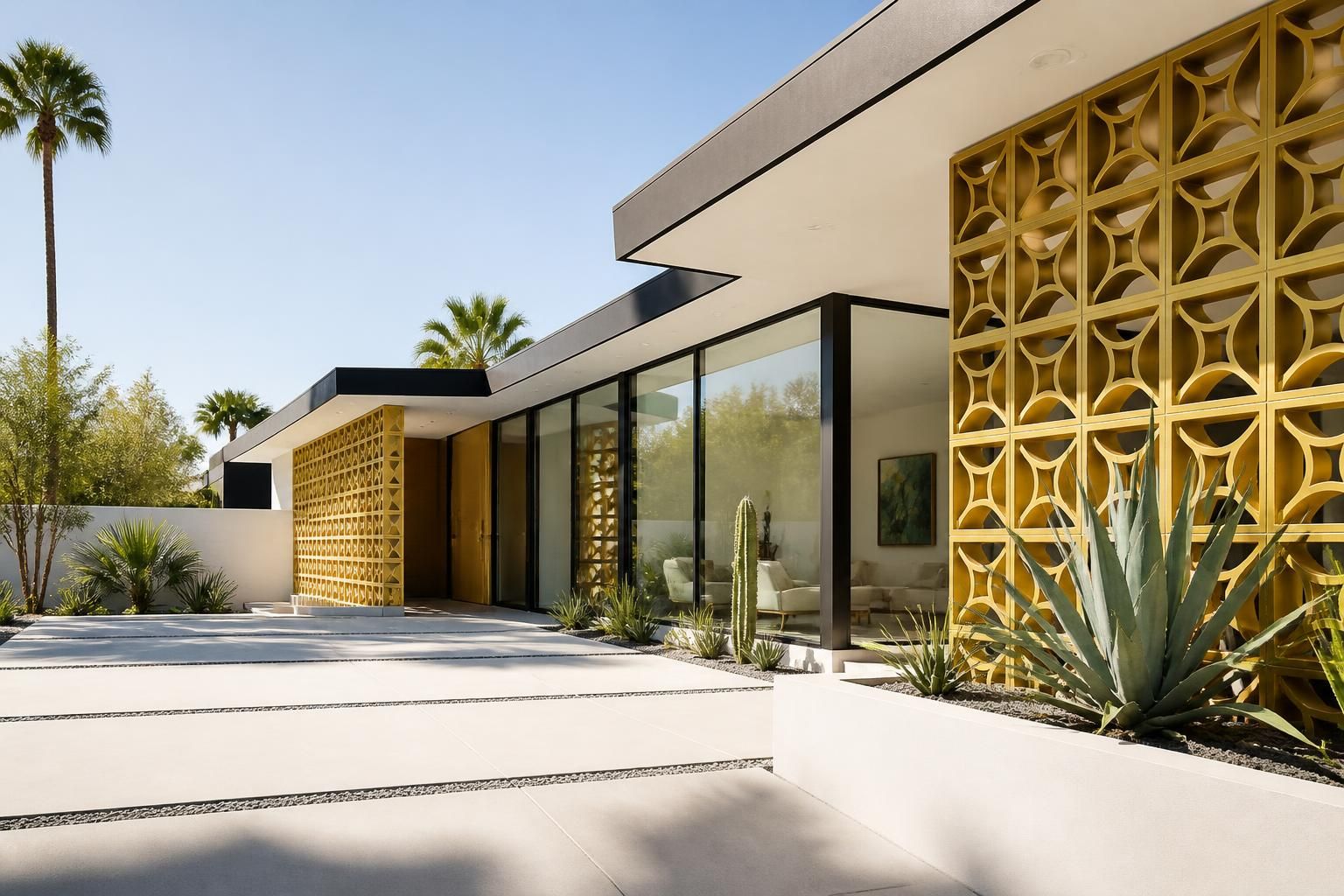
This approach is vividly illustrated in her landmark project in Trousdale Estates, Beverly Hills, a neighborhood renowned for its mid-century modern homes and rich architectural heritage. The estate’s original layout features iconic elements like flat roofs, expansive glass walls, and open floor plans designed to invite the outdoors in. Kanter Tritsch’s vision was to honor this legacy while introducing design innovations that cater to 21st-century living. Such innovations include integrating sustainable building materials, enhancing natural ventilation, and prioritizing energy efficiency, all while preserving the neighborhood’s aesthetic coherence.
An example of her modern interpretation is the treatment of breeze blocks, traditionally used in mid-century designs for ventilation and shade. At the Kanter Tritsch-Lauder residence, each breeze block is painted gold internally, turning functional elements into artistic features that play with light and create a glowing effect after dusk. This thoughtful blend of practicality with artistic influence elevates the home’s visual storytelling and exemplifies how Kanter Tritsch redefines traditional materials to engage contemporary audiences.
Her firm’s expertise extends beyond residential projects, encompassing commercial interiors that reflect the same commitment to modern design principles. Graph Design LTD is recognized for delivering spaces that unify sleek aesthetics with occupant well-being, resulting in environments where form and function coexist harmoniously. This blend underlines her broader impact on modern design trends, positioning her as a pivotal figure in shaping the look and feel of spaces that prioritizes human experience alongside stylistic innovation.
The Significance of Artistic Influence in Lori Kanter Tritsch’s Interior Design Approach
Interior design under Lori Kanter Tritsch is an exercise in creative innovation and subtle storytelling. Her interiors are deliberately curated spaces where every element—from furnishings to textiles—has a narrative role that complements the architectural framework. This approach reflects a design philosophy that values atmosphere and human connection, challenging the notion that modern homes are inherently sterile or impersonal.
For example, the Kanter Tritsch-Lauder residence incorporates a mixture of luxurious yet inviting materials such as linen, leather, sandstone, and oak cladding. These elements introduce tactile warmth against the home’s clean modern lines, creating a multi-layered sensory experience. The living room, outfitted with furniture from renowned designers like Vladimir Kagan and Holly Hunt, offers a blend of comfort and elegance. The creamy white rug accented with interlocking golden circles adds a visual softness and a subtle echo of the gold hues found in the breeze blocks, tying the space together with cohesive visual language.
The role of art in her interiors is equally central. Having inherited a passion for postwar contemporary art through her partner’s family, she curated a collection featuring notable artists such as Richard Misrach, James Turrell, Robert Indiana, and Robert Rauschenberg. These pieces do more than decorate; they engage with the space’s natural light, scale, and flow, creating dialogues between artwork and architecture that elevate the home’s cultural resonance.
Her inclusion of a vibrant mosaic inspired by Brazilian artist Roberto Burle Marx along an interior wall further exemplifies her intent to incorporate color and movement. This document of visual storytelling is not a mere decorative afterthought but an emblematic extension of her design philosophy—where architecture and art coalesce to evoke emotional and intellectual responses from occupants and visitors alike.
Core Elements in Lori Kanter Tritsch’s Interior Design
- Textural Layers: Combining natural fabrics and materials to soften modern spatial geometry.
- Artwork as Narrative: Investing in curated art pieces to enrich space stories and character.
- Functional Elegance: Selecting furniture that balances exquisite form with everyday usability.
- Color as Atmosphere: Strategic use of color motifs reflected in structural and decorative elements.
- Light Interaction: Maximizing natural and artificial lighting to enhance aesthetic qualities and comfort.
Creative Innovation and Sustainable Practices in Lori Kanter Tritsch’s Architectural Projects
In the realm of modern design, sustainability has become a critical benchmark for new constructions and renovations—a challenge Lori Kanter Tritsch embraces with both expertise and foresight. Her collaborative work on the Beverly Hills modernist home underscores her commitment not only to aesthetics but also to environmentally conscious practices.
The architectural team, including Kovac Design Studio and construction overseen by Scott Anderson and John Slagle, incorporated green design principles from the initial schematic phases. For example, the home’s structure promotes natural airflow through sliding glass walls that pocket away to fully open the interior to the outdoor terrace, reducing reliance on artificial cooling. The use of white terrazzo flooring assists in reflecting sunlight, helping to moderate indoor temperatures naturally, thereby lowering energy consumption.
Innovations in material choices also reflect this sustainable mindset. The renovation fully cleared the original structure, allowing the introduction of locally sourced, durable, and recyclable materials that enhance durability while reducing environmental impact. This approach aligns with broader global design trends where environmental responsibility and enduring beauty converge.
The home’s architectural concept also respects the regional context, preserving sightlines and vistas of Los Angeles’ cityscape and ocean beyond. By doing so, it maintains a dialogue between built environment and natural landscape—a principle that resonates with both Kanter Tritsch’s design impact and the broader movements in sustainable modern architecture.
In addition to individual projects, Kanter Tritsch’s $1.25 million pledge to establish a prize and fellowship at the University of Pennsylvania’s Weitzman School emphasizes her investment in future generations of architects who prioritize energy and environmental innovation. This dual focus on current projects and educational advocacy reflects a design philosophy that is both present and future oriented.
The Broader Impact of Lori Kanter Tritsch on Modern Design Trends and Real Estate Value
In the current 2026 landscape where both buyers and investors seek properties that combine innovative design with lasting value, Lori Kanter Tritsch’s work stands out as an exemplar of how modern design principles can enhance real estate appeal. Her meticulously crafted homes demonstrate how architectural distinction and interior sophistication contribute not only to lifestyle quality but also to property market performance.
Her projects often enhance a neighborhood’s prestige by respecting historical design contexts while introducing contemporary updates that resonate with today’s buyers. For instance, in Trousdale Estates, her residence and similar properties contribute to an architectural dialogue that sustains community identity and attracts discerning residents who value design integrity as a long-term investment.
From a real estate perspective, properties designed or influenced by Kanter Tritsch often command premiums due to:
- Architectural uniqueness: Custom design elements that elevate a home’s visual and functional appeal.
- Quality of materials: Use of premium and sustainable finishes that promise durability.
- Smart spatial planning: Innovative layouts enhancing flow and adaptability.
- Integration of indoor-outdoor spaces: Increasing usable living areas and lifestyle flexibility.
- Strong artistic and cultural components: Enhancing emotional connection to the home.
By blending these factors, Lori Kanter Tritsch has helped redefine expectations for luxury modern homes, supporting resilient market values in an evolving real estate climate. Her work illustrates the financial and personal benefits of investing in thoughtful, innovative architecture.
| Design Feature | Impact on Property Value | Example |
|---|---|---|
| Seamless Indoor-Outdoor Flow | Increases livable space and desirability in warm climates | Beverly Hills modernist home |
| Use of Sustainable Materials | Reduces long-term maintenance costs and environmental footprint | Materials sourced for Los Angeles residence reconstruction |
| Custom Artistic Elements | Enhances character and buyer emotional engagement | Gold-painted breeze blocks and custom mosaic |
| Collaborative Design Processes | Ensures tailored solutions that boost market appeal | Graph Design LTD partnership with Kovac Studio |
| Architectural Heritage Respect | Maintains community prestige and historical value | Work in Trousdale Estates with local architectural traditions |
Philanthropy and Academic Contributions Amplifying Lori Kanter Tritsch’s Legacy in Architecture and Design
Lori Kanter Tritsch extends her influence beyond architecture and design through her philanthropic and academic commitments. Recognizing that the future of modern design depends on nurturing emerging talent, she and William Lauder have invested heavily in educational initiatives that support innovation and sustainability in the field.
The Kanter Tritsch Prize in Energy and Architectural Innovation at the University of Pennsylvania exemplifies this vision. Valued at $50,000, the prize recognizes architects and students pushing boundaries in environmentally conscious design. Additionally, their $1.25 million endowment to establish a fellowship and the Kanter Tritsch Medal for Excellence highlights their dedication to empowering both students and practicing architects on a global scale.
This medal has honored influential figures like A. Eugene Kohn and Tod Williams and Billie Tsien, amplifying their work and setting high standards for contemporary architectural practice. The medal not only acknowledges achievement but also serves as an inspiration for the broader architectural community to pursue creative innovation responsibly.
By fostering dialogue between academic institutions and industry leaders, Kanter Tritsch helps ensure that the principles of modern design—integrating sustainability, artistic expression, and social responsibility—remain at the forefront of architectural evolution. The broader real estate market similarly benefits as these ideas permeate residential and commercial development trends, contributing to environments that are both valuable and meaningful.
Who is Lori Kanter Tritsch and what is her architectural background?
Lori Kanter Tritsch is an architectural designer and founder of Graph Design LTD with over 40 years of experience. She studied at the University of Pennsylvania’s Master of Architecture program, deeply influenced by West Coast modernism.
How does Lori Kanter Tritsch blend modern design with sustainability?
She incorporates sustainable materials and environmental design principles into her projects, such as maximizing natural light and ventilation, while maintaining aesthetic appeal and functionality.
What makes the Kanter Tritsch-Lauder residence architecturally significant?
The residence revitalizes Trousdale Estates’ mid-century modern style by integrating traditional architectural elements with innovative, artistic details and modern sustainable practices.
How does artistic influence manifest in Kanter Tritsch’s interior designs?
Her interiors combine curated postwar contemporary art, luxurious materials, and vibrant color motifs to create spaces rich in narrative and emotional engagement.
What philanthropic efforts does Lori Kanter Tritsch support in architecture?
She and her partner William Lauder fund prizes and fellowships at the University of Pennsylvania that promote energy innovation and architectural excellence among students and practitioners.

At 33 years old, I specialize as a Licensed Residential Real Estate Advisor and Property Market Analyst. With a deep understanding of market trends and client needs, I provide strategic insights and personalized guidance to help clients make informed real estate decisions.